
Alphabet sequencing Normal Letter Recognition Worksheets for Ages 6-9
3 filtered results
Difficulty Level
Grade
Age
-
From - To
Subject
Activity
Standards
Introduce your child to the fun world of letters with our Alphabet Sequencing Normal Letter Recognition Worksheets tailored for ages 6-9. These engaging worksheets help children master letter recognition, enhancing their reading and writing skills. Designed to progress from simple to more challenging exercises, kids will enjoy an interactive learning experience while developing critical literacy foundations. Ideal for both home and classroom use, our worksheets support a balanced approach to education with a blend of play and study. Spark your child's curiosity and boost their confidence in alphabet sequencing today!
Favorites
With answer key
Interactive
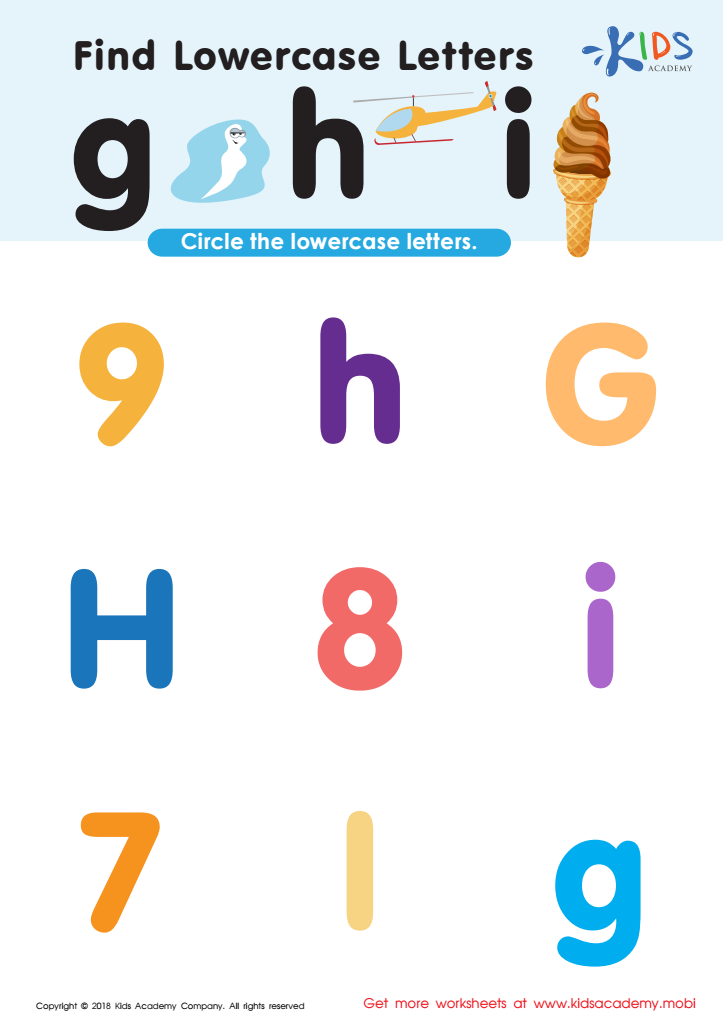
Find Lowercase Letters g h i Worksheet
Turn learning into a fun journey with your child! Use this free worksheet to find and circle the lowercase letters hidden amongst uppercase letters and numbers. Your child will understand what you're teaching them as they enjoy the search.
 Assign to My Students
Find Lowercase Letters g h i Worksheet
Worksheet
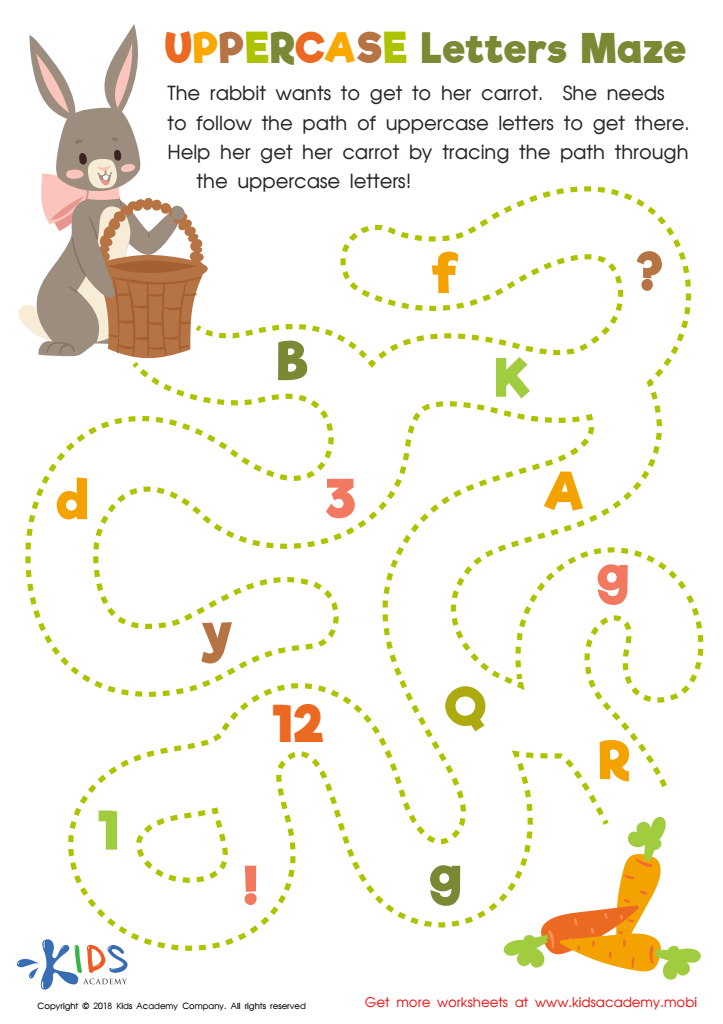
Uppercase Letters Maze Worksheet
Kids can have fun helping a rabbit find her carrot by picking the path with uppercase letters. This worksheet teaches letter differentiation while building confidence. Kids will have a great time while getting an essential skill!
Uppercase Letters Maze Worksheet
Worksheet
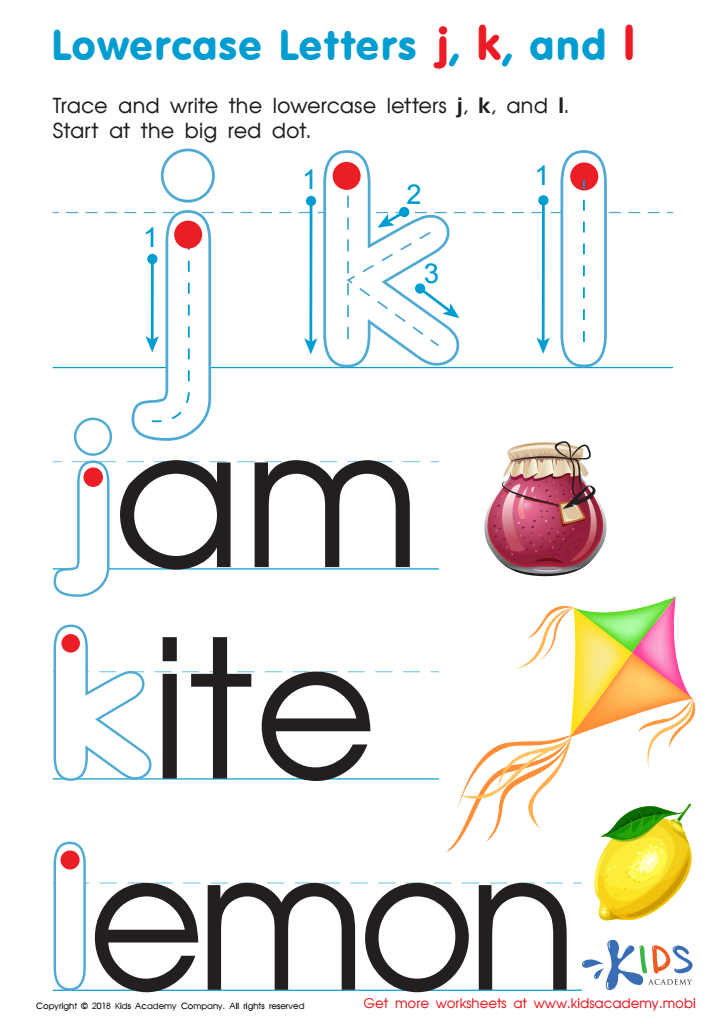
Lowercase Letters j k l Worksheet
Teach your child the difference between uppercase and lowercase letters. Have them trace and write the lowercase letters j, k, and l, starting at the red dot. Guide your child's hand to form the letters correctly.
Lowercase Letters j k l Worksheet
Worksheet
Join Kids Academy for Free
Who is primarily going to use this learning content?








Alphabet sequencing and letter recognition are foundational skills in early literacy development, essential for ages 6-9. Parents and teachers should prioritize these learning aspects because they lay the groundwork for more complex reading and writing tasks.
When children master alphabet sequencing, they understand the order of the letters, which aids in alphabetic principle acquisition – the relationship between letters and sounds. This skill is crucial for phonics, spelling, and the ability to decode words during reading. Accurate letter recognition ensures that children can identify individual letters both in isolation and within words, crucial for reading fluency.
Moreover, proficiency in these areas boosts children's confidence. A child who can effortlessly recognize and sequence letters is likely to approach reading and writing tasks with more enthusiasm and less frustration, fostering a positive association with learning.
For teachers, understanding a child's proficiency in these skills allows for targeted interventions and more focused instructional strategies, whether offering more practice for those struggling or advanced challenges for those excelling. For parents, engaging in activities that promote alphabet understanding, like reading alphabet books or playing sequencing games, can strengthen their child's skills outside the classroom, contributing to academic success.
Altogether, alphabet sequencing and letter recognition are critical stepping stones in the journey to becoming proficient readers and writers, affecting overall academic achievements and lifelong learning.








