
Letter Tracing Normal Letter Recognition Worksheets for Ages 6-9
4 filtered results
Difficulty Level
Grade
Age
-
From - To
Subject
Activity
Standards
Our "Letter Tracing Normal Letter Recognition Worksheets" for ages 6-9 are designed to build foundational handwriting and literacy skills. These engaging worksheets make learning enjoyable by helping children recognize and trace letters accurately. Each worksheet provides ample practice to reinforce muscle memory and develop fine motor skills. Ideal for classroom use or homeschooling, these resources are aligned with educational standards. Through fun and interactive exercises, kids will gain confidence in writing both uppercase and lowercase letters, setting the stage for fluent reading and writing. Cultivate your child’s alphabet mastery today with our expert-crafted letter tracing worksheets!
Favorites
With answer key
Interactive
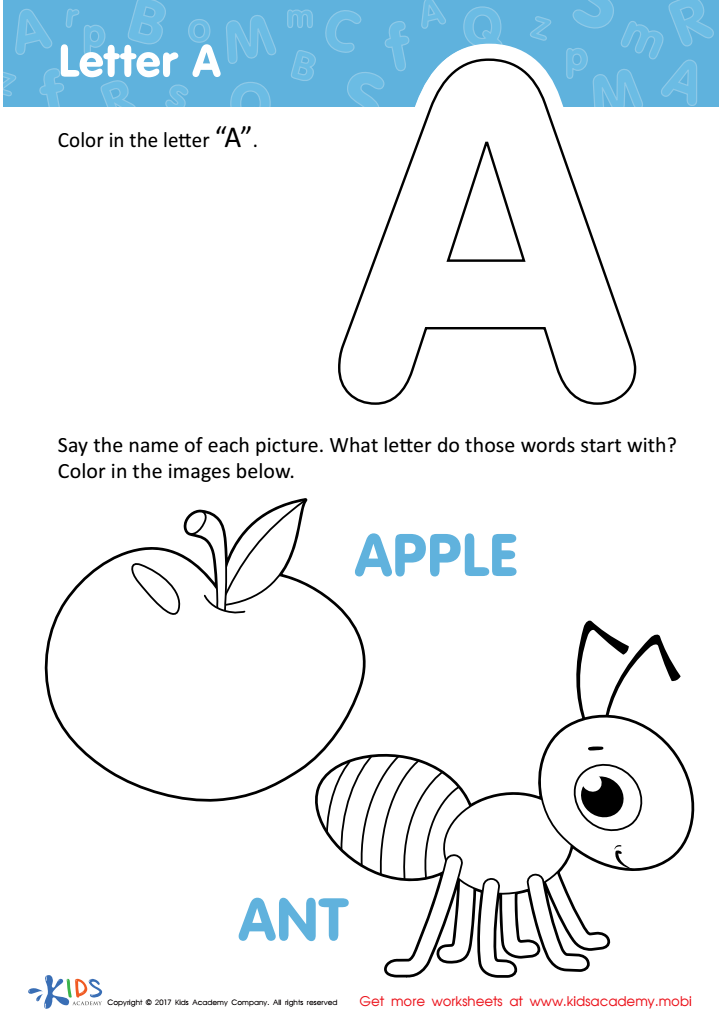
Letter A Coloring Sheet
This letter "A" coloring page is great for introducing kids to the alphabet! Let them exercise their creativity while they learn to recognize letters and sounds - it's a fun and easy way to help them get started.
Download (PDF)
 Assign to My Students
Assign to My Students
Letter A Coloring Sheet
Worksheet
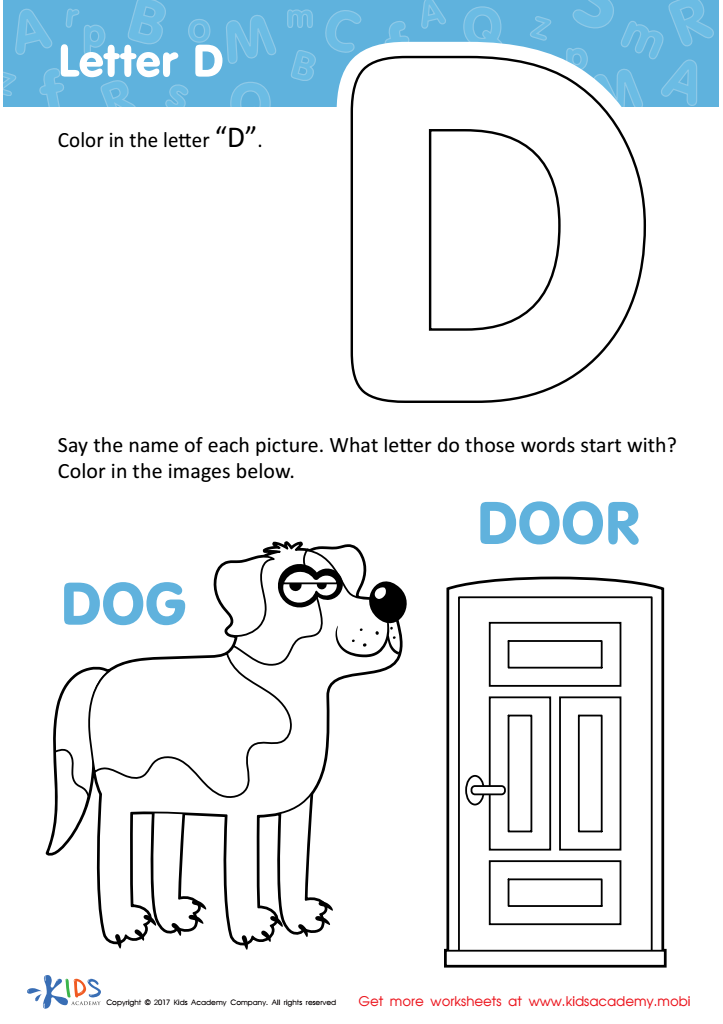
Letter D Coloring Sheet
Coloring with this letter "D" page is a great way to encourage your child's creativity while they learn the letter "D" and its sound. It's a fun activity to stimulate their imagination!
Download (PDF)
Assign to My Students
Assign to My Students
Letter D Coloring Sheet
Worksheet
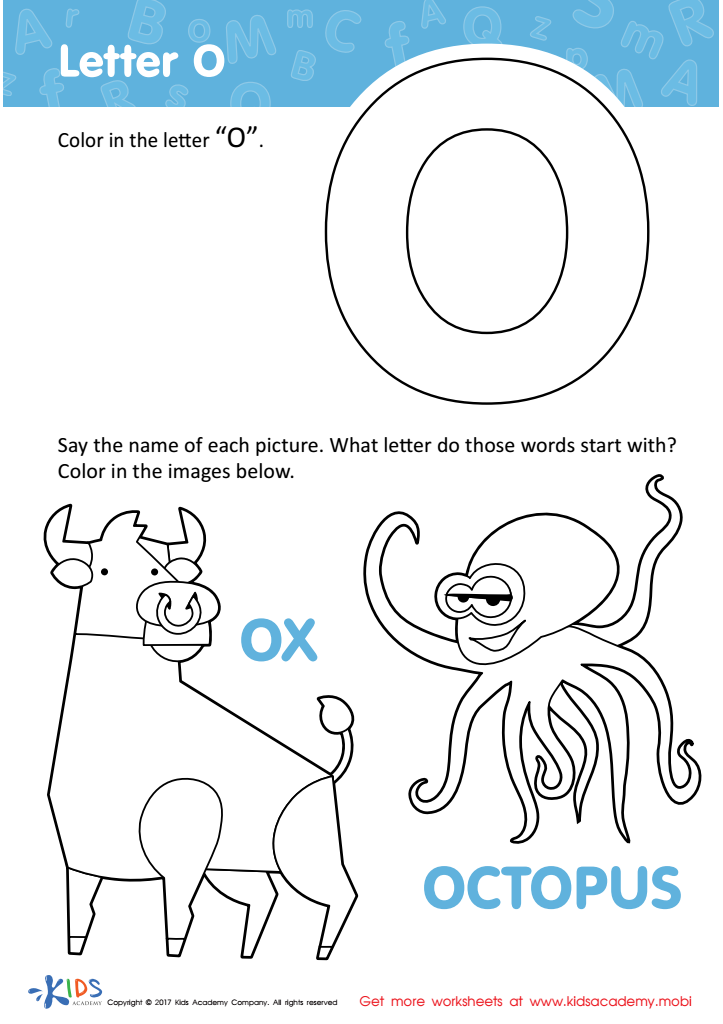
Letter O Coloring Sheet
Oh my! The letter "O" is so much fun. Coloring in the octopus and ox on this delightful letter "O" coloring page can help your child have fun while strengthening their recognition of the letter and sound.
Download (PDF)
Assign to My Students
Assign to My Students
Letter O Coloring Sheet
Worksheet
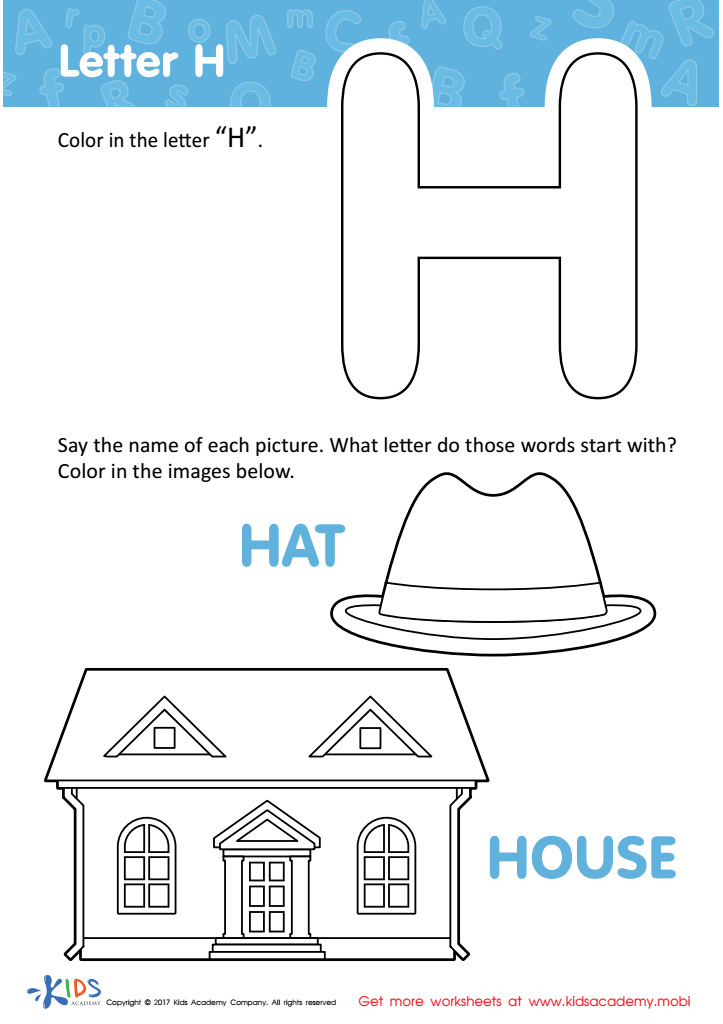
Letter H Coloring Sheet
This fun "H" coloring page will help your child recognize the letter and sound of "H"! With a hat and house to color, your little learner will have a blast picking colors and creating designs, all while learning about the letter "H"!
Download (PDF)
Assign to My Students
Assign to My Students
Letter H Coloring Sheet
Worksheet
Join Kids Academy for Free
Who is primarily going to use this learning content?








Letter tracing and normal letter recognition are fundamental components of early literacy development for children aged 6-9. Parents and teachers should prioritize these activities as they lay the groundwork for essential reading and writing skills.
Firstly, letter tracing helps children develop fine motor skills. By guiding a pencil to form letters, they enhance hand-eye coordination and manual dexterity, which are crucial for writing fluency. This activity also strengthens muscle memory for letter shapes, easing the transition to freehand writing.
Furthermore, letter recognition is crucial for reading development. Understanding the appearance and sound of each letter enables children to decode words, facilitating the acquisition of reading skills. It serves as the building block for phonemic awareness, the ability to hear, identify, and manipulate individual sounds in words, which is vital for reading proficiency.
Engaging in these activities also boosts children's confidence. As they become more competent in recognizing and forming letters, they gain a sense of accomplishment and motivation to learn more. This positive feedback loop encourages a lifelong interest in reading and writing.
Combining letter tracing and recognition in educational activities thus supports holistic literacy development, leading to improved academic outcomes and better preparation for future learning challenges. Both parents and teachers play a critical role in fostering these early skills to set children on a successful educational path.








