Lowercase letter writing Normal Letter Recognition Worksheets for Ages 6-9
3 filtered results
-
From - To
Welcome to our engaging Lowercase Letter Writing Normal Letter Recognition Worksheets, tailored for ages 6-9! These carefully designed worksheets help young learners master lowercase letter formation and enhance their letter recognition skills. Each worksheet features fun activities that promote creative expression while solidifying foundational literacy concepts. Our interactive approach keeps children motivated and eager to practice writing and identifying lowercase letters. Perfect for both classroom use and homeschooling, these worksheets are easy to print and integrate into your curriculum. Foster your child's confidence in literacy with our engaging and educational resources—helping them develop essential writing skills in a fun and inspiring way!
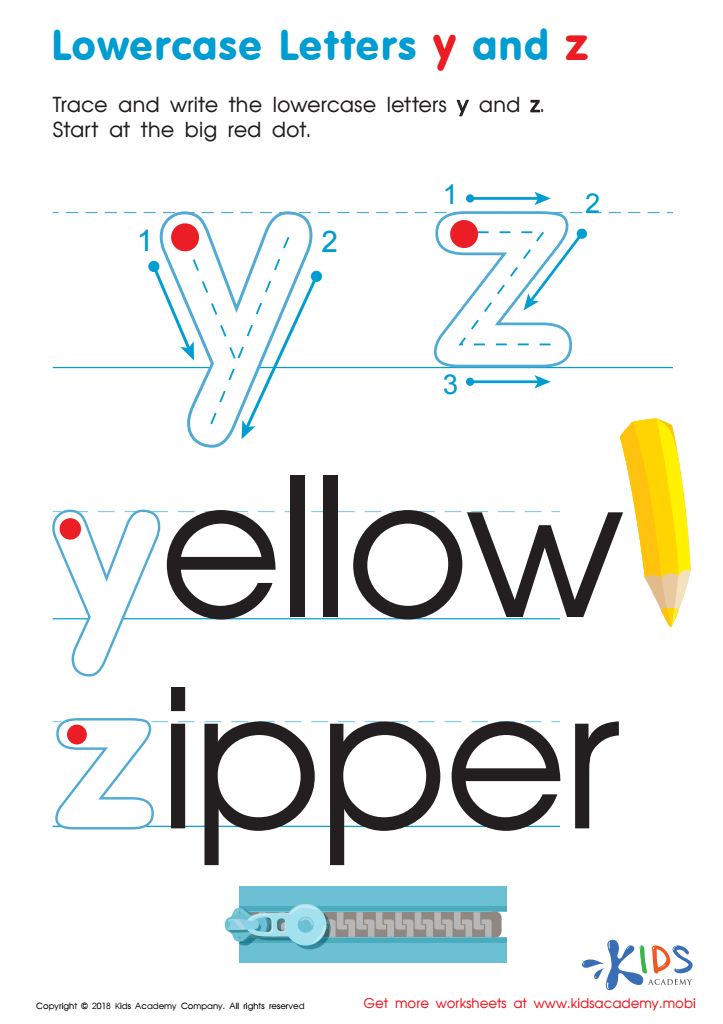
Lowercase Letters y z Worksheet
 Assign to My Students
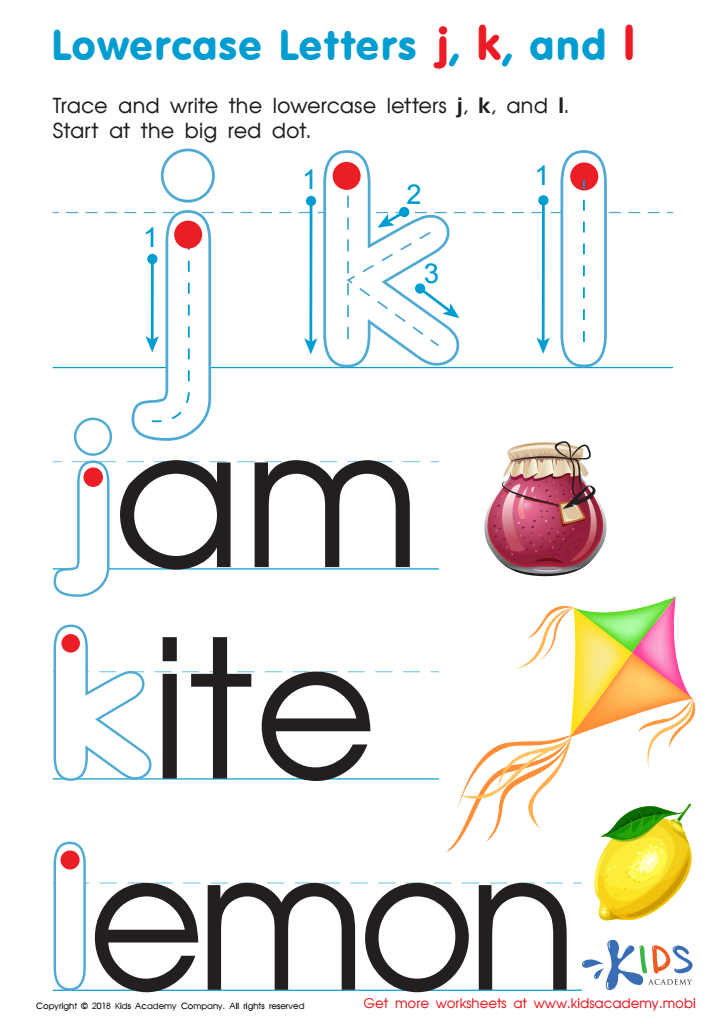
Lowercase Letters j k l Worksheet
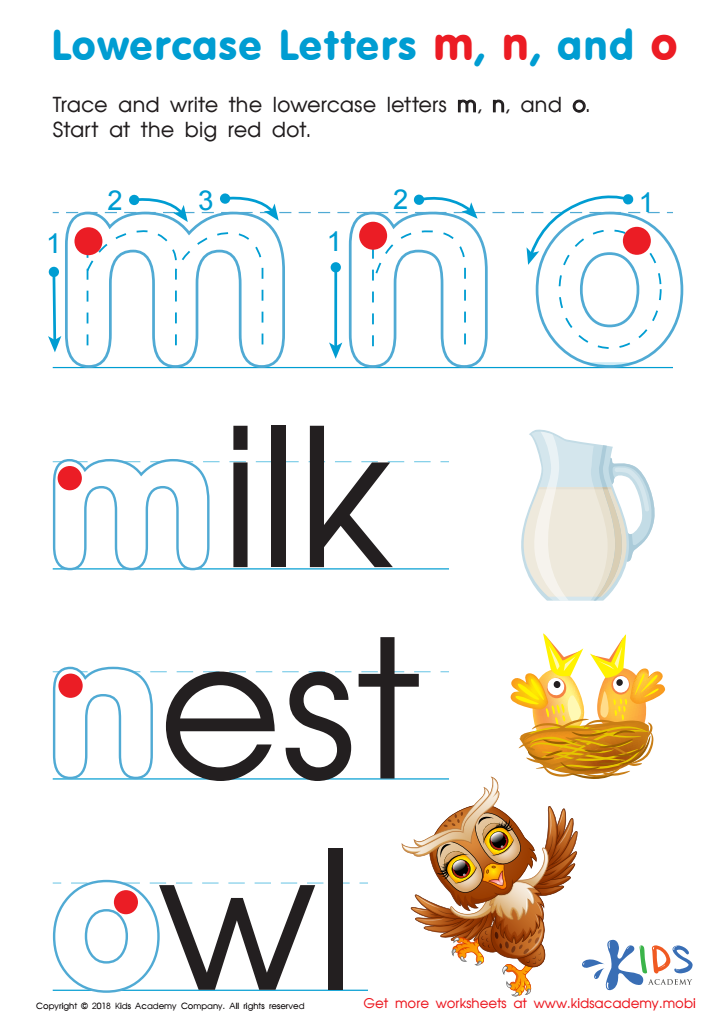
Lowercase Letters m n o Worksheet








Teaching lowercase letter recognition and writing is crucial for children aged 6 to 9, as it forms the foundation for their reading and writing skills. During this developmental stage, children are transitioning from recognizing letters to using them in their own writing. Understanding lowercase letters is essential since they comprise the majority of text encountered in everyday life.
Parents and teachers should care about this because proficiency in lowercase letter recognition empowers children to read independently and with confidence. When children can identify and visualize letters correctly, their ability to decode words improves, enhancing overall literacy skills. This boosts their self-esteem and encourages a love of reading.
Furthermore, practicing uppercase and lowercase writing helps fine-tune motor skills, promoting better handwriting. Good handwriting is vital for clear communication, especially as children progress through higher grades where the written expression becomes increasingly significant.
Lastly, early mastery of lowercase letters aids in developing spelling and vocabulary, both of which are fundamental for effective communication. By prioritizing lowercase letter recognition and writing, parents and teachers support children's academic success and lifelong learning habits.








