Alphabet understanding Normal Upper & Lowercase Letters Worksheets for Ages 6-9
3 filtered results
-
From - To
Discover our Alphabet Understanding Normal Upper & Lowercase Letters Worksheets, expertly designed for children ages 6-9. These engaging worksheets make learning letters a delightful experience. Students will practice recognizing, matching, and writing upper and lowercase letters while enhancing their fine motor skills. With creative exercises and fun activities, our worksheets promote alphabet proficiency and foundational literacy. Ideal for classroom use or at-home learning, this essential resource ensures your child develops a strong understanding of the alphabet, preparing them for future reading success. Jumpstart your child's literacy journey with our interactive and effective alphabet worksheets today!
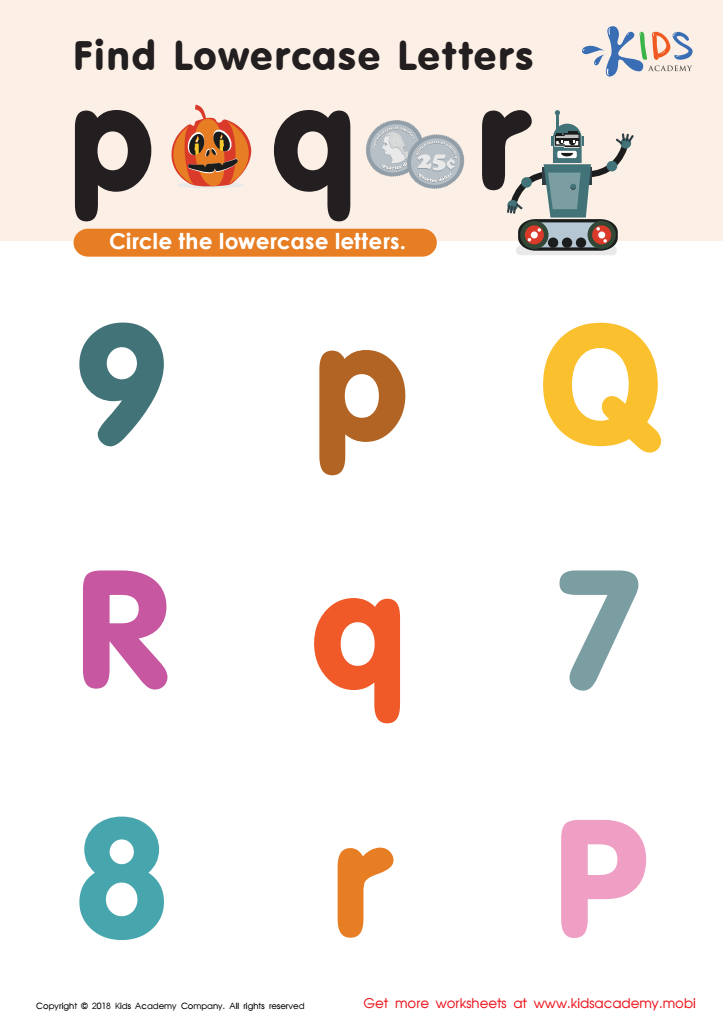
Find lowercase Letters p q r Worksheet
 Assign to My Students


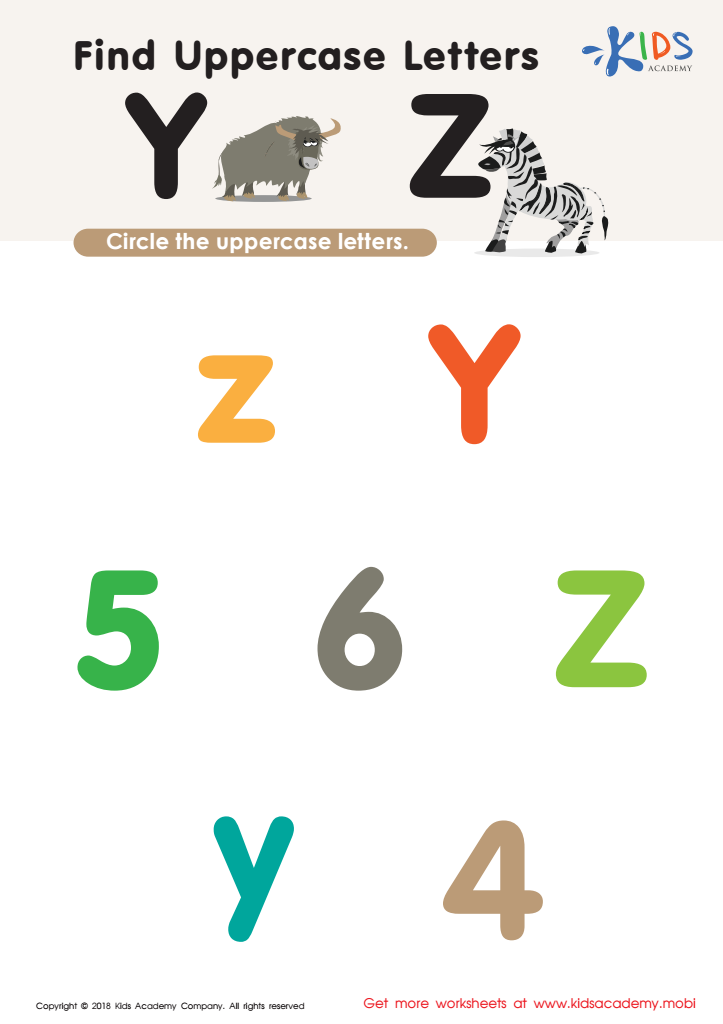
Find Uppercase Letters Y Z Worksheet
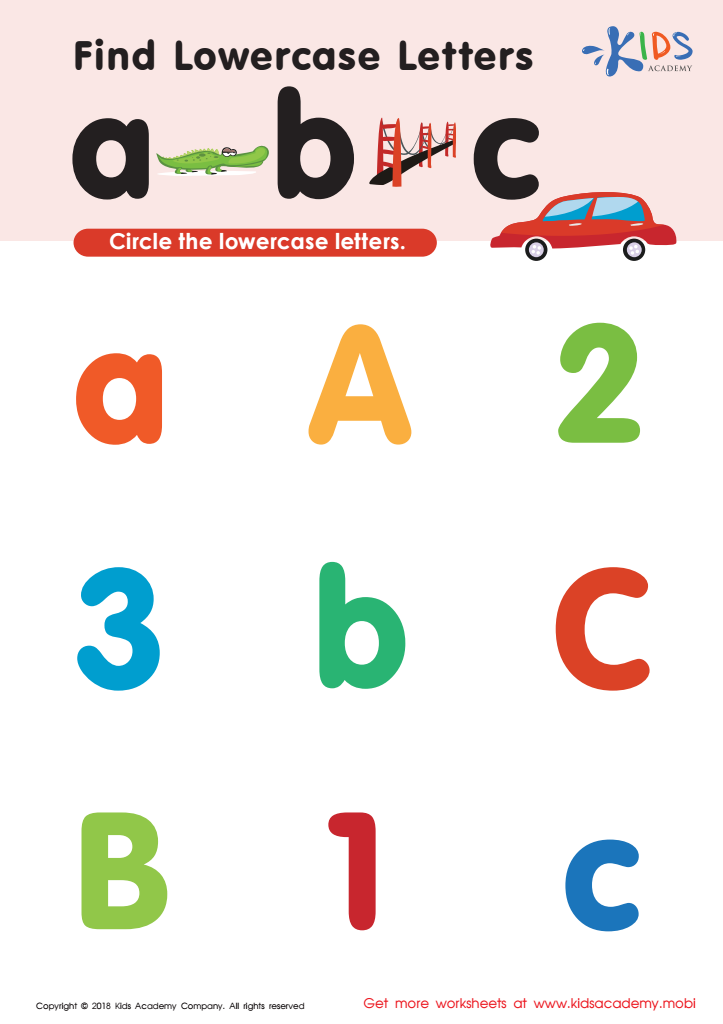
Find lowercase letters a b c Worksheet






Understanding both uppercase and lowercase letters is crucial for children in the 6-9 age range as it forms the foundation of literacy, which is essential for their academic success and overall communication skills. Mastering alphabet recognition aids in the development of reading and writing fluency. When children can easily distinguish between uppercase and lowercase letters, they can better recognize words and understand sentences, enhancing their reading comprehension.
This skill also helps children follow standard writing conventions. Knowing when to use uppercase letters—such as at the beginning of sentences or for proper nouns—contributes to clearer and more accurate writing, which in turn makes their written communication more effective.
Furthermore, differentiating between different letter cases supports language development. It introduces children to the nuances of written language, aiding in vocabulary expansion and proper grammar usage. This understanding is especially important as they advance in school, where they are required to read and write more complex texts.
Without this foundational knowledge, children may struggle with reading fluency, experience frustration, and develop negative attitudes toward learning. Therefore, parents and teachers play a pivotal role in supporting alphabet knowledge through engaging, age-appropriate activities, setting the stage for confident and competent readers and writers.







