Basic Arithmetic Normal Addition and Subtraction Word Problems Worksheets for Ages 6-9
4 filtered results
-
From - To
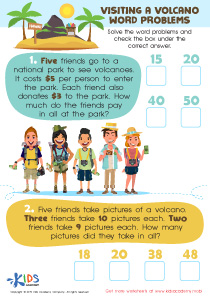
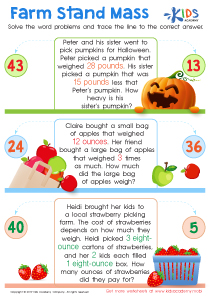
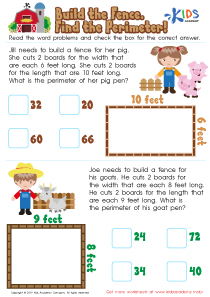
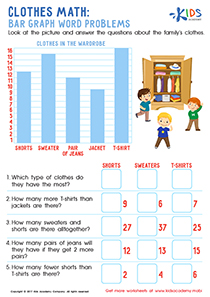
Enhance your child’s math skills with our "Basic Arithmetic Normal Addition and Subtraction Word Problems Worksheets for Ages 6-9". These engaging worksheets are designed to make learning fun and interactive, helping young learners grasp basic addition and subtraction through relatable word problems. Perfect for children aged 6 to 9, each worksheet includes a variety of exercises that boost problem-solving abilities and build a strong arithmetic foundation. Tailored to align with early education standards, these activities support classroom learning and provide effective practice at home. Give your child the tools they need to excel in math with our expertly crafted worksheets.
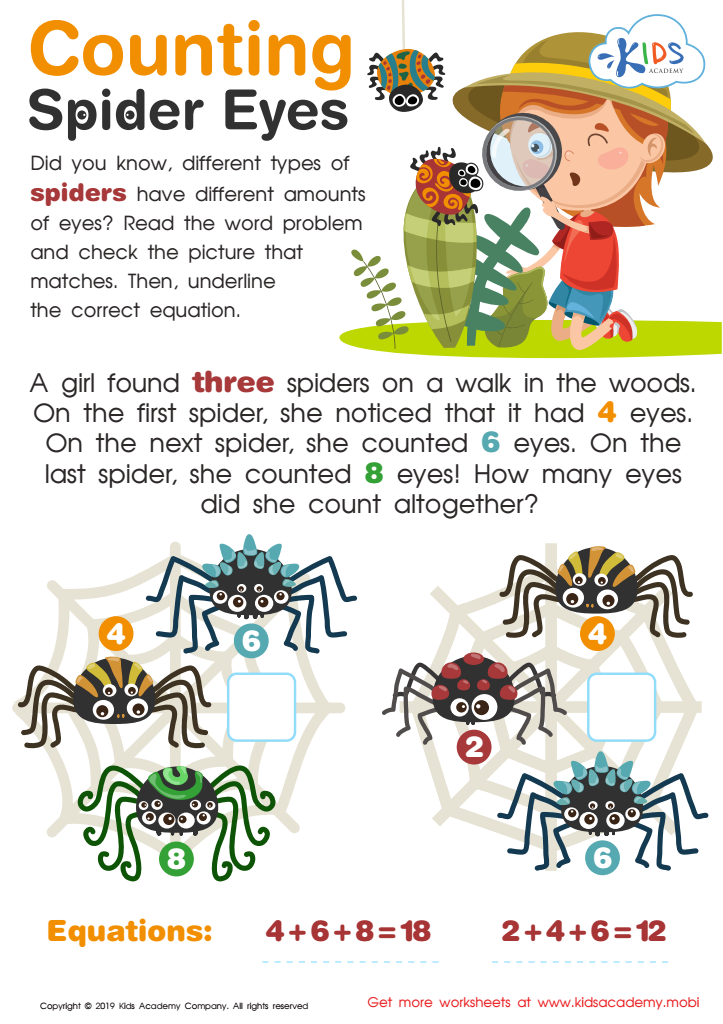
Counting Spider Eyes Worksheet
 Assign to My Students
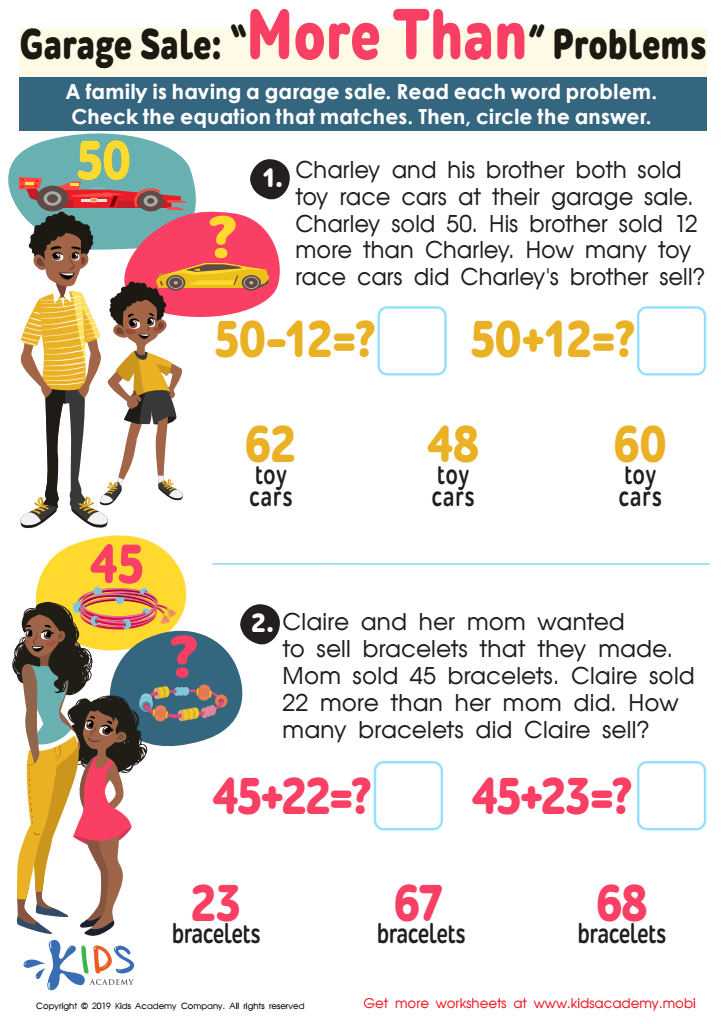
Garage Sale - More yhan Worksheet
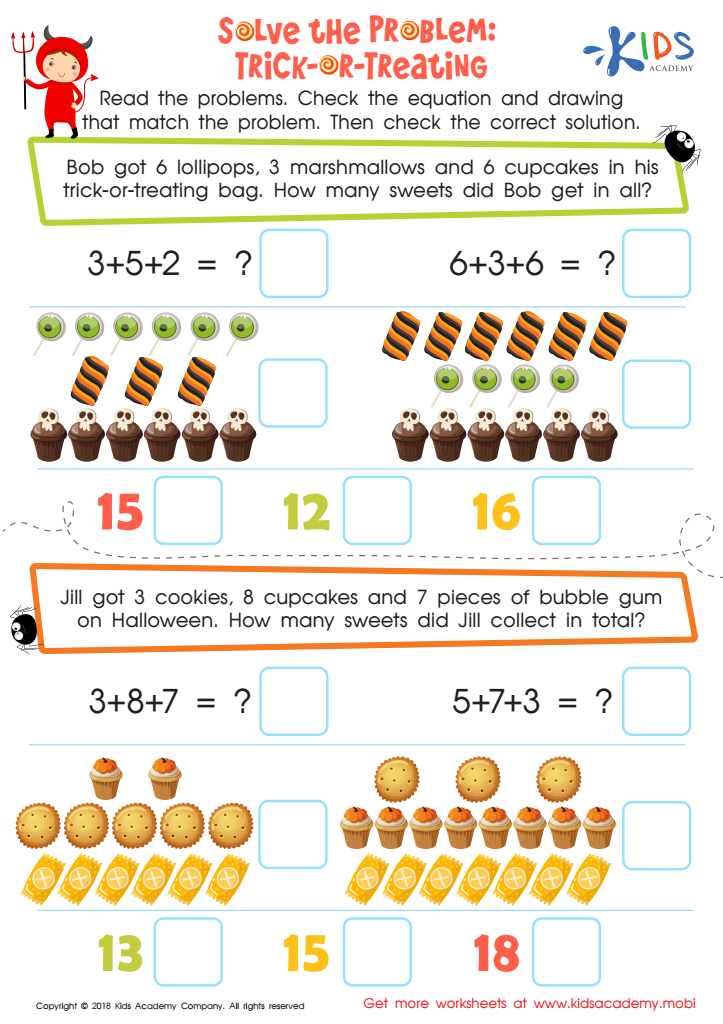
Solve the Problem: Trick–or–treating Worksheet
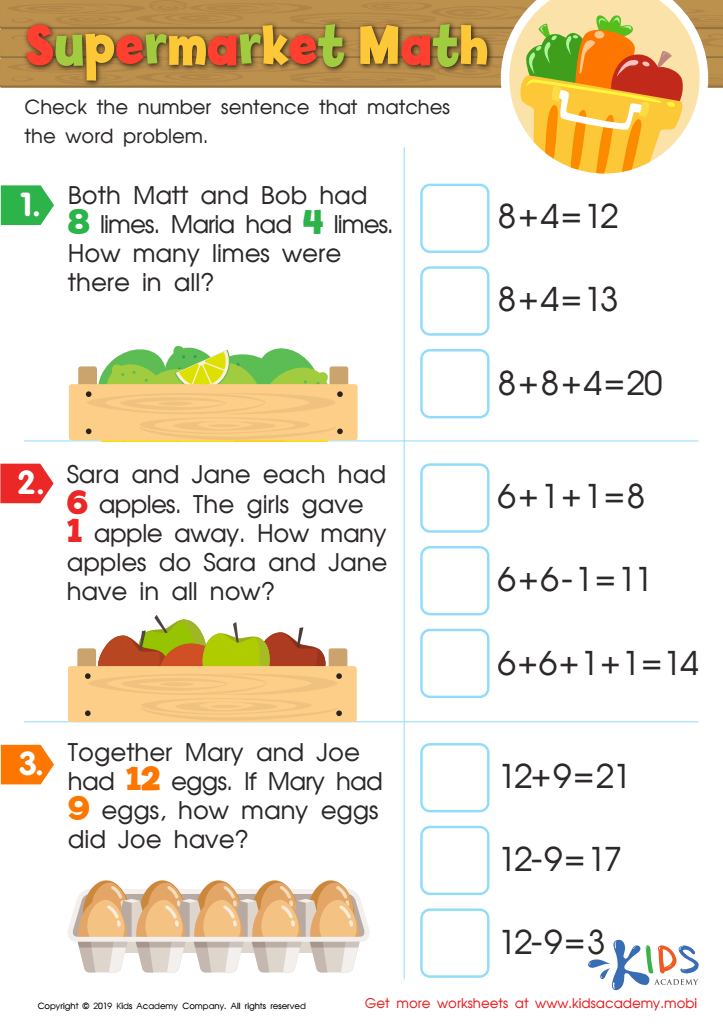
Supermarket Math Worksheet








Basic arithmetic, including normal addition and subtraction word problems, is essential for children ages 6-9 because it lays the foundation for higher-level math skills and critical thinking. At this developmental stage, children are in the concrete operational phase, where they begin to think logically about concrete events. Solving these word problems helps them understand the practical applications of numbers in daily life.
For parents, supporting basic arithmetic skills means promoting their child's overall academic success. These foundational skills are building blocks for subjects such as science, technology, finance, and others involving analytical thinking. Engaging with word problems also improves reading comprehension, as children must read the problem, understand the context, and identify relevant information to solve it.
For teachers, effectively teaching these concepts ensures that students achieve mathematical fluency, a state wherein children can solve problems quickly and accurately. Consistent practice reinforces computational skills and enhances memory-related to mathematical facts. Additionally, it aligns with educational standards and assessments that gauge student performance.
Ultimately, competency in basic arithmetic fosters confidence, reduces math anxiety, and prepares children for future challenges both inside and outside the classroom. Demonstrating a positive regard for these skills instills lifelong learning attitudes and prepares students for a wide array of academic and real-life situations.