Number Recognition Normal Building Vocabulary Worksheets for Ages 6-9
4 filtered results
-
From - To
Explore our engaging "Number Recognition Normal Building Vocabulary Worksheets" designed for children ages 6-9. These carefully crafted worksheets help young learners enhance their number recognition skills while simultaneously expanding their vocabulary. Each activity encourages children to identify numbers, understand their meanings, and utilize them in various contexts. Crafted with fun illustrations and age-appropriate challenges, these worksheets cater to diverse learning styles, making mathematics enjoyable and accessible. Perfect for home or classroom use, our resources foster a strong foundation in essential numeracy and literacy skills. Empower your child’s learning journey today with our interactive and educational worksheets!
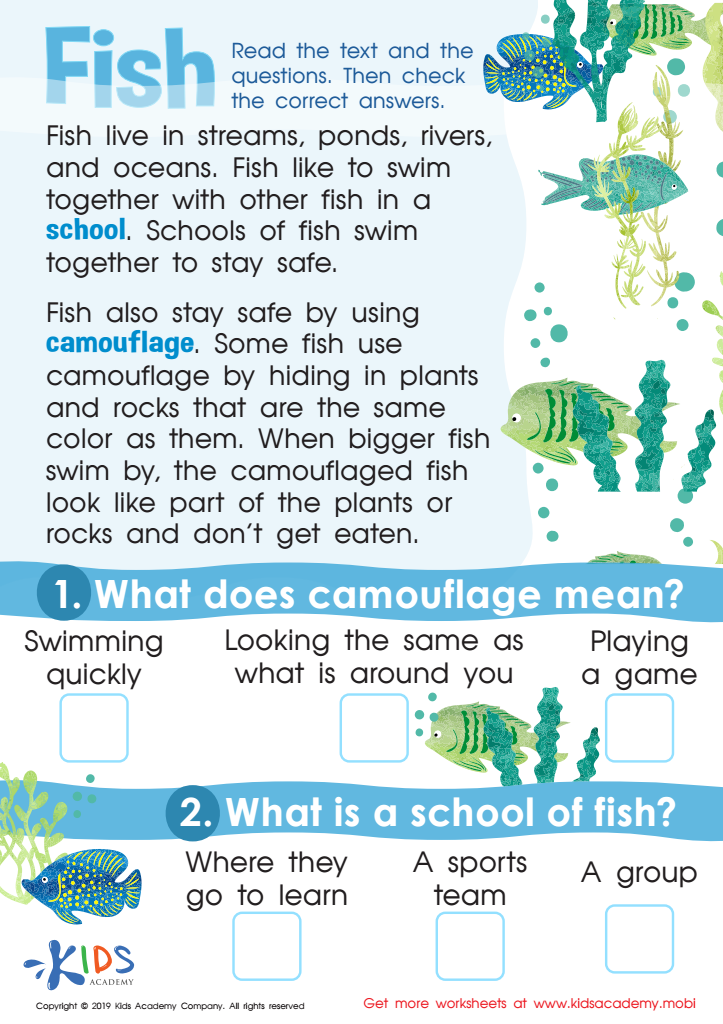
Fish Worksheet
 Assign to My Students











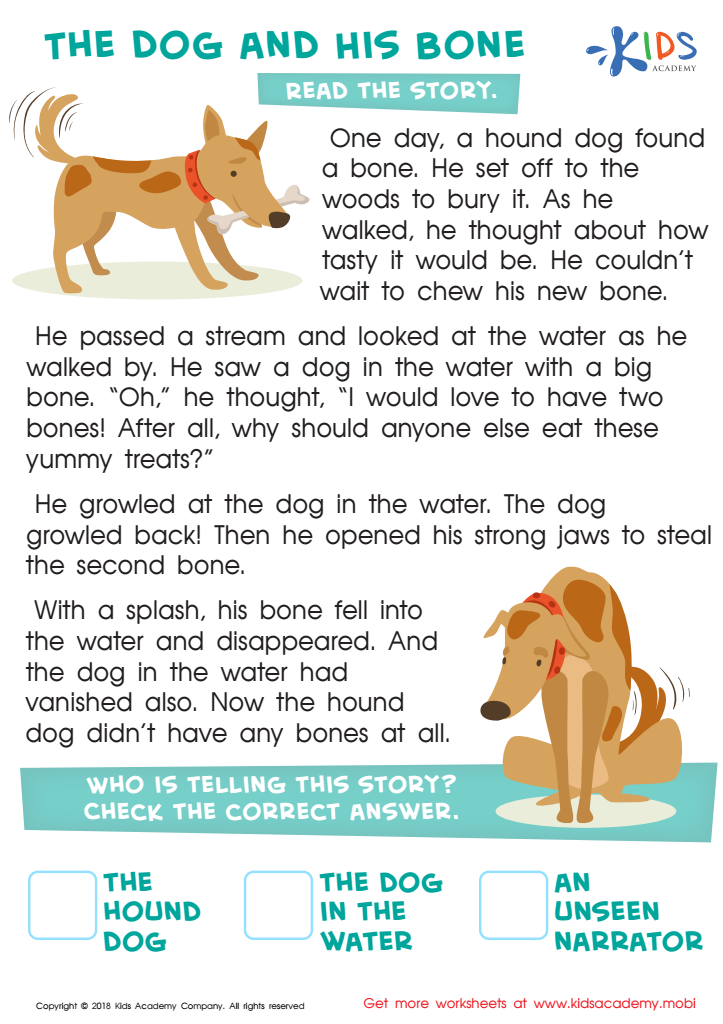
The Dog and His Bone Worksheet
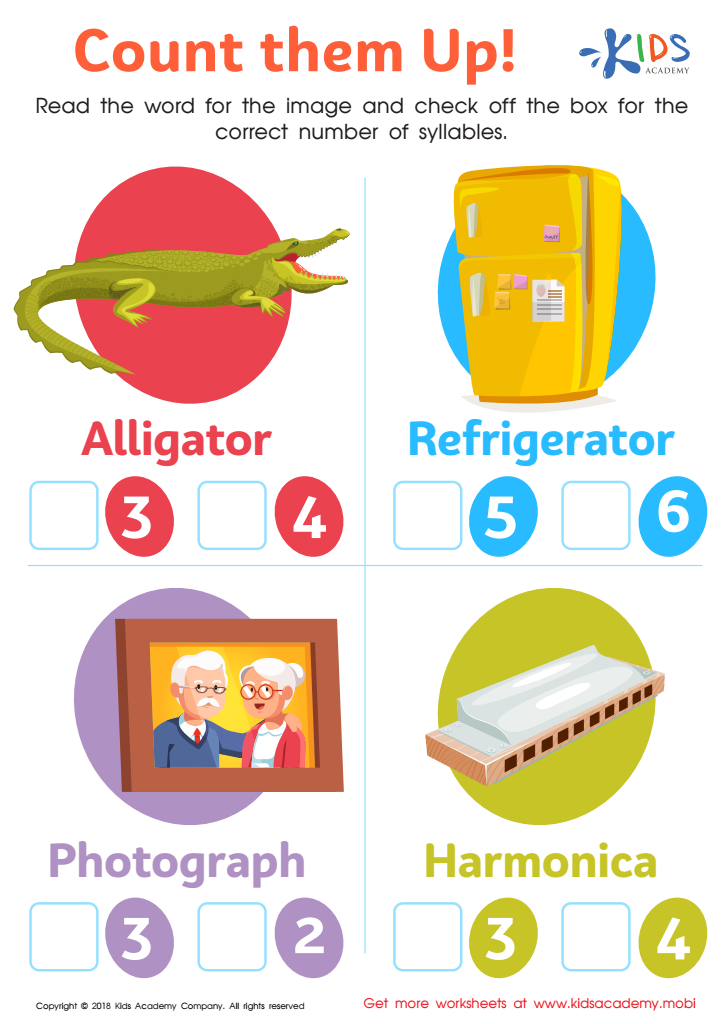
Count Them Up Worksheet
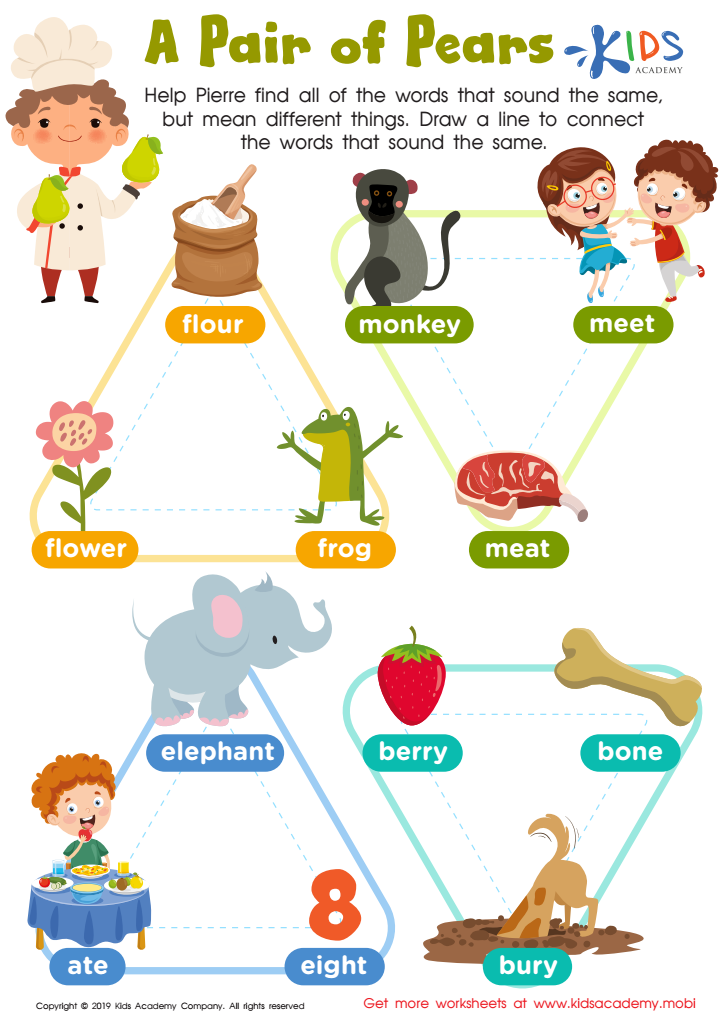
Pair Pears Worksheet







.jpg)
Number recognition and vocabulary building are essential aspects of early childhood education, particularly for children ages 6-9. At this stage, children are developing foundational math and language skills that will serve as the building blocks for their future academic success.
Parents and teachers should prioritize number recognition because it fosters critical thinking and problem-solving skills. Recognizing numbers is not just about identifying them; it aids in understanding quantity, which is essential for various everyday activities and more complex mathematical concepts as they advance in their learning.
Simultaneously, vocabulary building during this age enriches children’s language skills, enabling them to express their thoughts clearly and comprehend what they read and hear. A strong vocabulary enhances communication, empowerment, and cognitive development. Readers with robust vocabularies generally perform better academically, as they can grasp more complex texts and concepts.
By supporting both number recognition and vocabulary building, adults can provide a balanced foundation that encourages a love for learning. Engaging activities combining numbers and words, such as mathematical games and storytelling, enhance these skills in a fun and interactive manner. Ultimately, prioritizing these skills helps equip children with the tools they need for lifelong success in both mathematics and literacy.








