Reading skills development Normal Building Vocabulary Worksheets for Ages 6-9
3 filtered results
-
From - To
Enhance your child's reading skills with our engaging vocabulary-building worksheets designed for ages 6-9. These printables foster confidence and literacy by introducing new words in a fun and interactive way. Each worksheet targets essential components of vocabulary acquisition, including word recognition, context clues, and synonyms. Perfect for at-home learning or classroom use, these resources promote independent learning while supporting comprehension and language development. Help your child cultivate a love for reading and expand their vocabulary through enjoyable activities tailored to their age group. Visit our site to access this educational treasure trove and watch your child's language skills flourish!
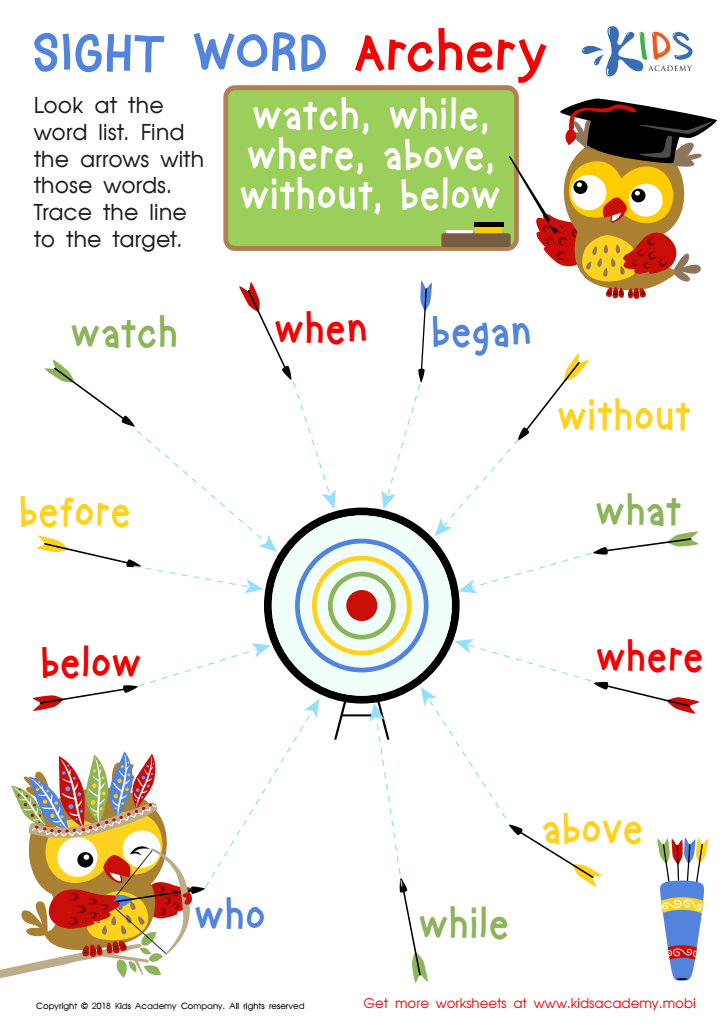
Sight Word Archery Worksheet
 Assign to My Students











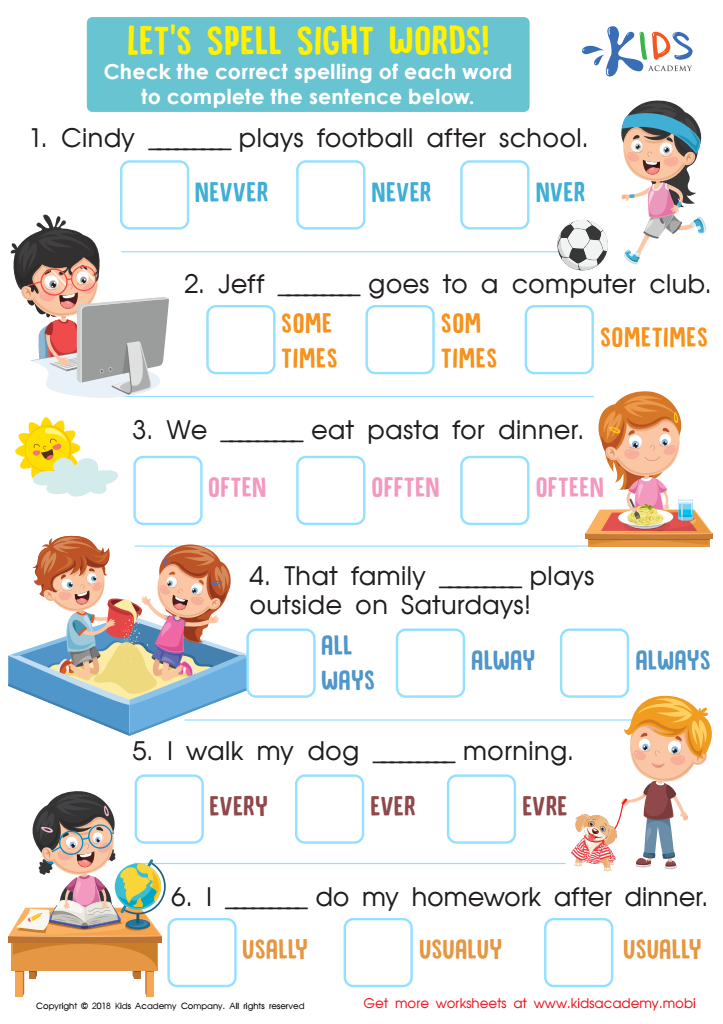
Let's Spell Sight Words Worksheet
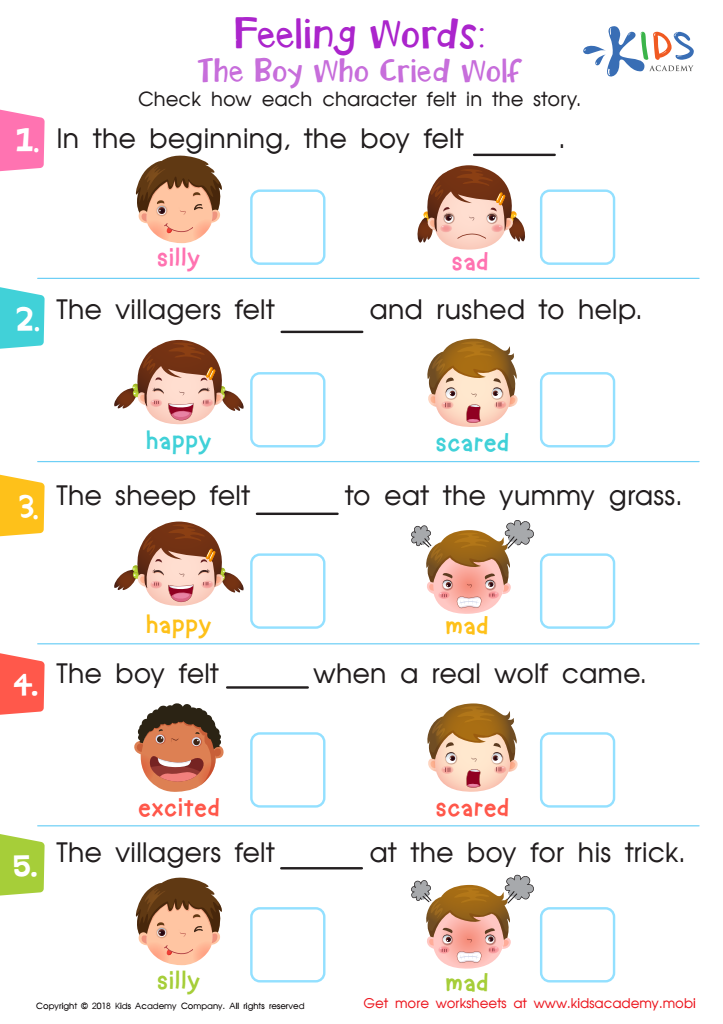
Feeling Words: The Boy Who Cried Wolf Worksheet








Parents and teachers should prioritize reading skills development and vocabulary building for children aged 6-9 because these foundational skills are pivotal for academic success and lifelong learning. At this stage, children are transitioning from learning to read to reading to learn, making strong reading skills essential for grasping future concepts across subjects. A rich vocabulary is closely tied to reading comprehension; without it, children may struggle to understand texts, which can hinder their academic growth.
Moreover, building a robust vocabulary enhances critical thinking and communication abilities, enabling children to express themselves effectively. It also fosters a love for reading, as children who understand more words tend to enjoy books and stories more, encouraging them to explore diverse genres and topics.
Early reading and vocabulary development can also bridge gaps in social interactions, as children use language to connect with peers and adults, fostering better relationships. Lastly, investing in these skills early lays a solid foundation for future learning, making it easier for children to tackle more complex language skills in later grades. Therefore, both parents and educators play a crucial role in nurturing reading and vocabulary development during these formative years, setting children up for success in school and beyond.








