
Number Recognition Normal Reading Worksheets for Ages 6-9
4 filtered results
Difficulty Level
Grade
Age
-
From - To
Subject
Activity
Standards
Welcome to our Number Recognition Normal Reading Worksheets designed for children aged 6-9! These engaging worksheets help young learners develop essential number recognition skills through fun activities and exercises. Perfect for classroom use or at-home practice, our resources promote numerical literacy while reinforcing early reading abilities. Each worksheet is thoughtfully crafted to foster comprehension and reinforce concepts in a playful manner. With a variety of colorful designs and interactive content, children will enjoy learning numbers and enhancing their cognitive skills. Explore our collection today and support your child’s educational journey with delightful learning experiences tailored to their age!
Favorites
With answer key
Interactive
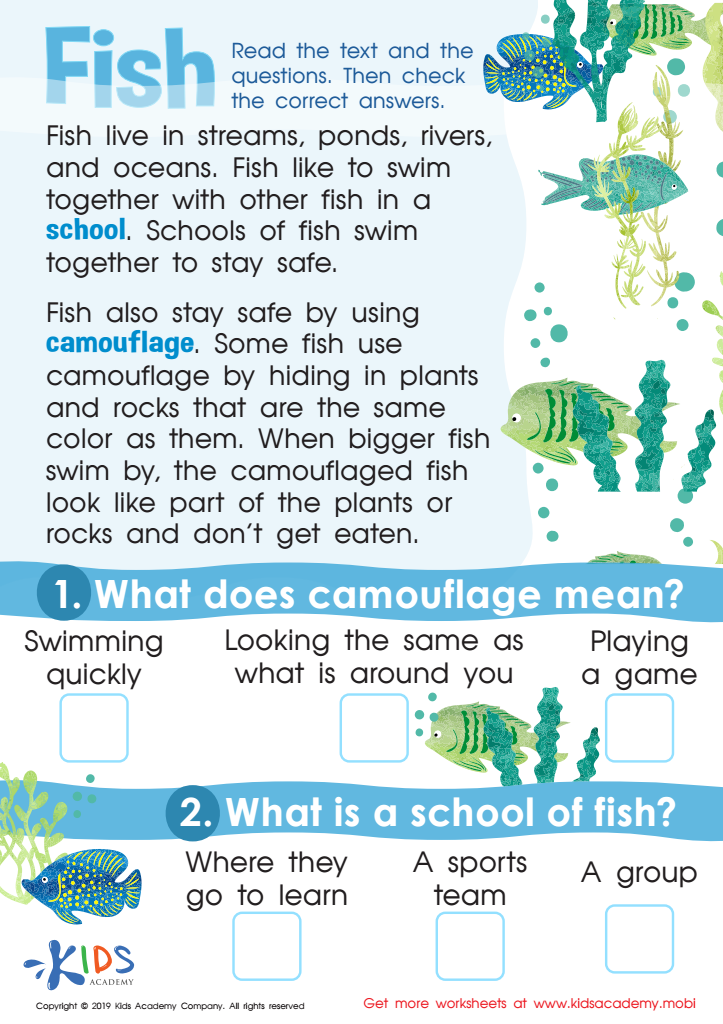
Fish Worksheet
Kids love learning about the creatures that live in water! This free PDF worksheet covers fish, teaching kids larger vocabulary and contextual reading comprehension. Questions prompt them to choose the right answer from multiple choices, just like in a classroom. It's a fun way to boost their reading skills and comprehension without them even realizing it!
 Assign to My Students
Fish Worksheet
Worksheet
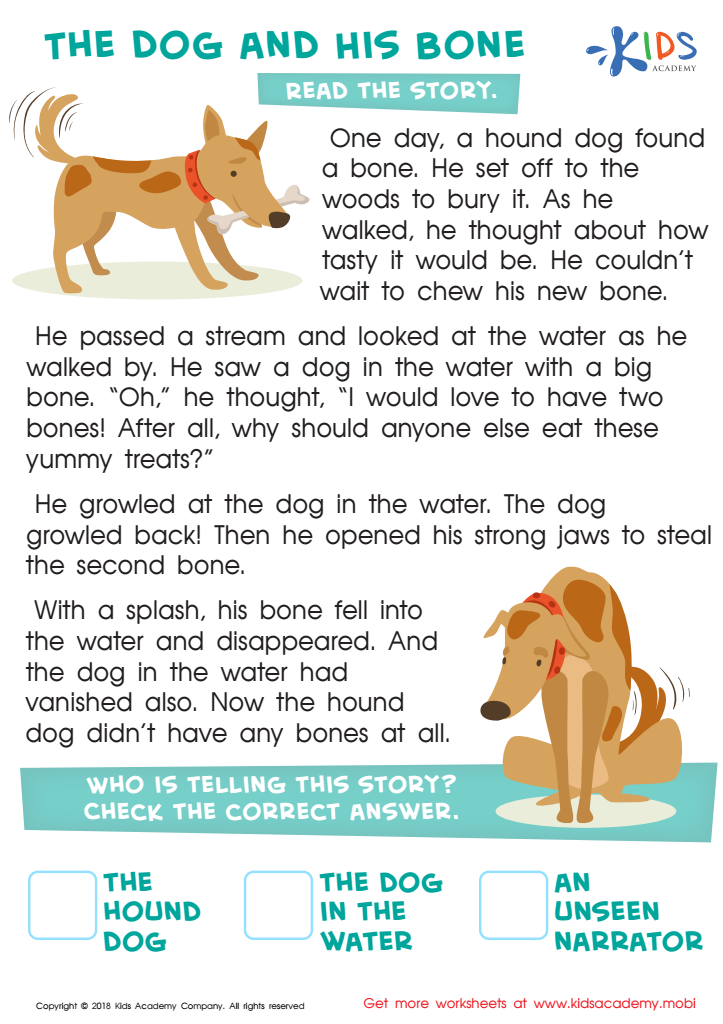
The Dog and His Bone Worksheet
Read the story of The Dog and His Bone to your kids, making sure they take in the details. Ask them the questions in this worksheet and help them check the answers. Encourage them to think carefully.
The Dog and His Bone Worksheet
Worksheet
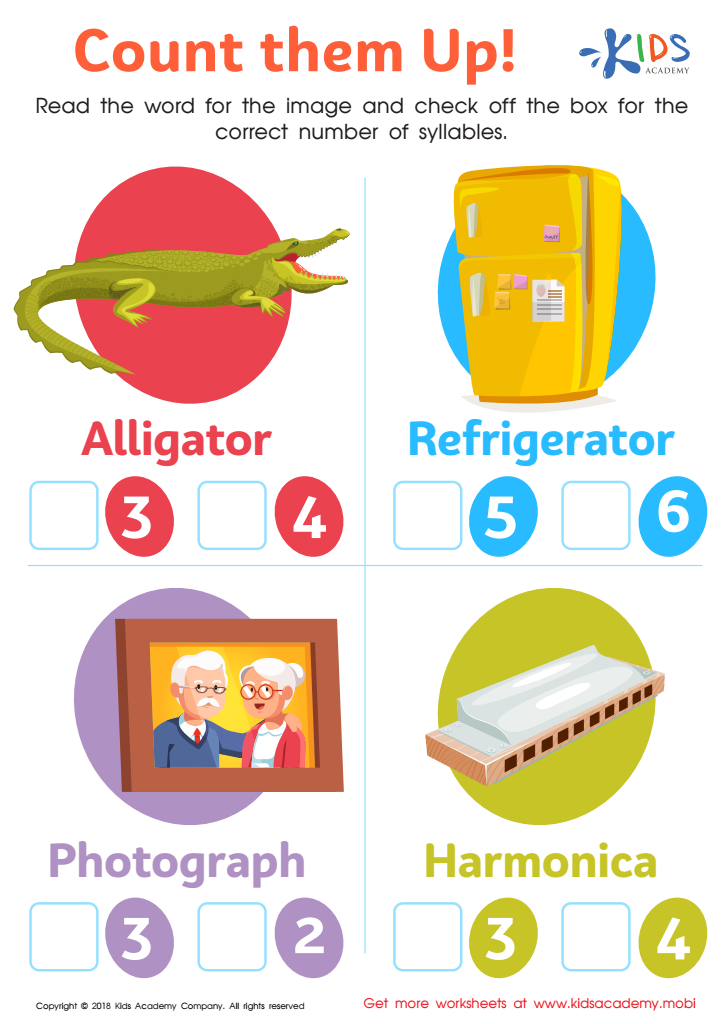
Count Them Up Worksheet
This worksheet has four colorful pictures. Ask your students to identify and name each image, then count the syllables in the word. Make them repeat the word after you, and check off the box with the correct number of syllables. Mastering the art of counting goes beyond numbers. Get your students counting syllables with this activity!
Count Them Up Worksheet
Worksheet
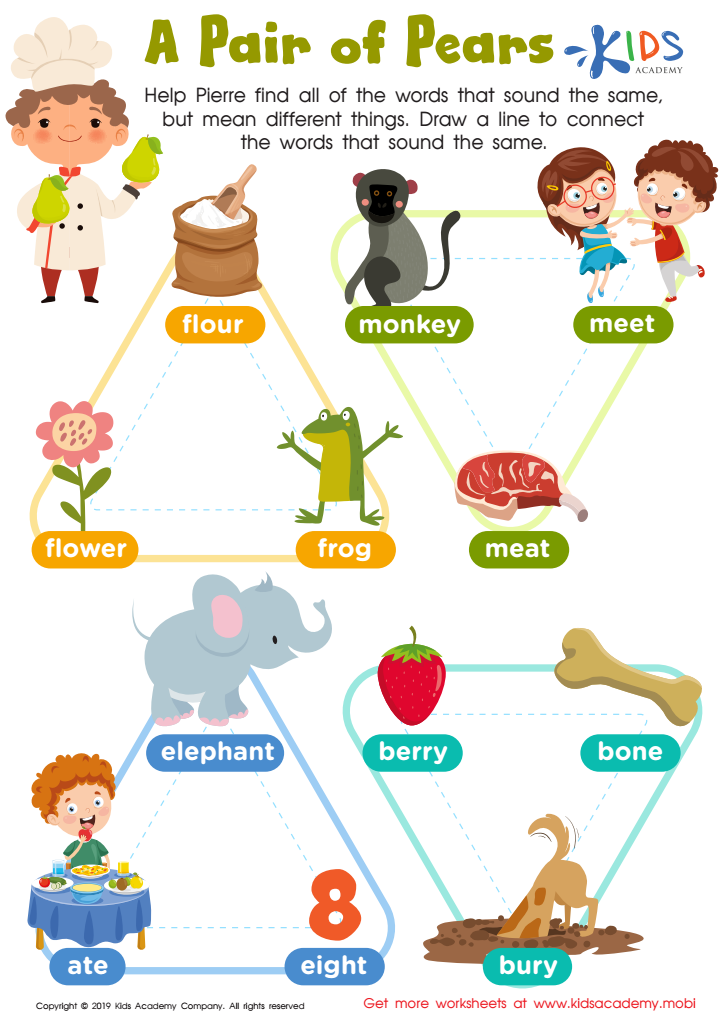
Pair Pears Worksheet
Young readers can have difficulty knowing when to use the right homophone. This free worksheet helps them use familiar imagery to understand better by connecting words that sound similar but are spelled and mean different things. Students will trace the lines to form a picture and have a reference image to differentiate between the different homophones.
Pair Pears Worksheet
Worksheet
Join Kids Academy for Free
Who is primarily going to use this learning content?








Number recognition is a fundamental skill that lays the groundwork for mathematical understanding, making it crucial for children ages 6 to 9. This stage of development often marks the transition from learning basic numerals to deeper mathematical concepts, such as addition, subtraction, and even early multiplication. When children can recognize numbers quickly and accurately, it bolsters their confidence and encourages a positive attitude toward math, which is vital for their overall academic success.
Moreover, number recognition fosters critical thinking and problem-solving skills. It allows children to make connections between numbers and their practical applications in everyday life, such as handling money, telling time, or understanding measurements. This competency is crucial as it feeds into broader cognitive development, enhancing their ability to engage with more complex mathematical concepts later on.
Parents and teachers should prioritize number recognition not just for its immediate educational value, but also for its long-term benefits. By providing engaging activities and consistent reinforcement, they can help children build a strong numeral foundation. This will not only support their academic achievements but also promote lifelong skills in numeracy, essential in our increasingly data-driven world. Investing in early number recognition ultimately prepares children for future success in varied disciplines, laying the groundwork for a well-rounded education.








