Basic astronomy knowledge Normal Science Worksheets for Ages 6-9
3 filtered results
-
From - To
Introduce your young explorers to the wonders of the universe with our "Basic Astronomy Knowledge" science worksheets for ages 6-9. Designed by education experts, these engaging activities cover fundamental topics such as the solar system, moon phases, constellations, and more. Children will develop critical thinking and observational skills while having fun with colorful, easy-to-follow worksheets. Perfect for both classroom and homeschooling, our printable resources ensure that young learners gain a solid foundation in astronomy, sparking their curiosity and love for science. Ignite a passion for the stars with Kids Academy's thoughtfully crafted materials!
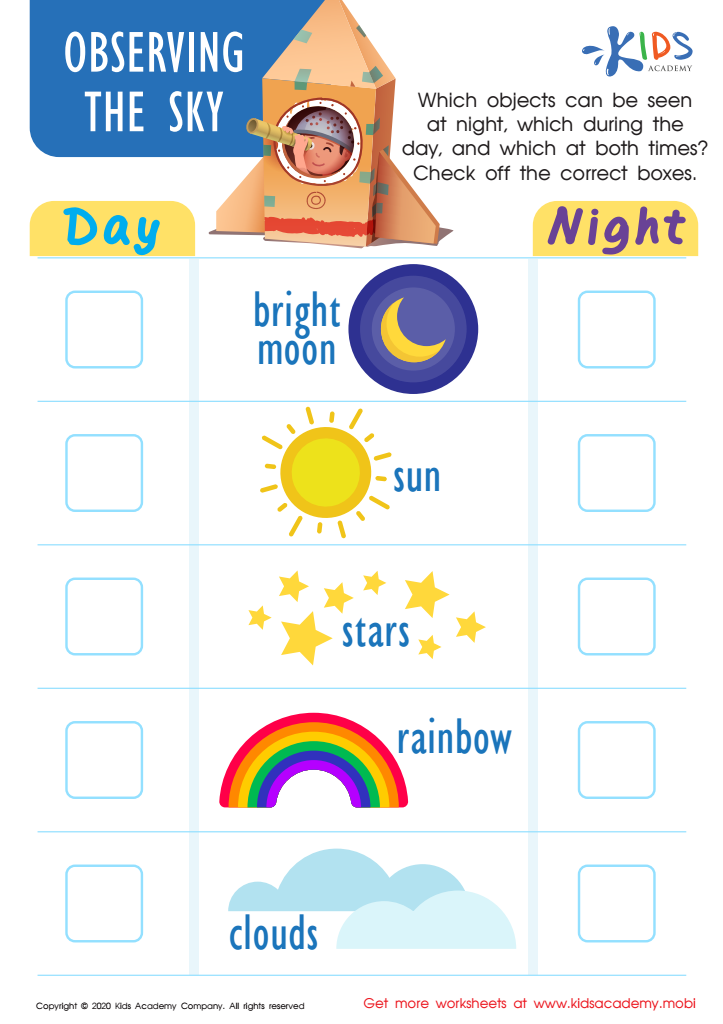
Observing the Sky Worksheet
 Assign to My Students
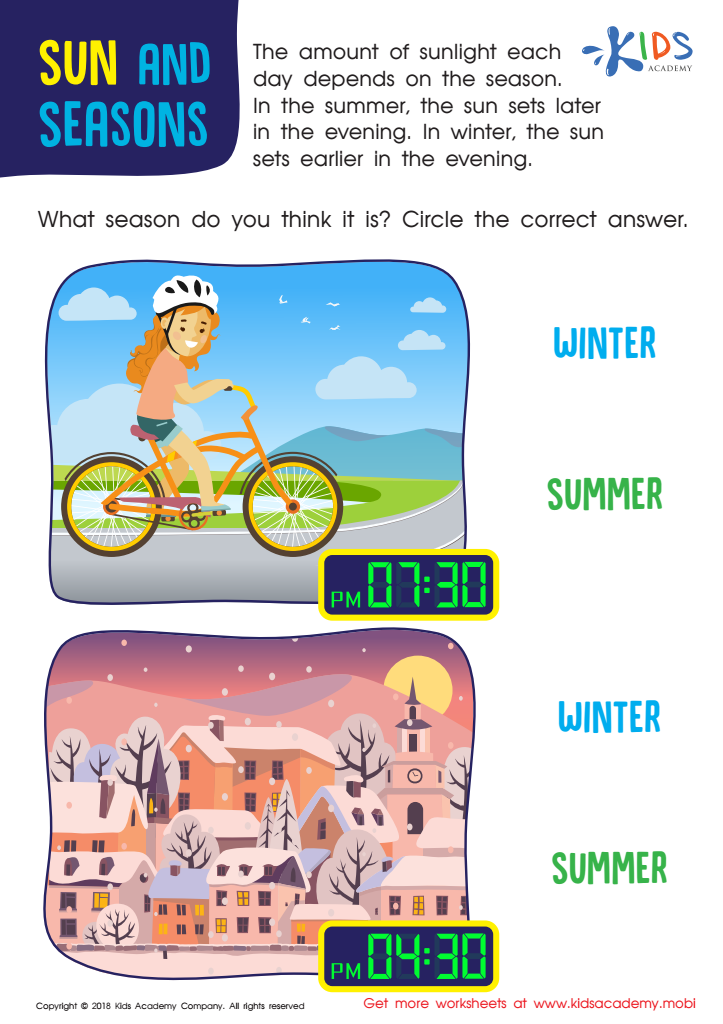
Sun and Seasons Worksheet
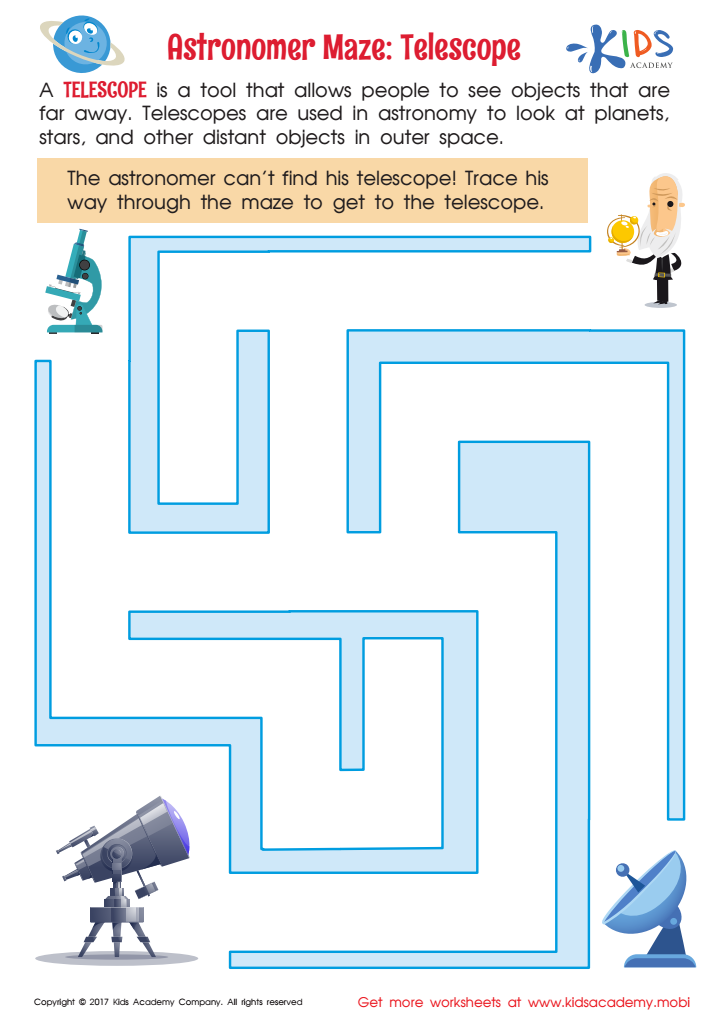
Astronomer Maze: Telescope Worksheet


.jpg)


.jpg)

Introducing basic astronomy to children ages 6-9 is crucial for their development. At this young age, children's minds are exceptionally curious and adaptable, making it an ideal time to spark an interest in science. Basic astronomy opens a gateway to a broader understanding of the world and the universe, fostering a sense of wonder and inquisitiveness.
Understanding the sun, moon, stars, and planets helps children grasp fundamental scientific concepts. For instance, observing phases of the moon or the changing seasons can teach cause and effect, one of the core principles of scientific reasoning. Additionally, learning about gravity through simple concepts like why things fall to the ground or why the Earth orbits the Sun can lay the foundation for more advanced physics later on.
Astronomy also helps improve mathematical skills. Counting stars, measuring distances between celestial objects, and recognizing shapes and patterns in constellations enhance early numeracy and spatial reasoning.
Providing children with basic astronomical knowledge fosters a broader awareness of the natural world, enhancing their respect for Earth and its place in the universe. This early exposure can cultivate lifelong curiosity and critical thinking. It lays the groundwork for future learning, instills a sense of perspective, and promotes both intellectual growth and a lasting appreciation for science.







