Understanding directions Normal Science Worksheets for Ages 6-9
4 filtered results
-
From - To
Discover the joy of learning with "Understanding Directions" Normal Science Worksheets, specially designed for children ages 6-9. At Kids Academy, we provide engaging, age-appropriate worksheets that foster essential learning skills. Our science activities help children grasp directional concepts and spatial awareness, blending play with education seamlessly. Whether at home or in the classroom, these printables encourage curiosity and critical thinking through interactive exercises. Transform everyday learning into an adventure, guiding young minds on the path to scientific exploration. Browse our selection today and watch your child confidently navigate their understanding of the world around them!
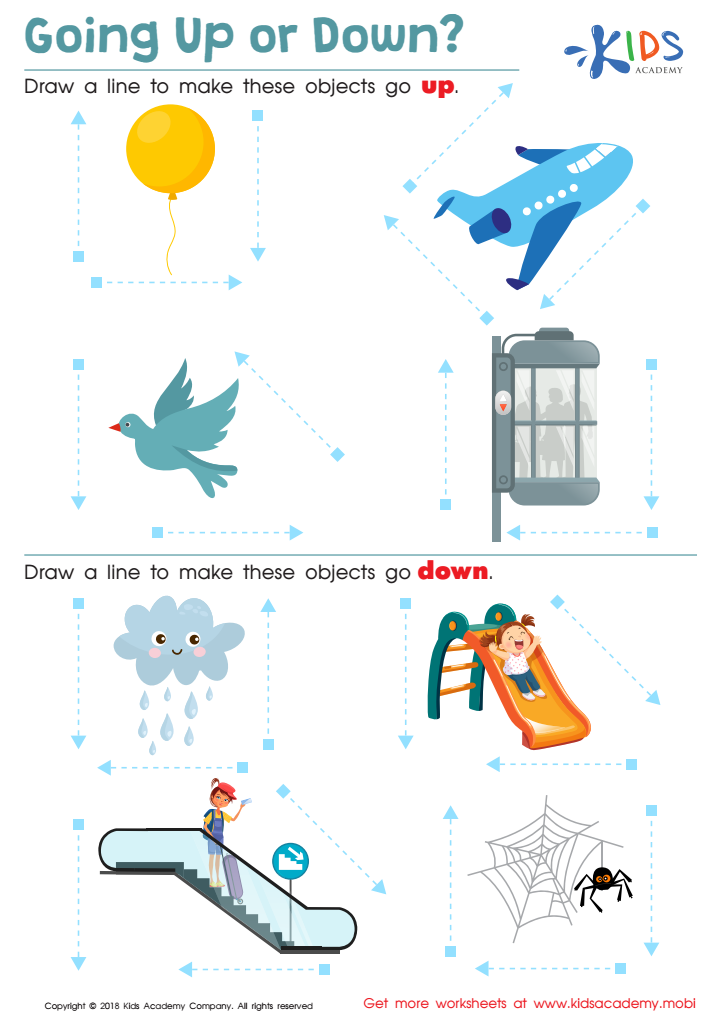
Going up or Down? Worksheet
 Assign to My Students
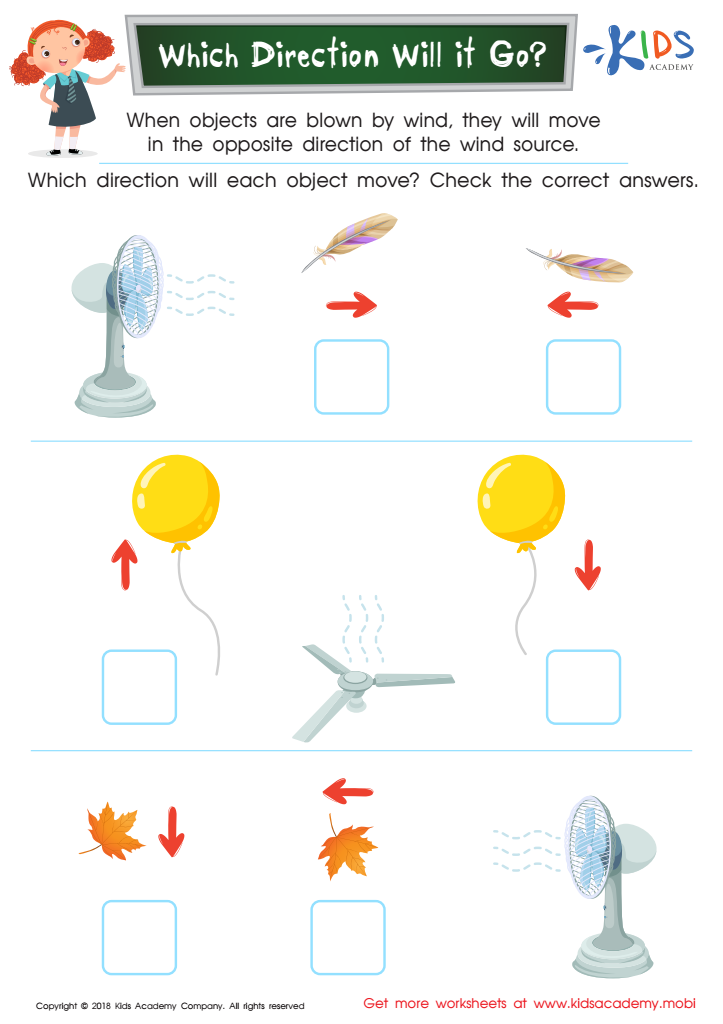
Which Direction Will it Go? Worksheet
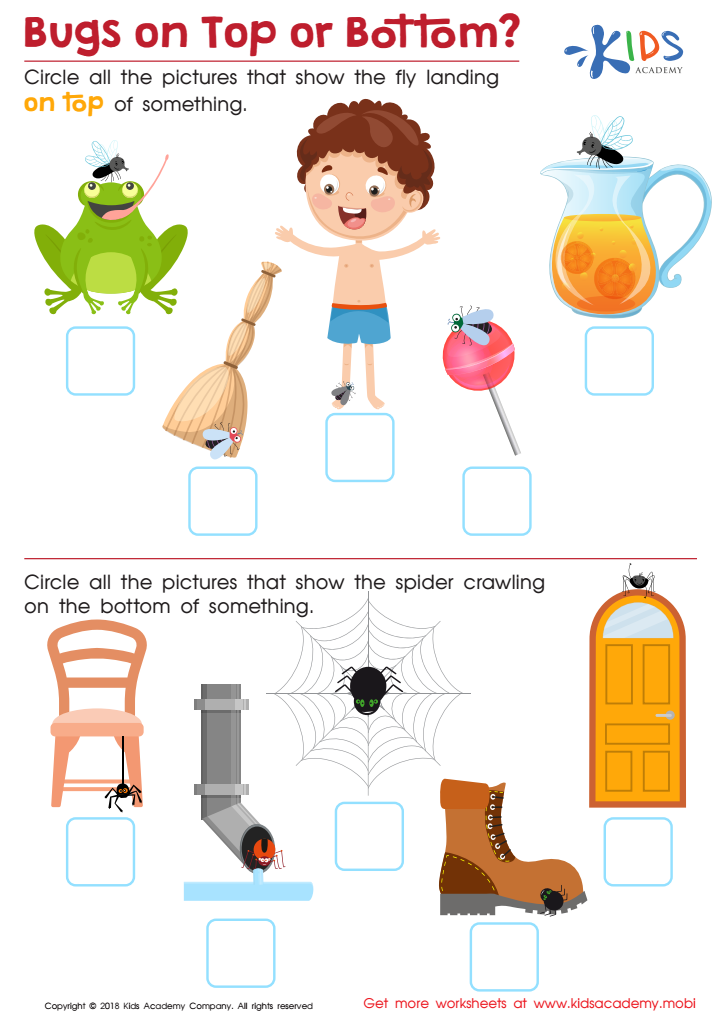
Bugs on Top or Bottom? Worksheet
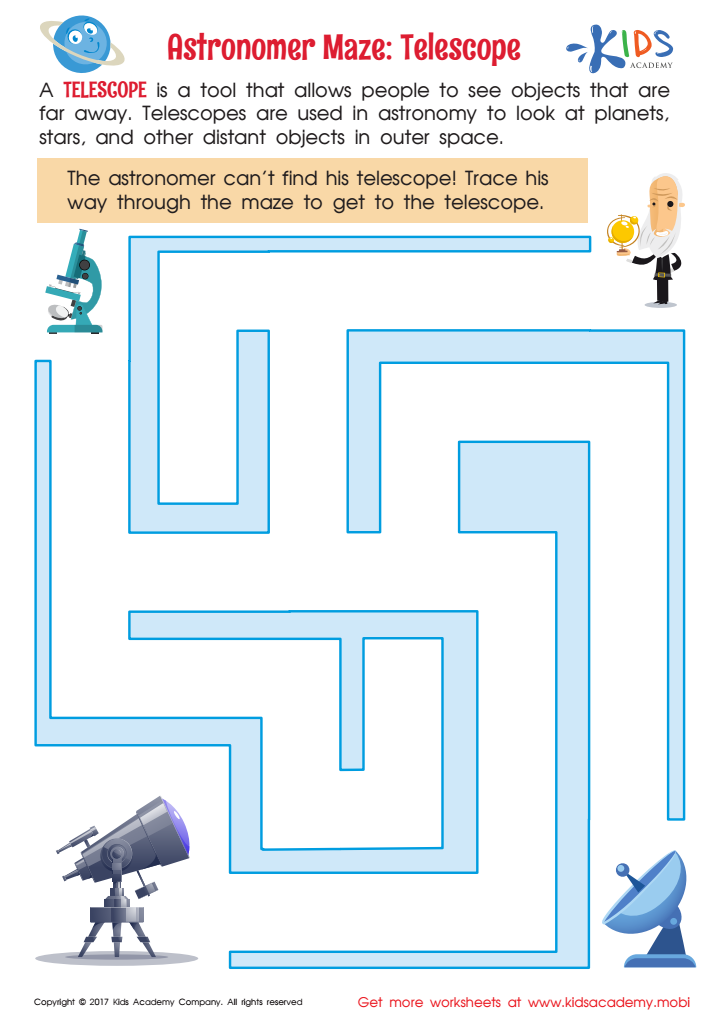
Astronomer Maze: Telescope Worksheet







Understanding directions and normal science for children aged 6-9 is crucial as it lays the foundation for cognitive development and lifelong learning. At this formative stage, kids are developing their ability to follow instructions, make observations, and comprehend basic concepts such as cause and effect. Grasping directions enables them to perform tasks accurately, which fosters independence and boosts self-confidence.
From a scientific perspective, engaging with basic scientific principles nurtures curiosity and critical thinking. Simple experiments and observations help children understand the world around them, sparking wonder and excitement. Science also enhances problem-solving skills as children make predictions, test ideas, and learn from results. This hands-on approach to learning promotes creativity and resilience when faced with challenges.
Understanding science at an early age encourages children to ask questions and seek answers, key components of lifelong learning. Exposure to foundational scientific concepts prepares them for future, more complex learning, making education a progressive and enjoyable journey.
Moreover, when parents and teachers prioritize these learning areas, they create an environment where curiosity and learning are valued. This supportive atmosphere not only aids academic success but also cultivates a love for exploring and understanding the world, skills that extend far beyond the classroom. Ultimately, this attentive approach helps shape well-rounded, capable, and inquisitive young adults.







