Understanding light sources Normal Physical Science Worksheets for Ages 6-9
4 filtered results
-
From - To
Explore the fascinating world of light sources with our "Understanding Light Sources" worksheets, designed specifically for ages 6-9. These engaging and educational resources help young learners discover the different types of light sources, including natural and artificial variations. Through interactive activities and hands-on exercises, students will develop essential skills while fostering their curiosity about how light affects our environment. Our worksheets align with early science curricula, making them a perfect addition to any classroom or home learning environment. Enhance your child's understanding of physical science and inspire a love for learning with these fun and informative worksheets!
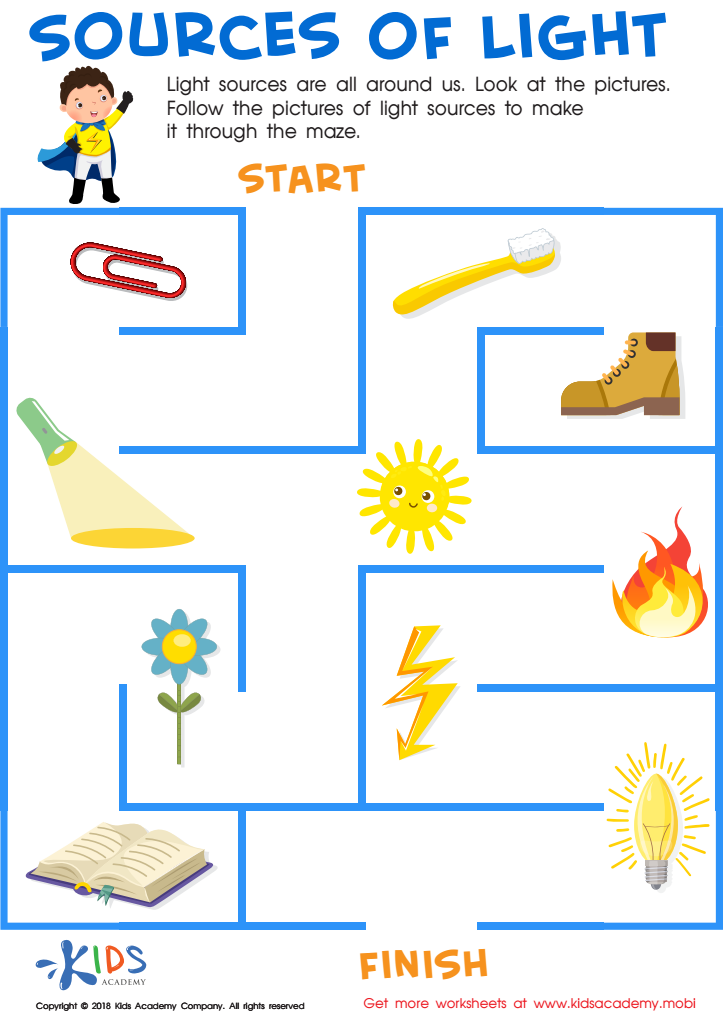
Sources of Light Worksheet
 Assign to My Students
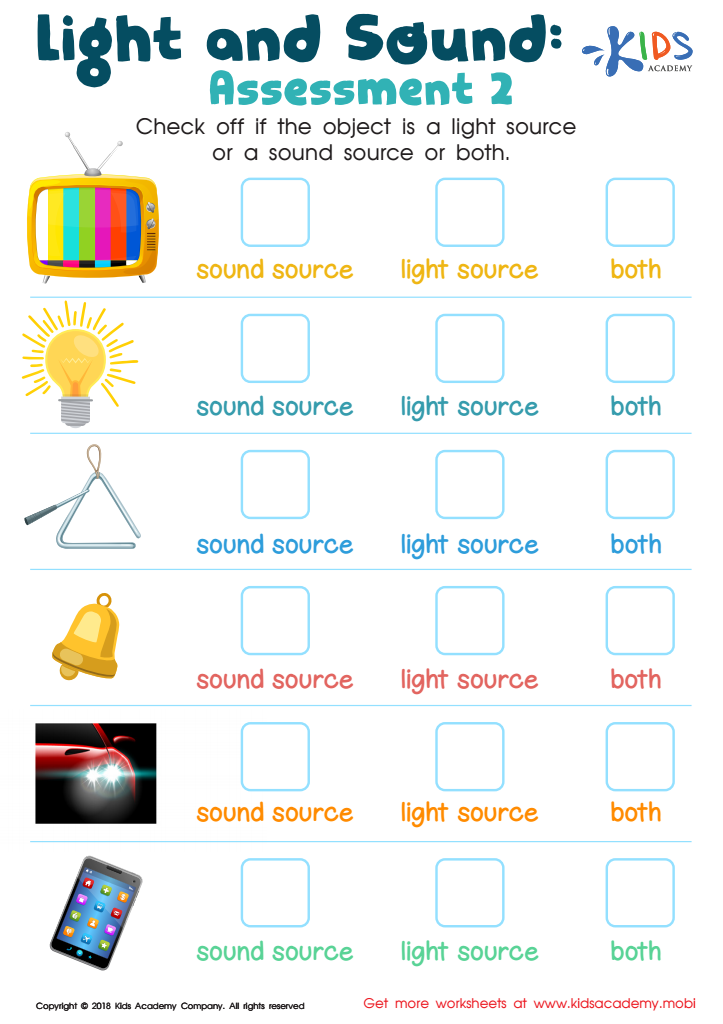
Light and Sound: Assessment 2 Worksheet
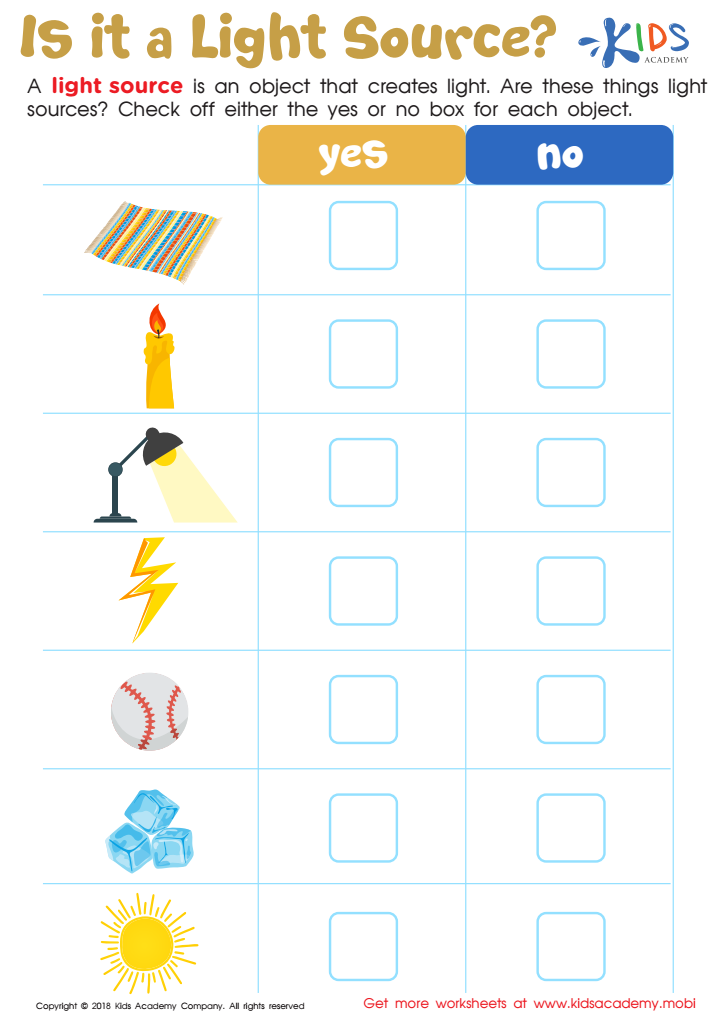
Is It a Light Source? Worksheet
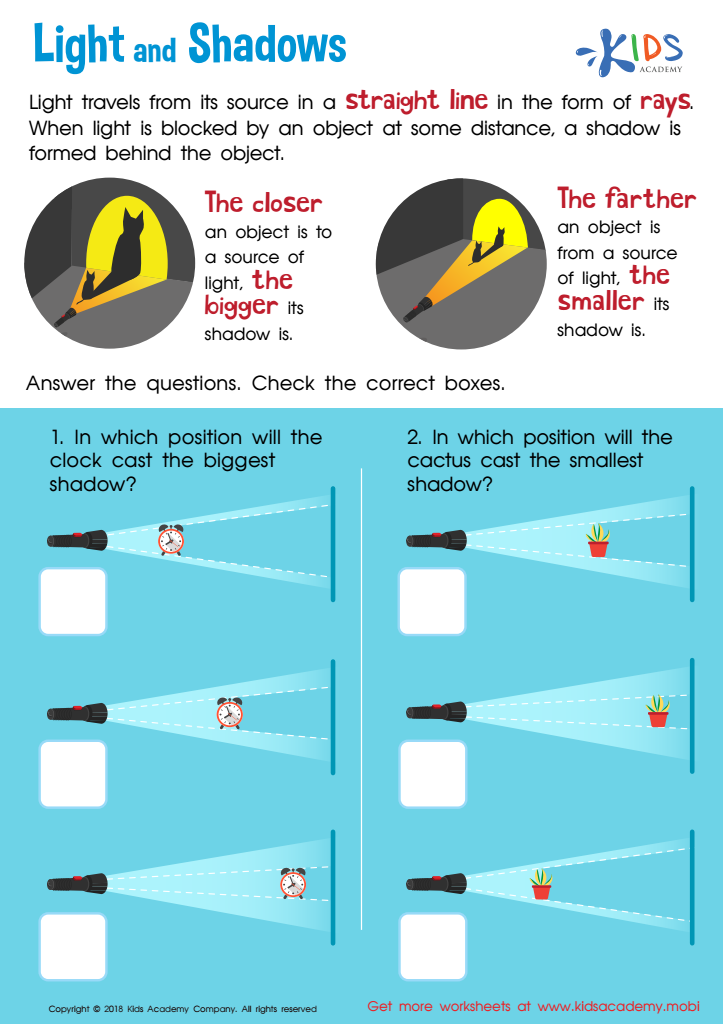
Light and Shadow Worksheet for Grade 3






Understanding light sources is crucial for children aged 6-9 as it forms a foundational concept in their scientific education. At this age, children are naturally curious about their surroundings, and introducing them to the principles of light aids in developing critical thinking and observation skills. Teachers and parents play a pivotal role in nurturing this curiosity.
By exploring how light sources work—such as the sun, lamps, and fire—children learn about the characteristics of light, including brightness, color, and shadow. This exploration fosters analytical thinking as they begin to ask questions about what they observe. Furthermore, understanding light sources enhances their comprehension of everyday phenomena, deepening their connection to the world. For instance, distinguishing between natural and artificial light helps them gain insight into environmental science and energy conservation.
Additionally, engaging with light sources can stimulate creativity through art and design projects, as children experiment with ways light interacts with different materials. This engagement not only solidifies scientific understanding but also promotes teamwork and social skills during collaborative learning activities. Ultimately, grasping the concept of light sources influences overall cognitive development and lays the groundwork for future topics in physical science, making it essential for educators and parents to prioritize.







