Critical thinking development Normal Plants and Animals Worksheets for Ages 6-9
3 filtered results
-
From - To
Enhance your child's critical thinking skills with our engaging Plants and Animals worksheets, specially designed for ages 6-9. These interactive activities encourage exploration and understanding of the natural world, fostering curiosity and analytical abilities. With a variety of fun exercises, children can identify plant and animal characteristics, classify species, and solve intriguing puzzles. Our worksheets aim to nurture a love for science while promoting problem-solving skills essential for academic success. Perfect for home or classroom use, these resources provide an enjoyable way for kids to connect with nature and enhance their critical thinking in a meaningful way. Start the adventure today!
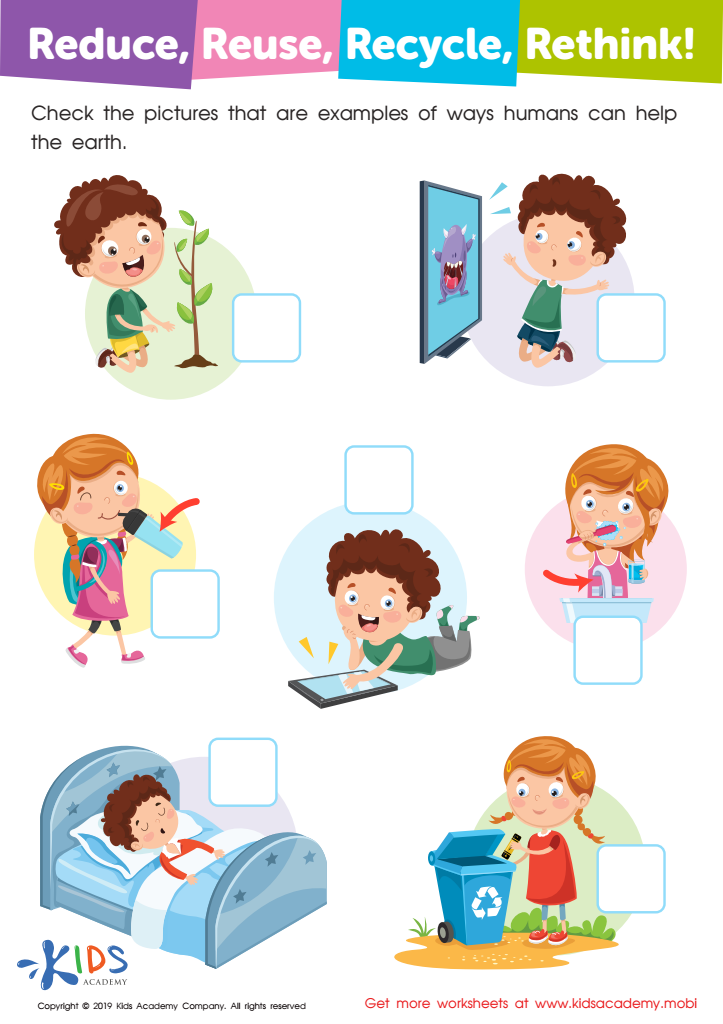
Reduce, Reuse, Recycle, Rethink Worksheet
 Assign to My Students











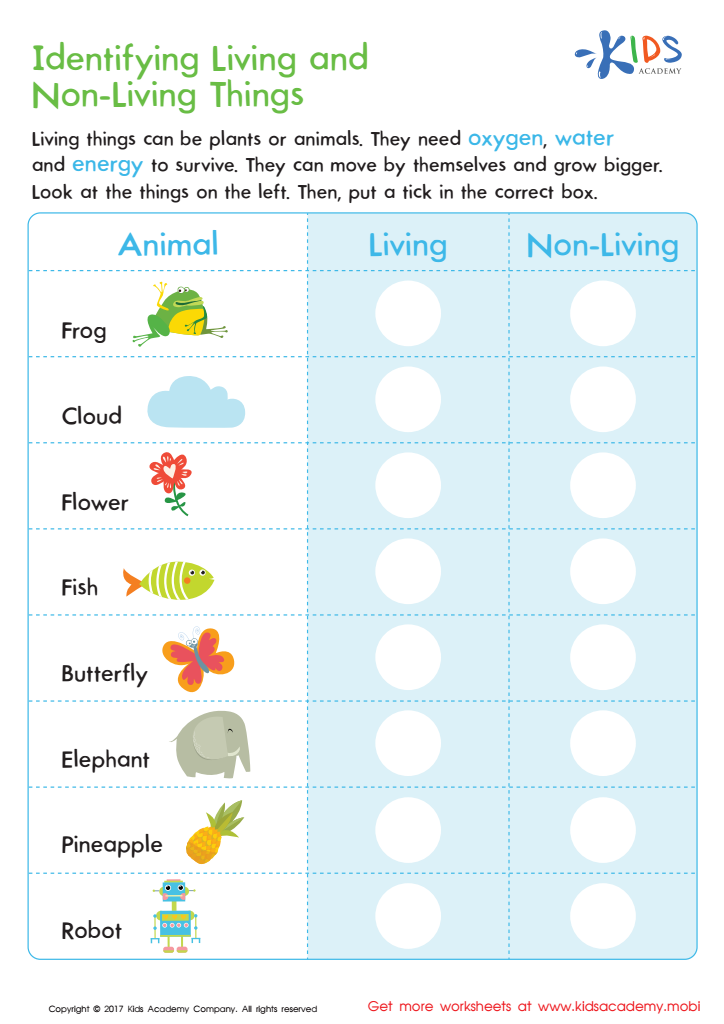
Identifying Living or Non–living Worksheet
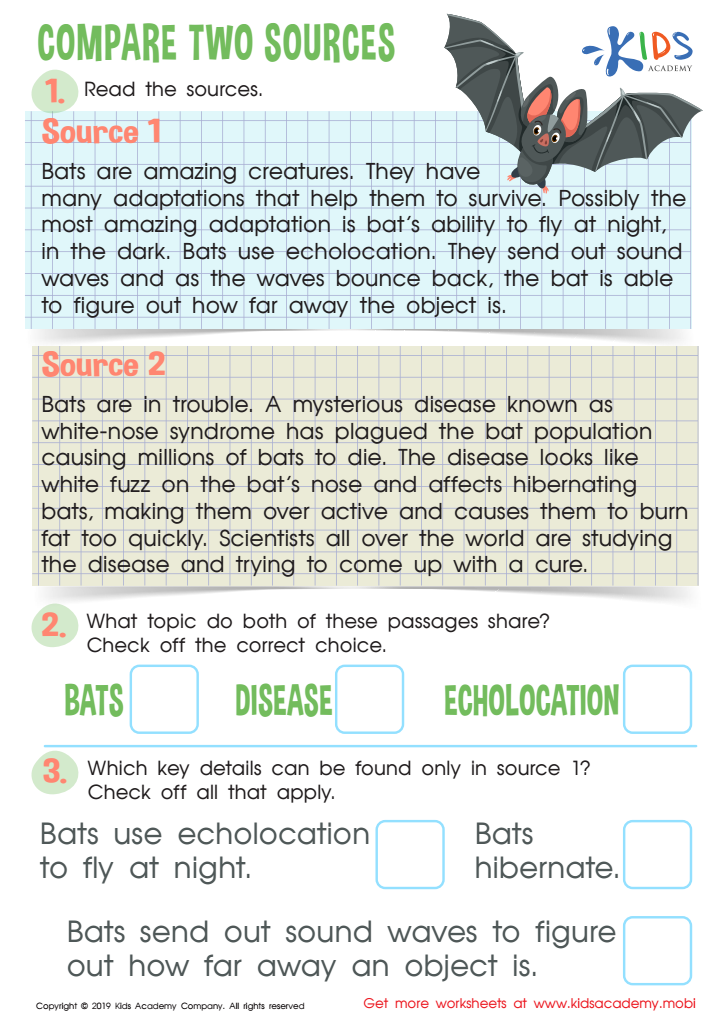
Compare Two Sources Worksheet








Critical thinking development in children aged 6-9 is essential for nurturing their understanding of the natural world, specifically regarding plants and animals. Parents and teachers should care about this because it lays the groundwork for deeper scientific reasoning and exploration. At this age, children are naturally curious, and fostering their critical thinking skills empowers them to ask questions, make observations, and seek explanations about the environment around them.
By engaging with plants and animals, children can learn to differentiate living things, understand ecosystems, and appreciate biodiversity. This knowledge helps them in forming a connection with nature, encouraging responsibility and stewardship from an early age. Critical thinking encourages students to hypothesize about life cycles, the roles of various species, and the interdependence within ecosystems, allowing them to develop analytical skills that go beyond memorization.
Moreover, critical thinking promotes problem-solving abilities, which are crucial for academic success. Engaging children in discussions about their observations or encouraging them to conduct simple experiments can foster creativity and innovation. In an increasingly complex world, developing critical thinkers who are environmentally aware and capable of making informed decisions about nature is vital for sustainable future outcomes. Thus, prioritizing critical thinking in understanding plants and animals is crucial for holistic childhood development.







