Motor skills development Normal ABC Letters Worksheets for 6-Year-Olds
3 filtered results
-
From - To
Nurture your child's motor skills seamlessly with our specially designed ABC letters worksheets for 6-year-olds at Kids Academy. These printable activities focus on enhancing fine motor development while making learning fun. Perfect for kindergarteners, the worksheets guide children through tracing, writing, and recognizing each letter of the alphabet. By combining educational content with engaging exercises, young learners can improve hand-eye coordination, pencil grip, and fine motor precision. Visit Kids Academy to access a library of tools crafted to support your child’s growth in a fun, comprehensive way that aligns with their early learning needs.

Letter H Tracing Page

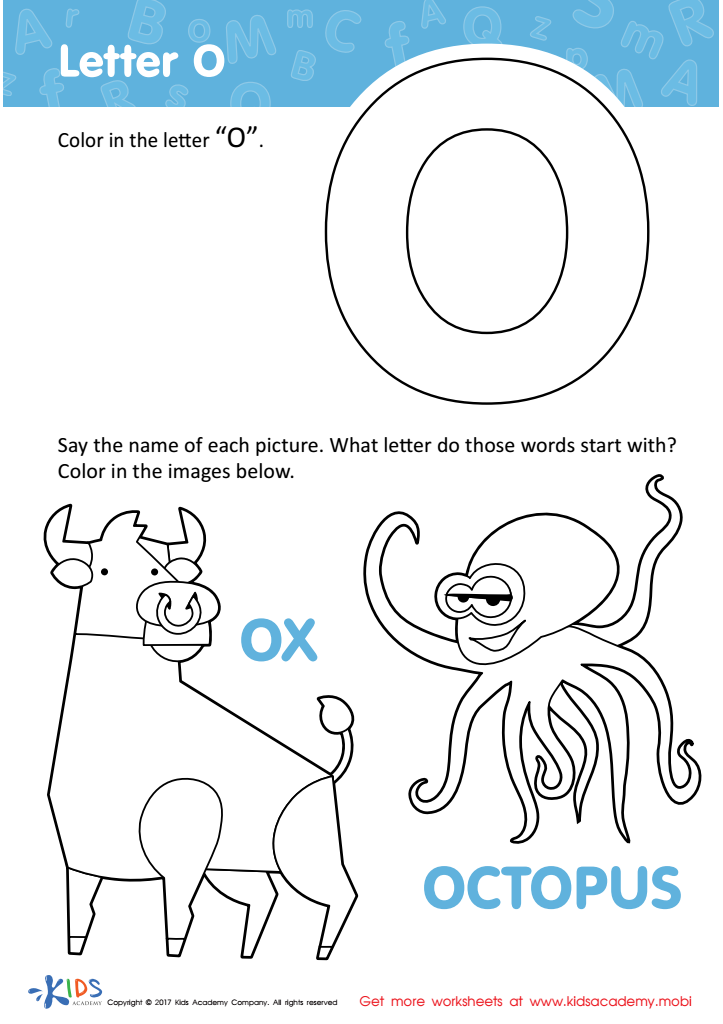
Letter O Coloring Sheet
 Assign to My Students
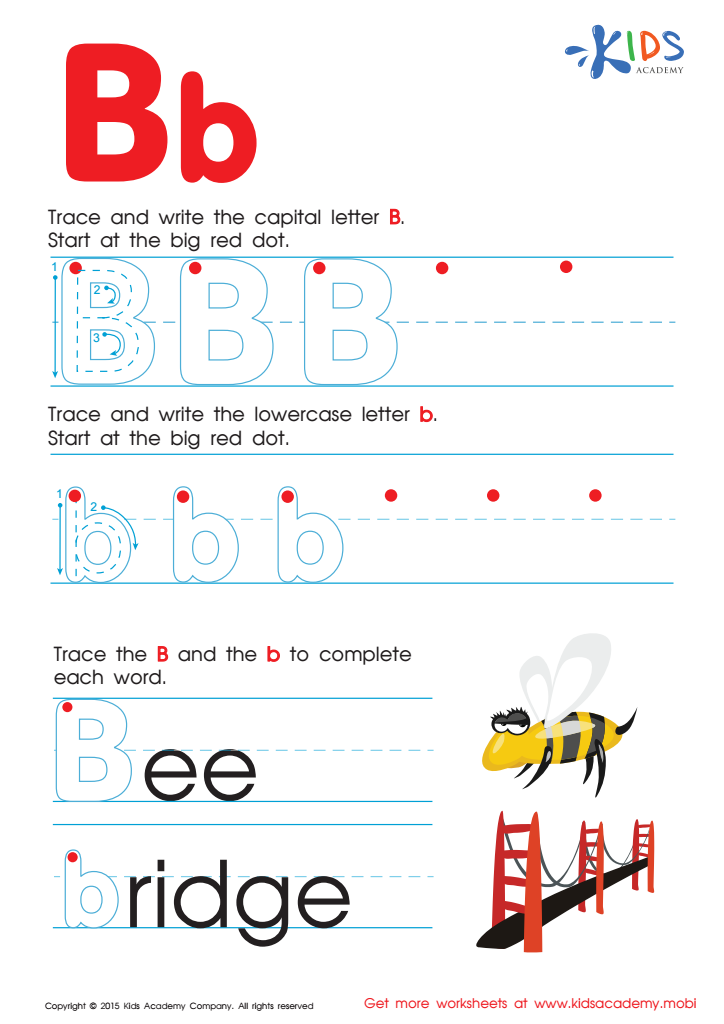
Letter B Tracing Page






Motor skills development in 6-year-olds is essential because it lays the foundation for overall physical, cognitive, and emotional growth. When children develop fine motor skills, such as correctly forming ABC letters, it not only aids in their academic progress but also fosters confidence and independence. These skills directly impact a child's ability to perform crucial everyday tasks such as writing, cutting with scissors, buttoning clothes, and tying shoelaces.
Fine motor skills are closely linked with hand-eye coordination and dexterity, which are critical for more complex tasks in the future. Proper development of these skills can enhance a child's ability to focus and also lays groundwork for later academic skills and interests, like drawing, mathematics, and science-related activities involving manual precision.
Moreover, struggling with motor skills can be quite frustrating for children, potentially impacting their self-esteem and social interactions. Regular practice and positive reinforcement from parents and teachers can mitigate these challenges, creating an enjoyable learning experience and a sense of achievement.
Ultimately, early attention to motor skills, particularly in forming letters correctly, ensures children won't face unnecessary obstacles as they progress through their educational journey. This proactive approach builds a solid foundation for lifelong learning and psychological resilience.







