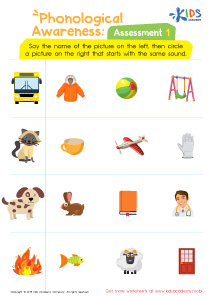
Reading Skills Normal Consonants Worksheets for 6-Year-Olds
3 filtered results
Difficulty Level
Grade
Age
-
From - To
Subject
Activity
Standards
Enhance your 6-year-old's reading skills with our engaging Normal Consonants Worksheets! Designed specifically for young learners, these worksheets focus on recognizing and mastering consonant sounds, essential for developing strong reading foundations. Activities include tracing, matching, and interactive exercises that make learning fun and effective. Our colorful and age-appropriate designs captivate young minds, while hands-on tasks reinforce phonetic understanding. Perfect for homes or classrooms, these resources help children build confidence in their reading abilities. Dive into a world of consonants with our expertly crafted worksheets, and watch your child flourish as they embark on their reading journey!
Favorites
With answer key
Interactive
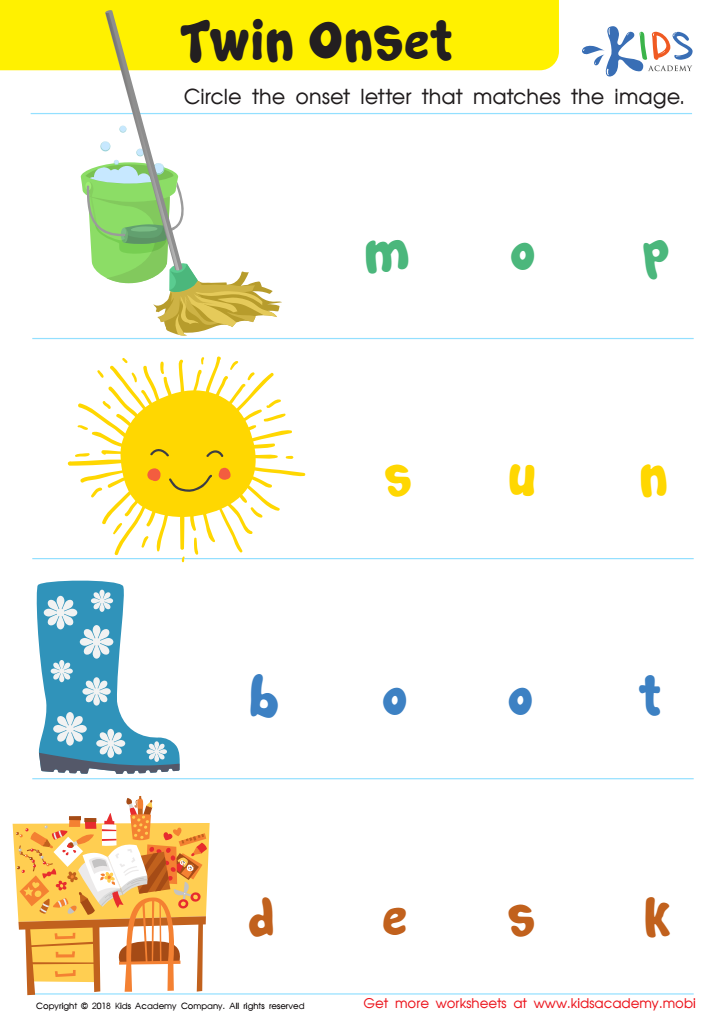
Twin Onset Worksheet
Children's phonological skills and reading/spelling strategies are strengthened by isolating initial consonants. This fun PDF worksheet encourages kids to trace the correct onset letter and hone fine motor skills. It's a great way to introduce early reading and spelling.
 Assign to My Students
Twin Onset Worksheet
Worksheet
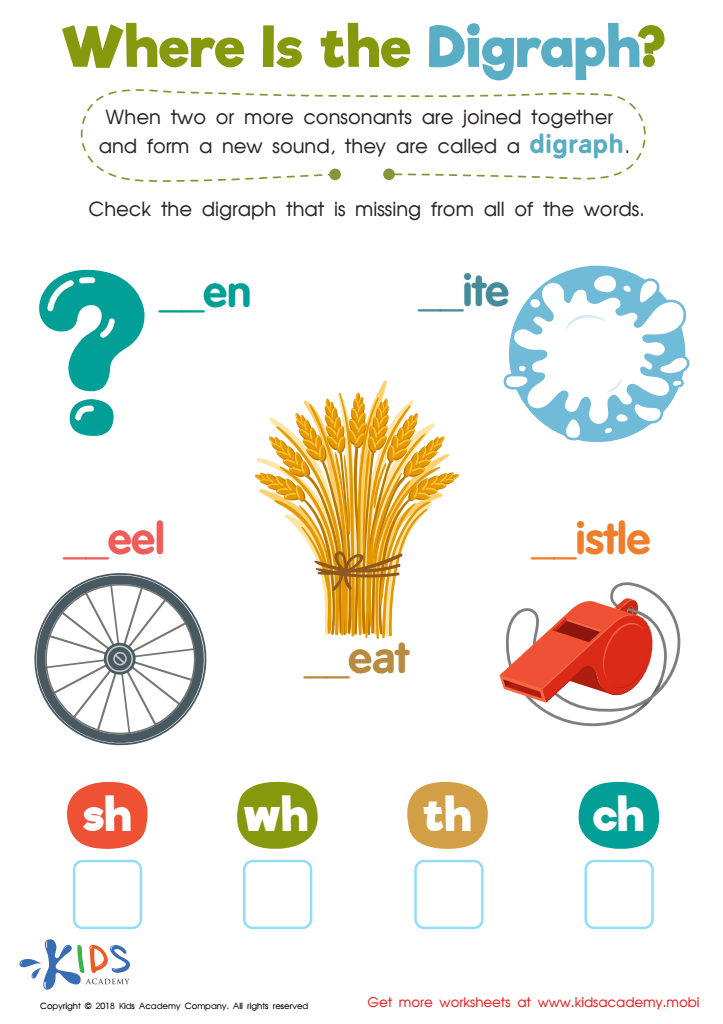
Where Is the Digraph? Worksheet
Teach your child about digraphs - two or more consonants that form one sound, like /wh/, /sh/, and /ch/. Show them words with these sounds and use this worksheet to help. Ask them which digraph is missing from the words and point out the pictures. 80 words.
Where Is the Digraph? Worksheet
Worksheet
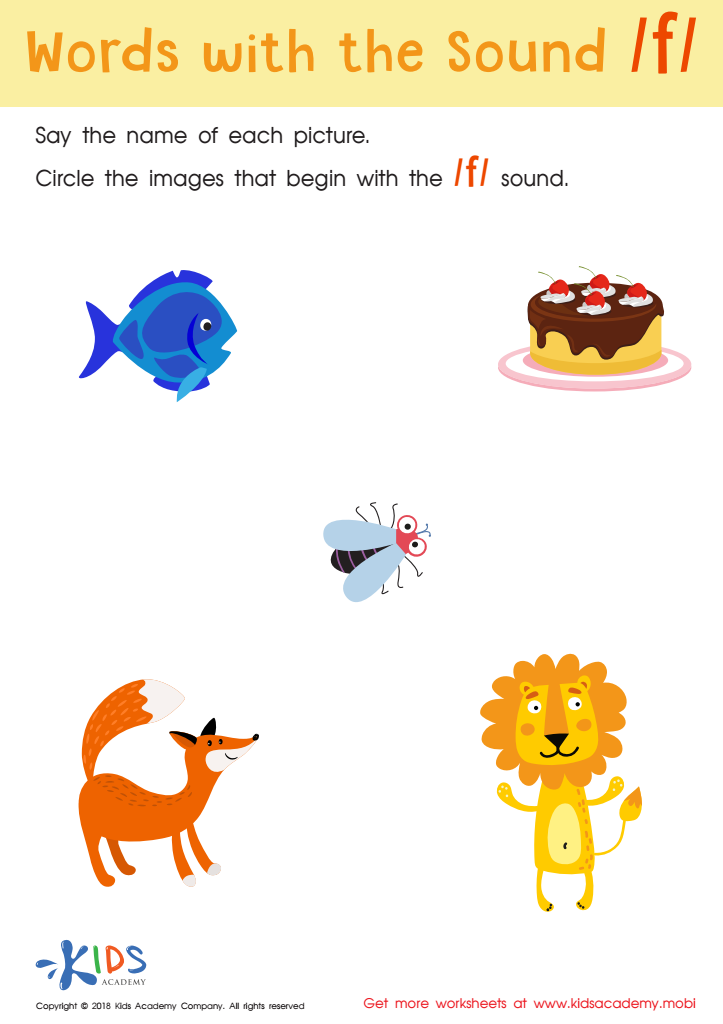
Words with sound f Reading Worksheet
This illustrated phonics worksheet is ideal for preschool or kindergarten. It helps boost learners' literacy skills with a focus on the letter "f". Ask your child to name all the pictures, listening for that sound. Examples are fish, fox, lion, bug. When they can identify which words start with "f", have them circle the images. Congratulate them on a job well done!
Words with sound f Reading Worksheet
Worksheet
Join Kids Academy for Free
Who is primarily going to use this learning content?



Reading skills are fundamental to a child's educational success, and understanding normal consonants is crucial for 6-year-olds as they begin their literacy journey. At this age, children are typically in the emergent reading stage, exploring letter sounds and word formation. By focusing on consonants, they learn to decode written language, building a foundation for more complex literacy skills.
Parents and teachers should prioritize consonant recognition because it aids in phonemic awareness—essential for reading fluency and comprehension. As children learn to associate specific consonants with their sounds, they gain confidence in their ability to sound out words, which fosters a love for reading.
Moreover, mastery of consonants facilitates the development of spelling skills. When children can identify and understand consonant sounds, they are better equipped to construct and spell simple words, enhancing their overall communication abilities.
Additionally, engaging in activities that promote consonant recognition can strengthen parent-child or teacher-student bonds. Fun reading games and phonics activities make learning enjoyable and create positive attitudes toward literacy.
In summary, caring about consonant skills supports a child's reading progress, enhances cognitive development, and opens doors to lifelong learning. Investing in these foundational skills during this crucial age is essential for each child's academic journey.