Letter-sound association Normal Alphabet Worksheets for 6-Year-Olds
6 filtered results
-
From - To
Unlock the world of reading with "Letter-Sound Association Normal Alphabet Worksheets for 6-Year-Olds" by Kids Academy! These engaging worksheets are designed to help young learners master the crucial connection between letters and their corresponding sounds. Perfectly suited for kindergarten and first-grade students, each worksheet introduces interactive activities that enhance phonemic awareness, spelling, and reading fluency. Through fun exercises and vivid illustrations, children will develop the foundational literacy skills they need for successful reading and writing. Give your child a head start in their educational journey with these essential and enjoyable learning resources!
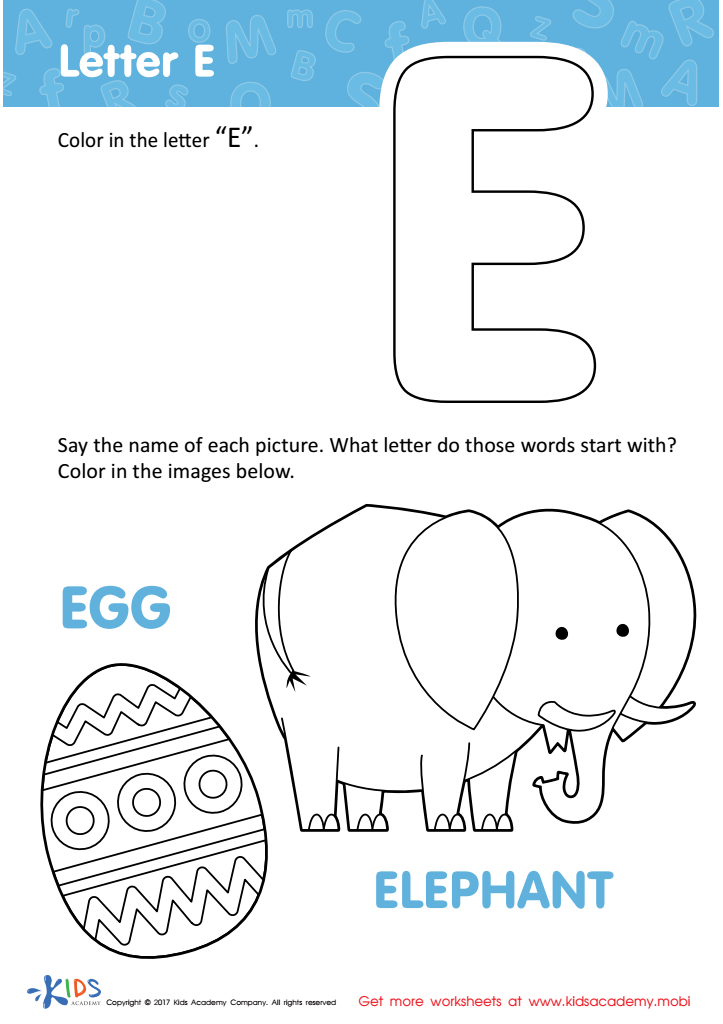
Letter E Coloring Sheet
 Assign to My Students
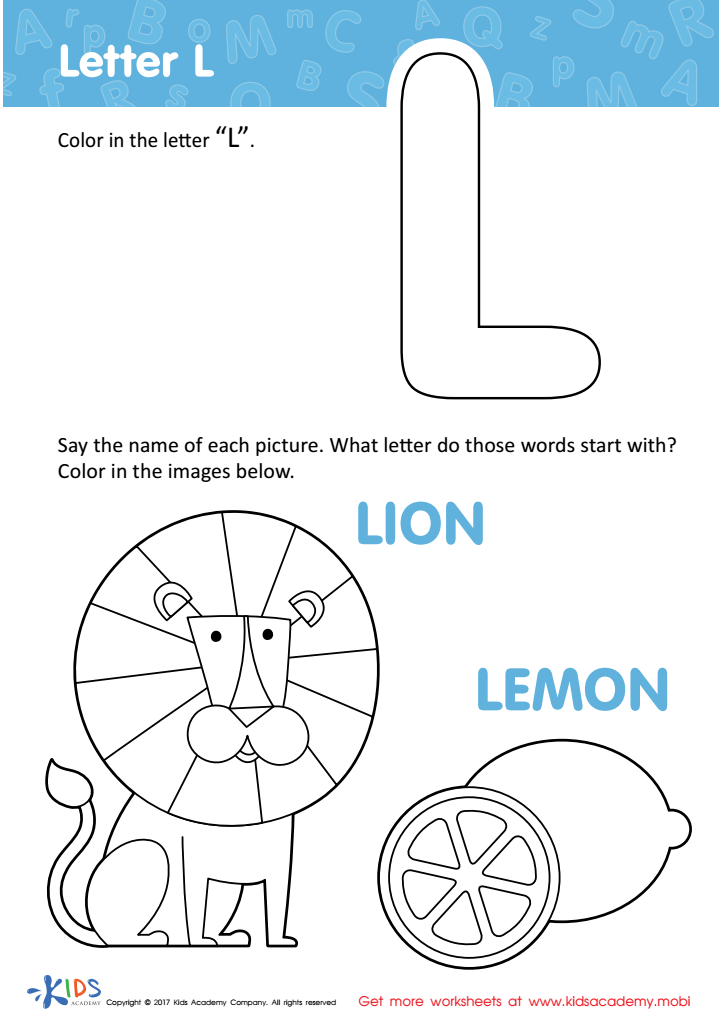
Letter L Coloring Sheet
Assign to My Students

Lowercase Letters m n o Worksheet
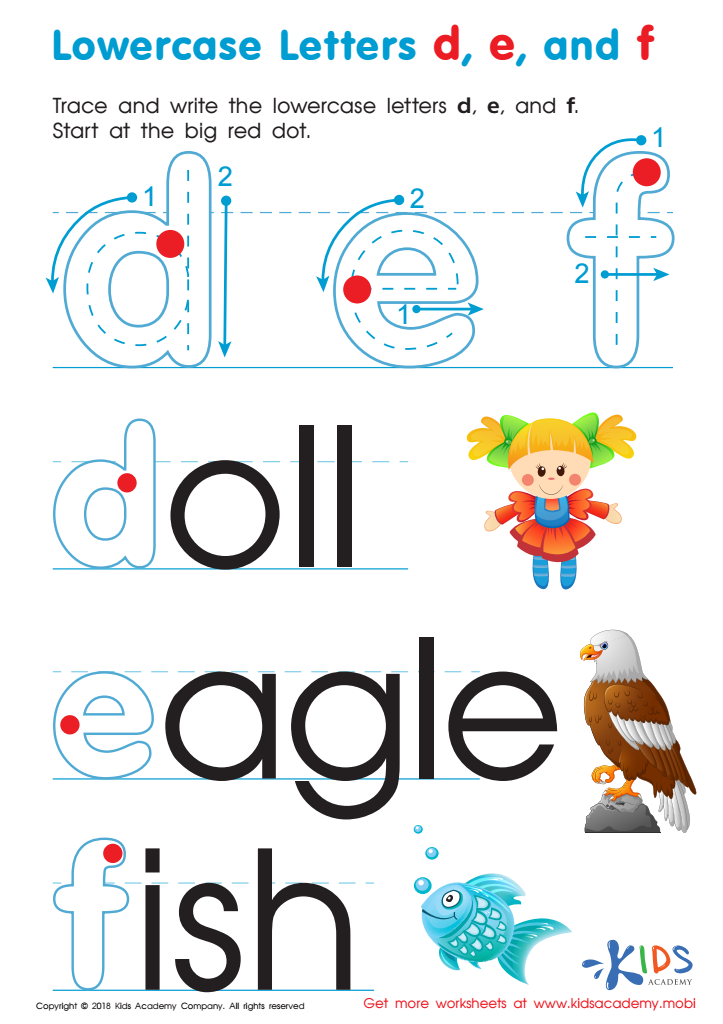
Lowercase Letters d e f Worksheet
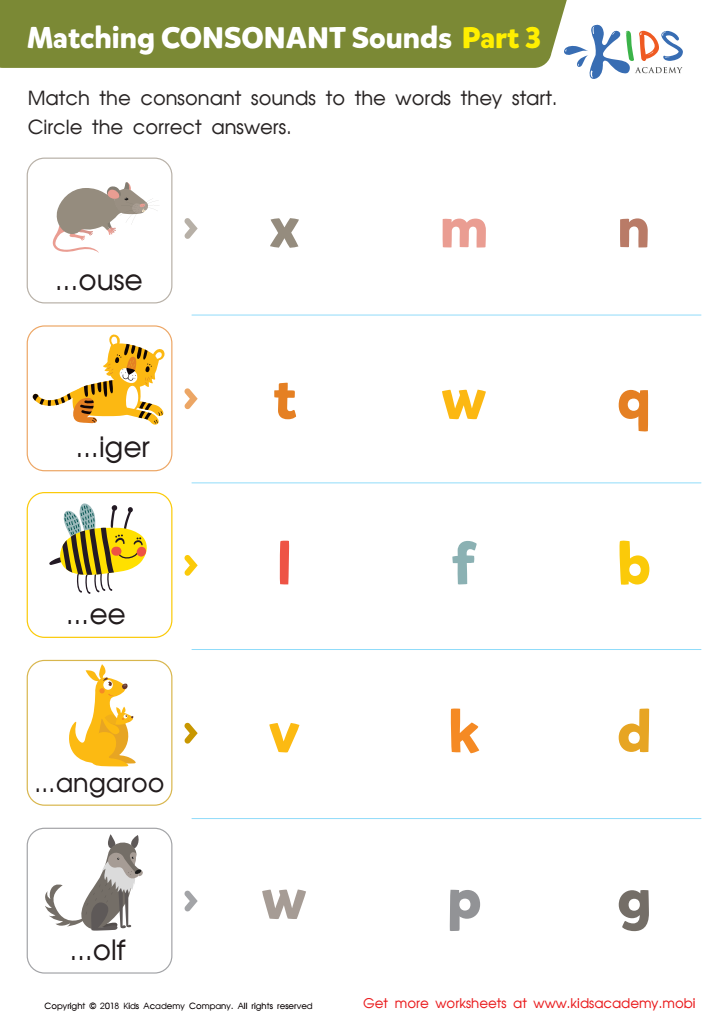
Matching Consonant Sounds: Part 3 Worksheet
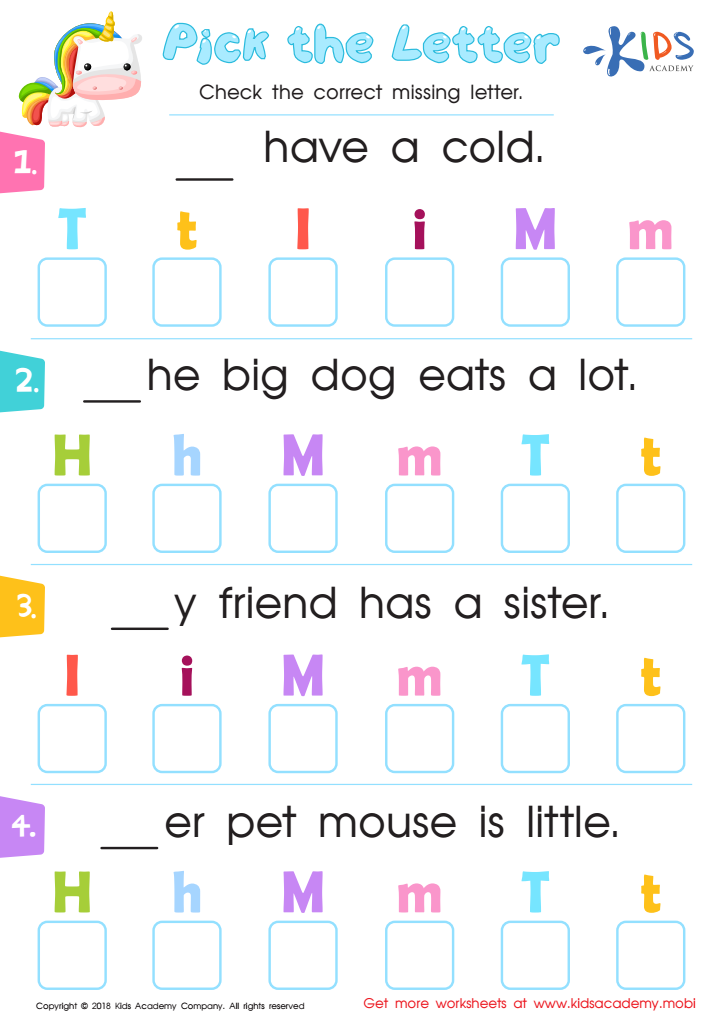
Pick the Letter Worksheet








Letter-sound association, or phonics, is the foundation of reading and writing. By the age of six, children are at a critical developmental stage for language acquisition. Parents and teachers play a crucial role in guiding and supporting children through this process. Understanding that each letter of the alphabet represents a particular sound is key to decoding words and fostering literacy.
When children grasp letter-sound associations, they are equipped to sound out words, which leads to increased confidence and fluency in reading. This foundational skill also enables them to spell words accurately, laying the groundwork for effective written communication.
Teachers use phonics instruction systematically to help children recognize patterns in words, develop vocabulary, and understand the nuances of language. This method empowers children to become self-sufficient readers who can tackle new words with ease.
Parents' involvement enriches this learning experience. By practicing phonics at home, reading books together, and engaging in letter-sound games, parents can reinforce what is taught at school, nurturing a positive and enjoyable learning environment.
Ultimately, mastering letter-sound associations by the age of six sets children on a path to academic success, fostering a lifetime love for reading and writing. This foundational skill ripples through all areas of study, making it a crucial aspect of early childhood education.







