
Letter Tracing Practice Normal Alphabet Worksheets for 6-Year-Olds
4 filtered results
Difficulty Level
Grade
Age
-
From - To
Subject
Activity
Standards
Explore our engaging "Letter Tracing Practice Normal Alphabet Worksheets for 6-Year-Olds" designed to boost your child's writing skills and alphabet recognition. These printable worksheets provide sequential tracing exercises for each letter, helping young learners develop fine motor skills and hand-eye coordination. With clear instructions and kid-friendly designs, our worksheets make learning fun and effective. Ideal for preschoolers and early learners, these tools ensure a strong foundation for future literacy. Encourage your child's educational journey with playful tracing activities that transform skill-building into a delightful experience. Start practicing today and watch them flourish!
Favorites
With answer key
Interactive
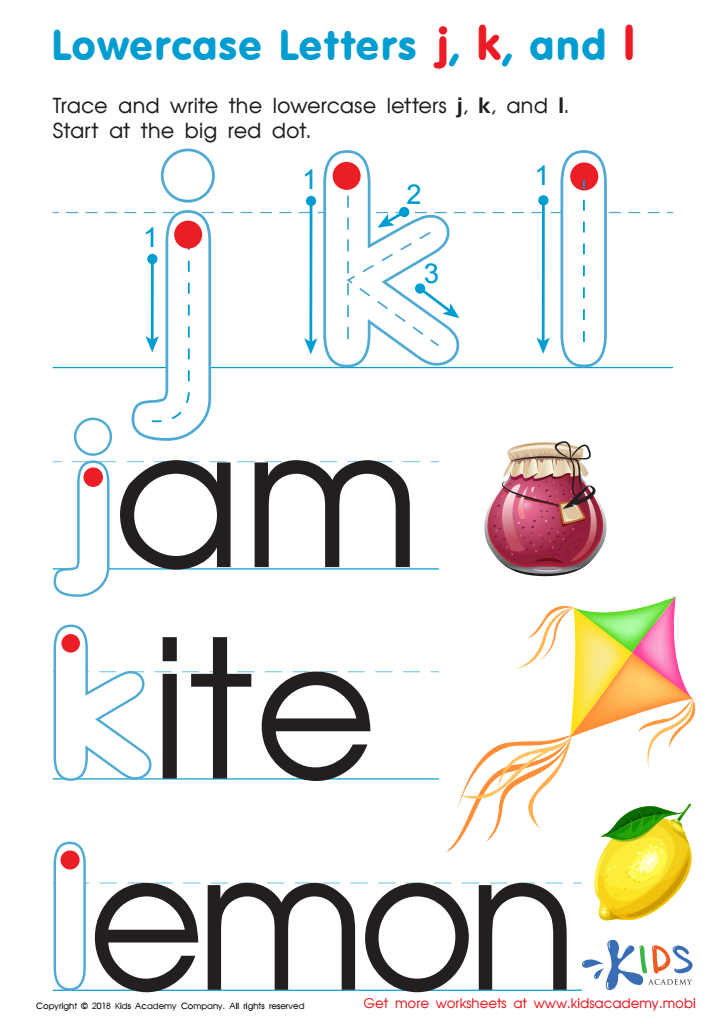
Lowercase Letters j k l Worksheet
Teach your child the difference between uppercase and lowercase letters. Have them trace and write the lowercase letters j, k, and l, starting at the red dot. Guide your child's hand to form the letters correctly.
Lowercase Letters j k l Worksheet
Worksheet
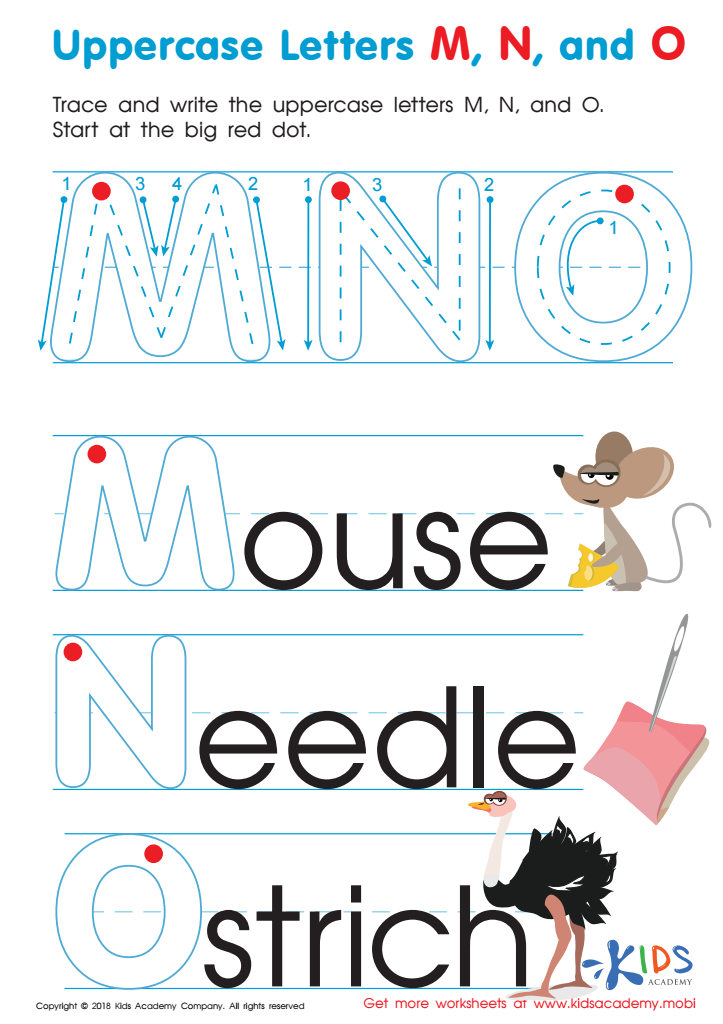
Uppercase Letters M, N, and O Worksheet
Download our easy-to-understand worksheet to help kids write M and N with ease! They'll trace dotted lines and follow arrows as they fill in the letters using a big red dot as a guide. The cute graphics will help them remember sounds too! Get your child writing quickly and confidently with this fun activity.
Uppercase Letters M, N, and O Worksheet
Worksheet
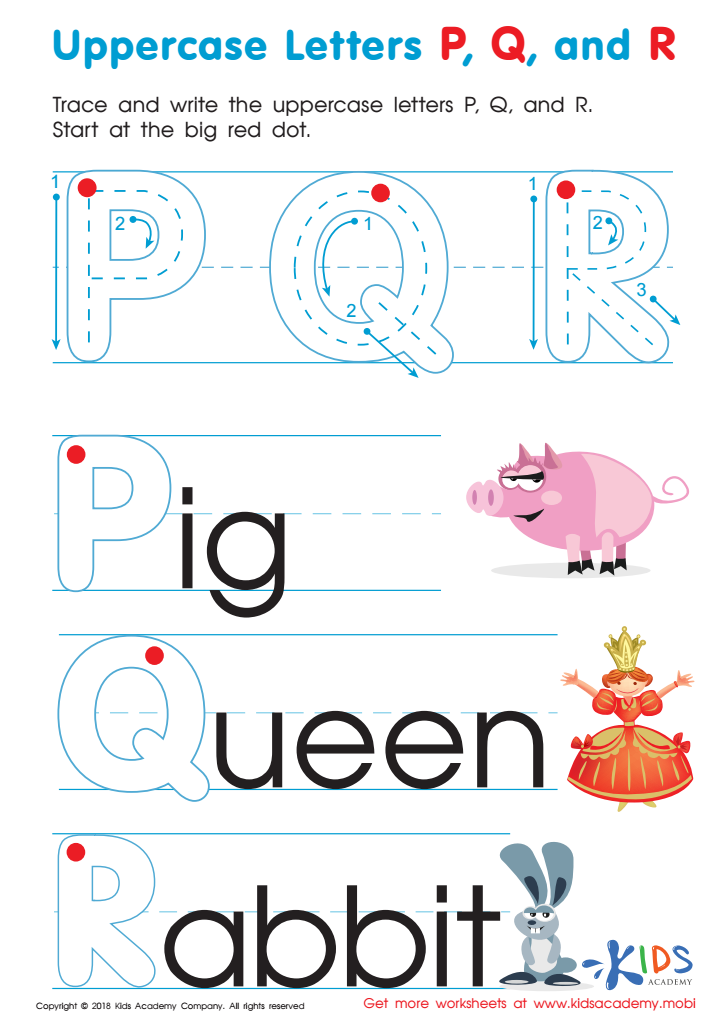
Uppercase Letters P, Q, and R Worksheet
Cute images of a pig, queen and rabbit make it fun to learn letter sounds. Follow the arrows to learn the strokes, then trace each letter from the big red dot. Perfect for kids to learn how to read and write P, Q, and R!
Uppercase Letters P, Q, and R Worksheet
Worksheet
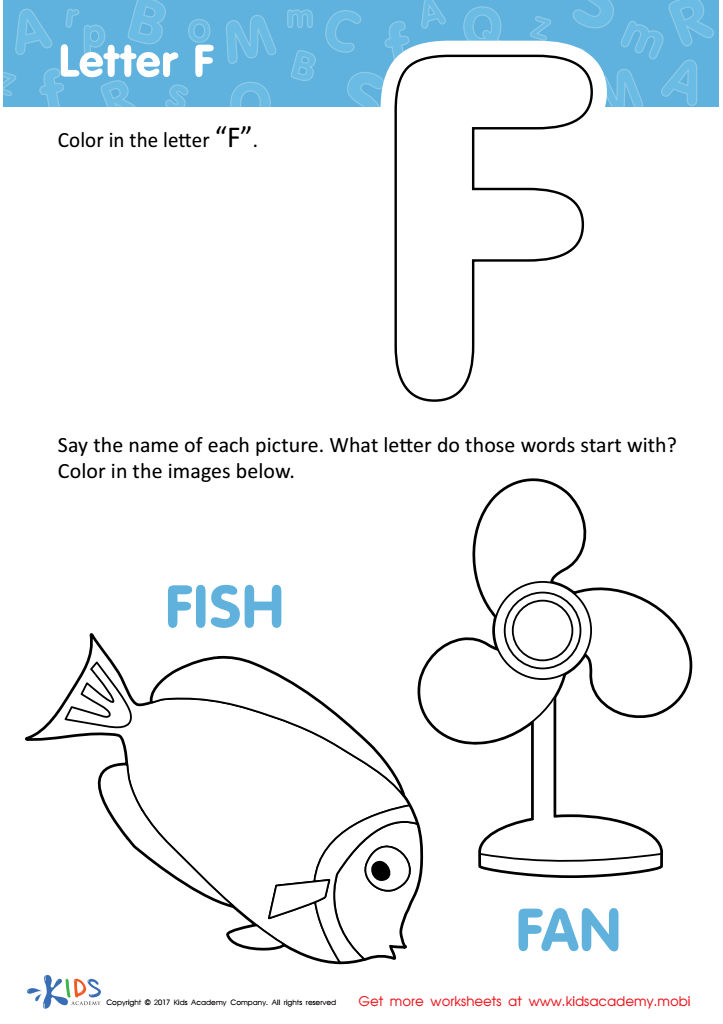
Letter F Coloring Sheet
Coloring pages help kids learn to recognize letters and sounds. Our "F" page has kids color a fish and a fan. It's a great way to introduce them to the letter "F" using words they already know.
Download (PDF)
 Assign to My Students
Assign to My Students
Letter F Coloring Sheet
Worksheet
Join Kids Academy for Free
Who is primarily going to use this learning content?







Developing foundational literacy skills is essential for young learners, and engaging in letter tracing practice is a fundamental step for 6-year-olds. At this age, children are honing their fine motor skills and building the muscle memory necessary for writing. Letter tracing helps them smoothly learn the shapes and strokes needed to form letters correctly. This foundational skill is crucial, as precise letter formation affects overall handwriting legibility and fluency.
Parents and teachers should care about letter tracing because it bridges the gap between recognizing letters and being able to reproduce them accurately. This practice not only aids in physical dexterity but also reinforces letter recognition, a key component in early reading skills. By regularly tracing letters, children develop stronger hand-eye coordination and begin to internalize the alphabet, which supports both their reading and writing development.
Additionally, engaging in letter tracing can build a child’s confidence and motivation to learn. Positive experiences in early literacy activities foster a love for learning and help children feel accomplished, thereby setting the stage for academic success. In summary, prioritizing letter tracing at this critical developmental stage is essential in equipping young learners with the tools they need for effective communication and for laying a strong groundwork for their educational journey.







