Uppercase identification Normal Alphabet Worksheets for 6-Year-Olds
5 filtered results
-
From - To
Boost your child's literacy skills with our Uppercase Identification Normal Alphabet Worksheets designed specifically for 6-year-olds! These engaging and interactive printable worksheets help young learners recognize, differentiate, and master uppercase letters through fun activities. Each worksheet is crafted to align with the needs of early learners, making alphabet identification enjoyable and effective. Kids will practice tracing, matching, and coloring while building their confidence in reading and writing. Perfect for home or classroom use, these worksheets support early education curricula and make learning the alphabet a delightful experience. Download your worksheets today and watch your child's letter recognition skills flourish!
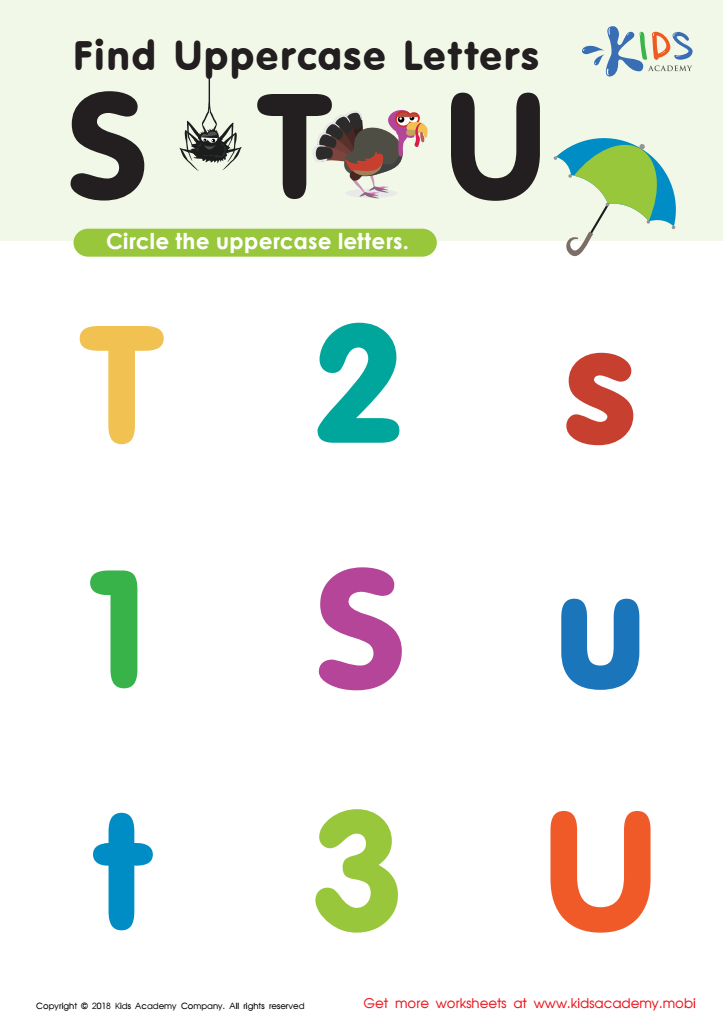
Find Uppercase Letters Worksheet
 Assign to My Students
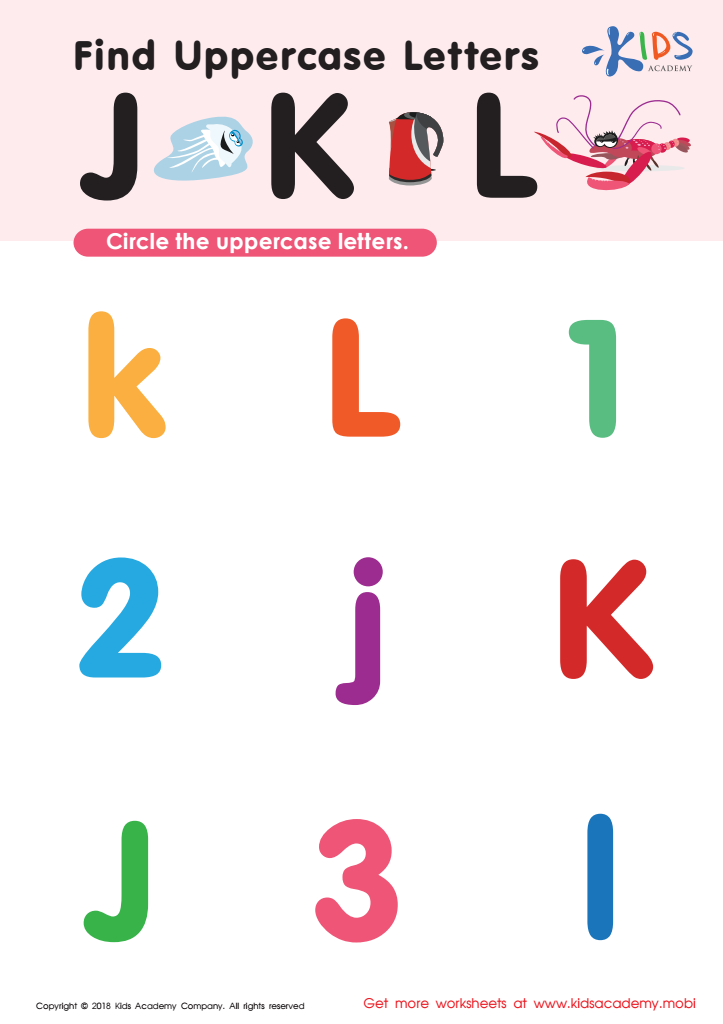
Find Uppercase Letters J, K, and L Worksheet

Find Uppercase Letters A, B, and C Worksheet
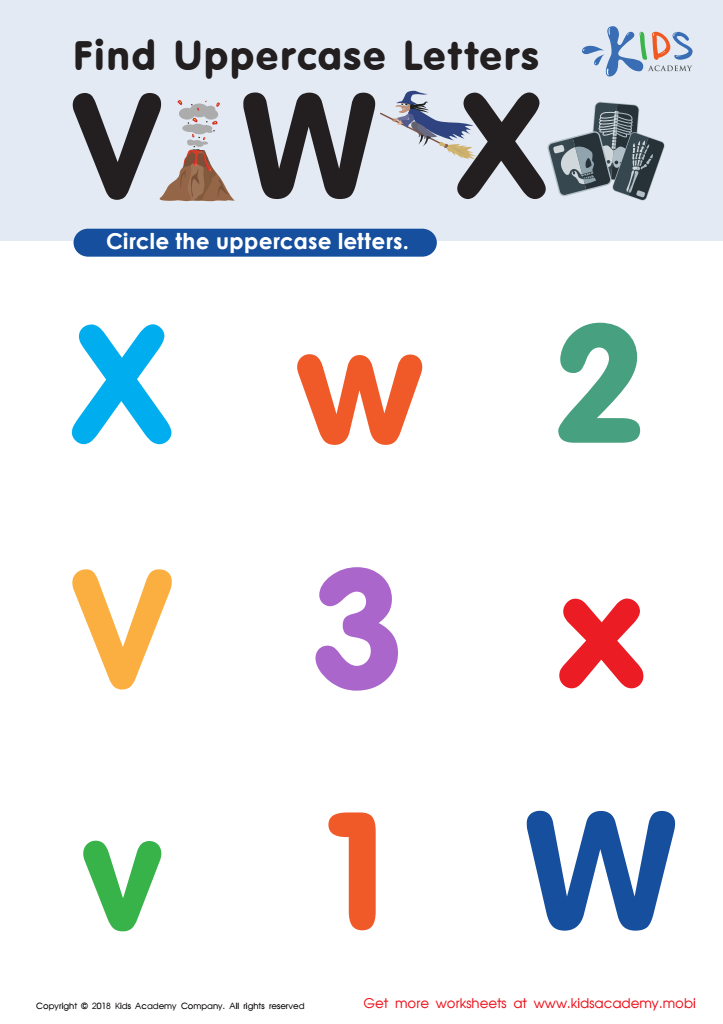
Find Uppercase Letters V, W, X Worksheet
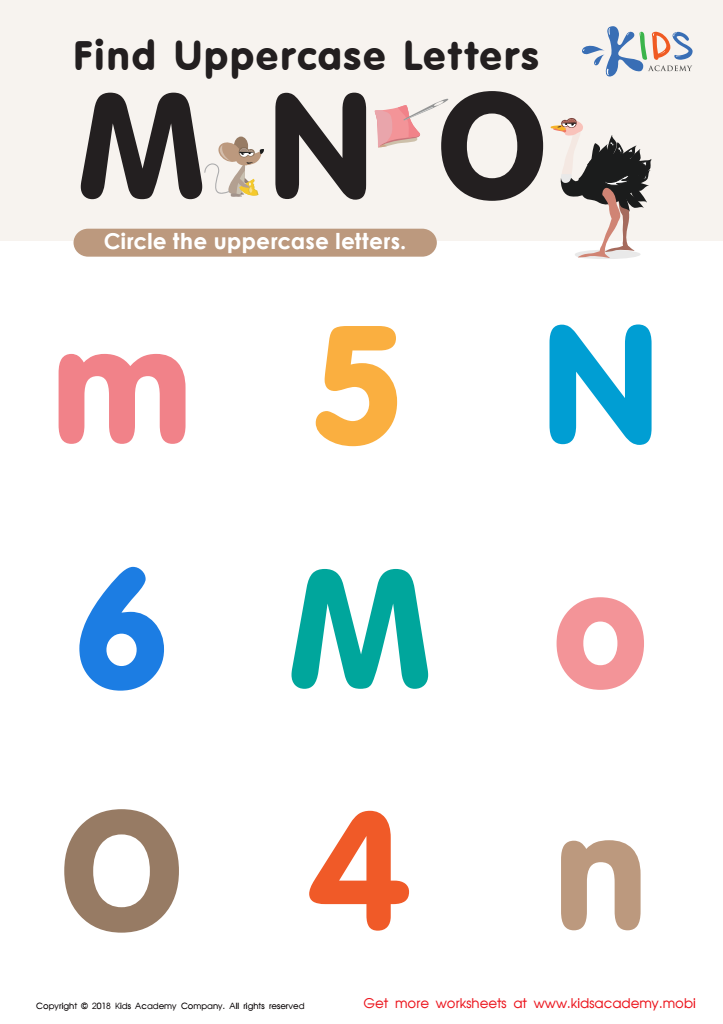
Find Uppercase Letters M, N, and O Worksheet








Uppercase letter identification is a crucial milestone in early literacy development for 6-year-olds. Understanding uppercase letters lays the foundation for reading and writing, as they are commonly used at the beginning of sentences and for proper nouns. Mastery of these letters helps children recognize patterns in words, supporting their decoding skills when they encounter new texts.
Teachers and parents should prioritize uppercase letter identification to foster children's confidence and motivation in literacy activities. When children feel skilled in recognizing uppercase letters, they are more likely to engage with reading materials, leading to increased vocabulary and comprehension. Additionally, this foundational skill encourages children to take pride in their writing, as they learn to use uppercase letters correctly in sentences.
Moreover, reinforcing uppercase identification supports cognitive development. Children learn to categorize and differentiate letters, enhancing their critical thinking skills. As facilitators of learning, parents and teachers can provide a variety of engaging activities, such as games and interactive reading sessions, focusing on uppercase letters. Ultimately, supporting this aspect of literacy not only contributes to academic success but also nurtures a lifelong love for reading and learning. Emphasizing uppercase identification can empower young learners on their journey to becoming proficient readers and writers.







