
Vocabulary Building Normal Alphabet Worksheets for 6-Year-Olds
5 filtered results
Difficulty Level
Grade
Age
-
From - To
Subject
Activity
Standards
Enhance your child's vocabulary with our engaging Vocabulary Building Normal Alphabet Worksheets designed specifically for 6-year-olds! These worksheets help young learners develop their language skills by introducing new words associated with letters of the alphabet. Each worksheet is visually engaging and incorporates fun activities, like matching, coloring, and letter tracing, to capture your child's interest while reinforcing vocabulary comprehension. Ideal for parents and teachers seeking effective tools to support early literacy, these resources foster creativity and boost confidence in learning. Download our printable worksheets today and support your child's educational journey in a fun and interactive way!
Favorites
With answer key
Interactive
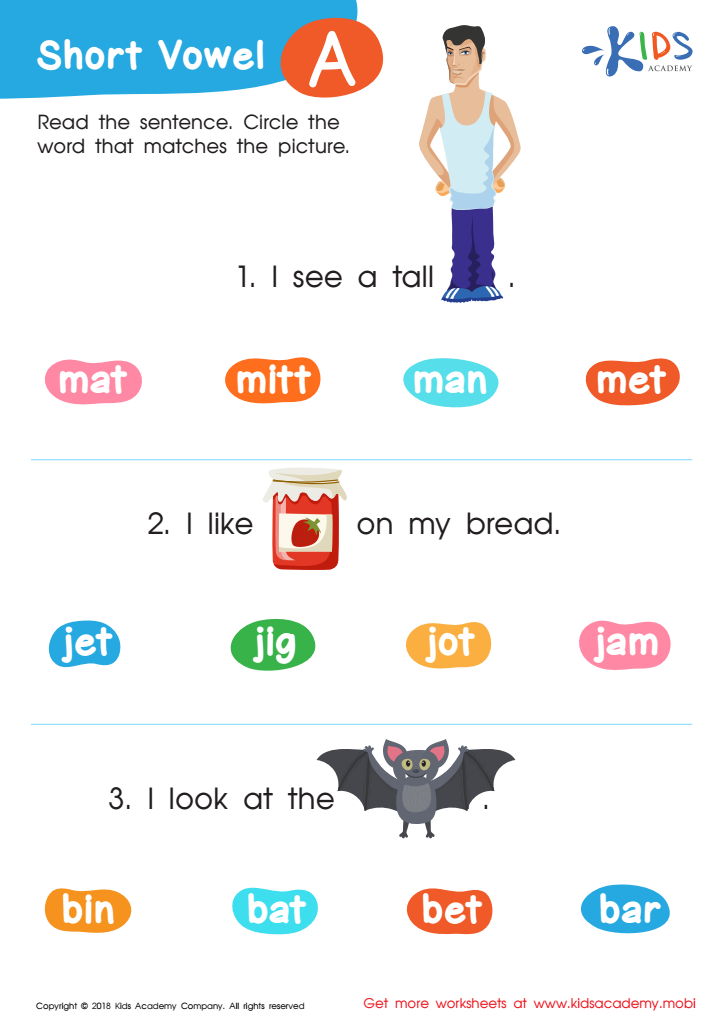
Short Vowel /a/ Worksheet
This free PDF helps new readers use sight words and pictures to read basic sentences. Then, they use accompanying word choices to find the correct word with the short a vowel sound. A key early reading skill, discriminating between short vowel sounds can be tricky in monosyllabic words, so use this PDF to help your reader reinforce it.
Short Vowel /a/ Worksheet
Worksheet
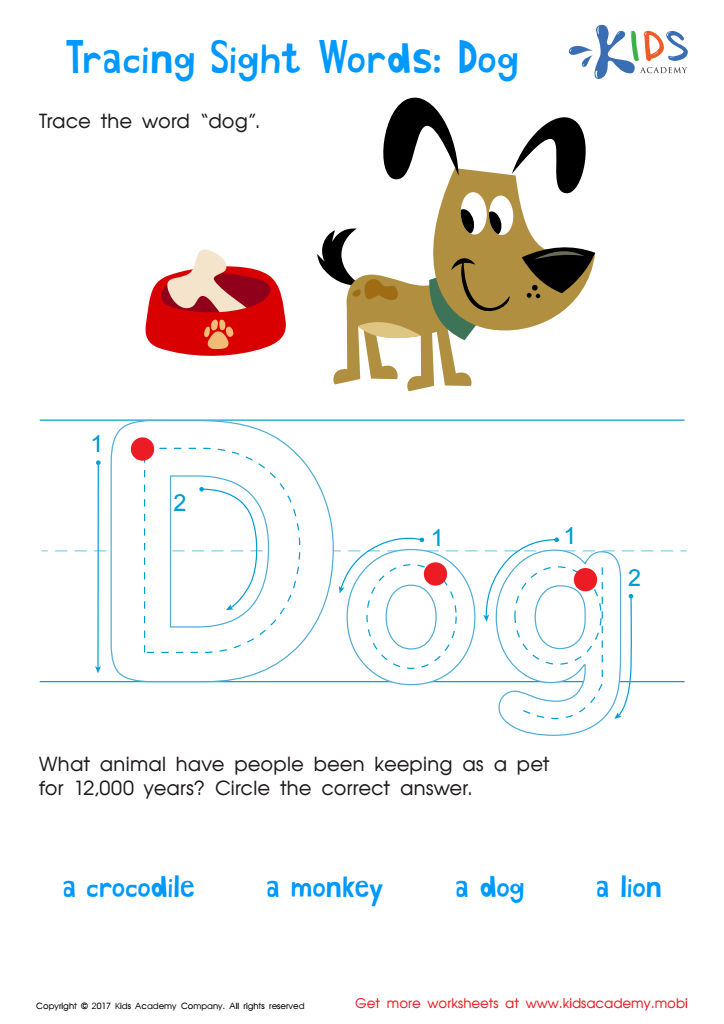
Dog Worksheet Sight Words Worksheet
Get your kids excited to read with our dog-themed sight words worksheet!
Excite your child to read with our sight words worksheet: dog edition! Featuring a lovable dog character to put a smile on any kid's face, this worksheet helps kids practice reading and writing the word "dog". Build a library of words they can read quickly and promote increasing literacy skills with early fluency! Get them ready for reading with our dog-themed sight words worksheet!
Dog Worksheet Sight Words Worksheet
Worksheet
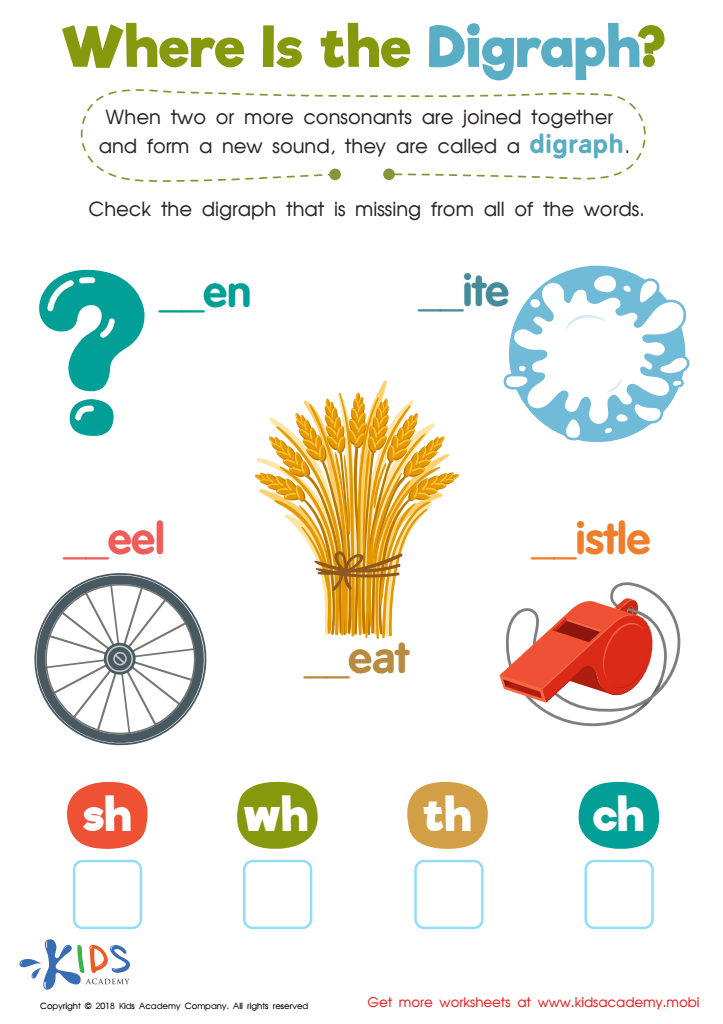
Where Is the Digraph? Worksheet
Teach your child about digraphs - two or more consonants that form one sound, like /wh/, /sh/, and /ch/. Show them words with these sounds and use this worksheet to help. Ask them which digraph is missing from the words and point out the pictures. 80 words.
Where Is the Digraph? Worksheet
Worksheet
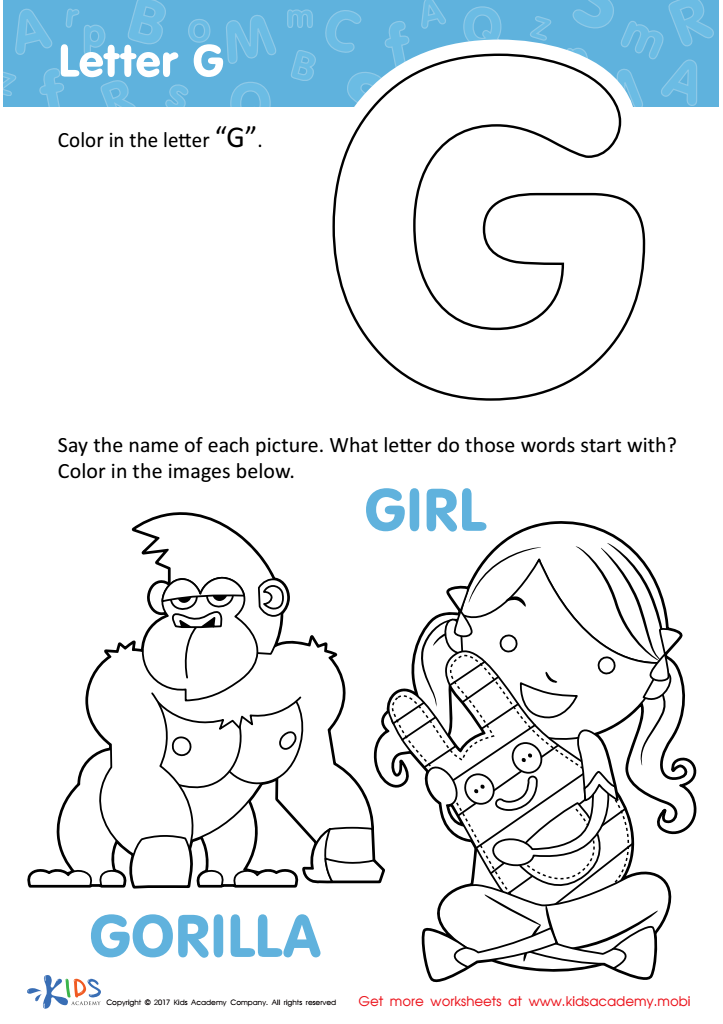
Letter G Coloring Sheet
This "G" coloring page encourages creativity and teaches kids the letter "G" sound. With its fun visuals and familiar words, it's sure to excite your child. Plus, you can talk about the letter’s sound with the pictures given.
Download (PDF)
 Assign to My Students
Assign to My Students
Letter G Coloring Sheet
Worksheet
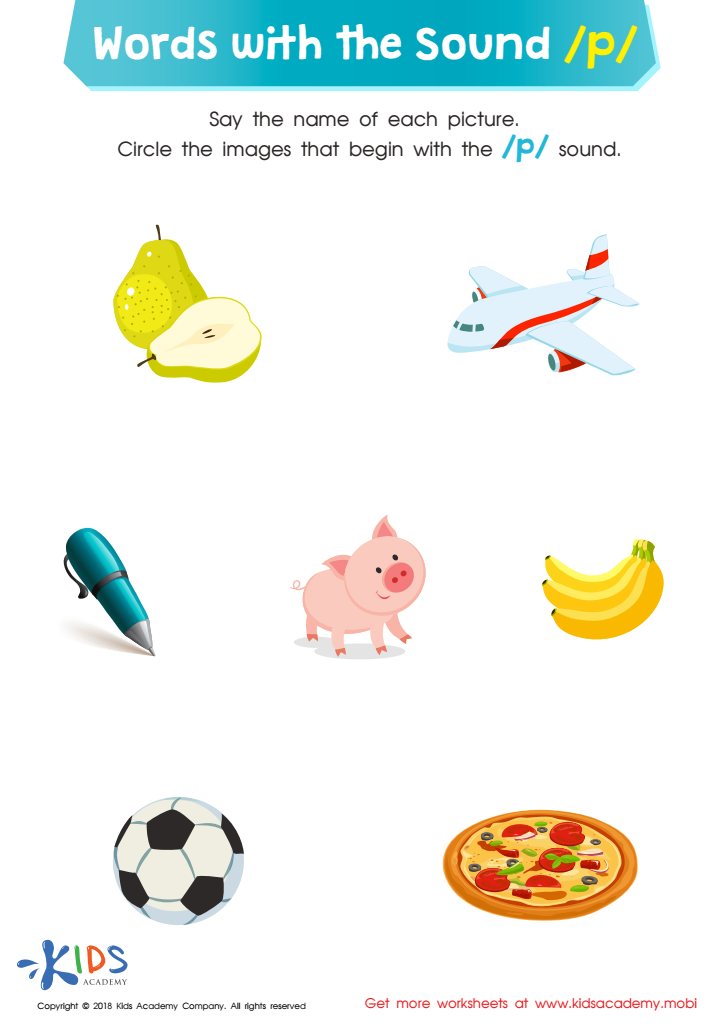
Words with sound p Reading Worksheet
Working on this fun worksheet? Name each picture aloud and listen carefully before circling those that start with the letter «p»! Pizza, pig, plane, or banana - practice phonics to help your child recognize the letter «p» sound for successful early reading and decoding!
Words with sound p Reading Worksheet
Worksheet
Join Kids Academy for Free
Who is primarily going to use this learning content?








Vocabulary building is essential for 6-year-olds as it lays a strong foundation for their reading, writing, and overall communication skills. At this age, children are naturally curious and absorb information rapidly. Introducing them to a well-rounded vocabulary using the normal alphabet enhances their ability to express thoughts, emotions, and ideas clearly.
Strong vocabulary skills boost comprehension, enabling children to engage with stories and texts more meaningfully. When parents or teachers emphasize vocabulary-building exercises, such as playing word games, reading aloud, and discussing new words, they help children to not only expand their language skills but also foster a love for learning.
Moreover, a rich vocabulary contributes to better academic performance. Children who struggle with vocabulary may face difficulties in understanding instructions or academic material, leading to frustration and reduced confidence. By cultivating vocabulary skills early, parents and teachers can help ensure that children communicate effectively and navigate social interactions with ease.
In summary, investing time in vocabulary building at this critical stage supports children's cognitive and linguistic development, paving the way for successful learning experiences and fostering self-esteem as they express themselves effectively in various settings. Investing efforts now will yield lasting benefits in their education and beyond.







