Fine Motor Skills Normal Letter E Worksheets for 6-Year-Olds
3 filtered results
-
From - To
Enhance your child's fine motor skills with our engaging "Normal Letter E" worksheets designed specifically for 6-year-olds! These printable activities offer a fun and interactive way for young learners to practice writing the letter E while developing their hand-eye coordination and dexterity. Each worksheet is crafted to keep kids motivated, featuring colorful illustrations and tracing exercises that encourage independent learning. Ideal for home or classroom use, these resources not only reinforce letter recognition but also support the fine motor skill development essential for successful handwriting. Download now and give your child a head start in their literacy journey!
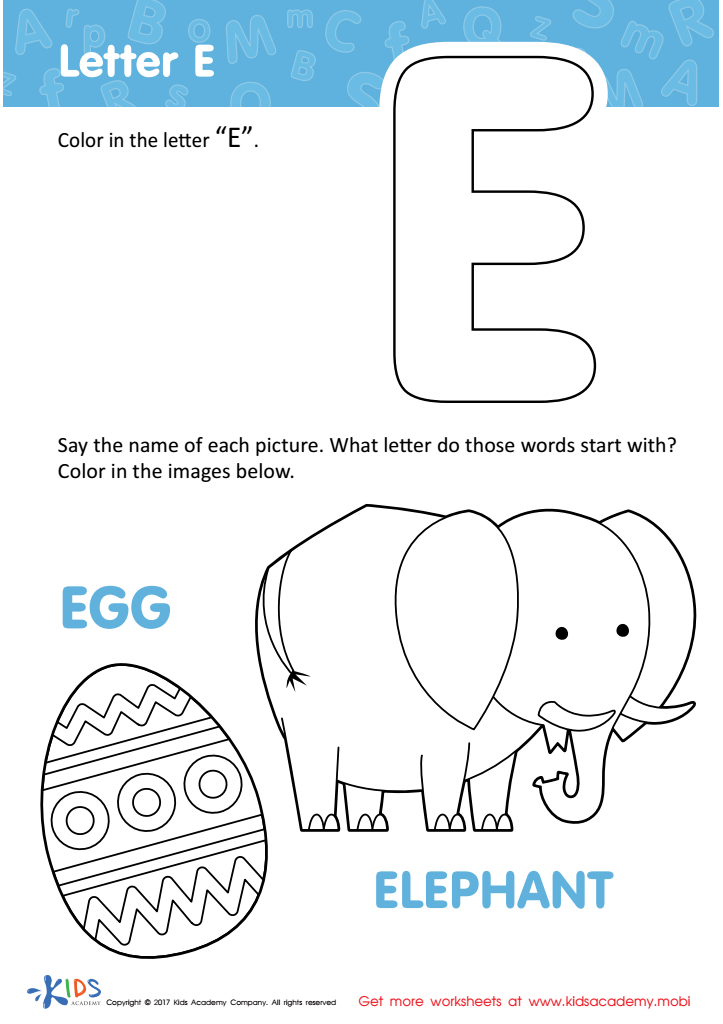
Letter E Coloring Sheet
 Assign to My Students

Letter E Tracing Worksheet
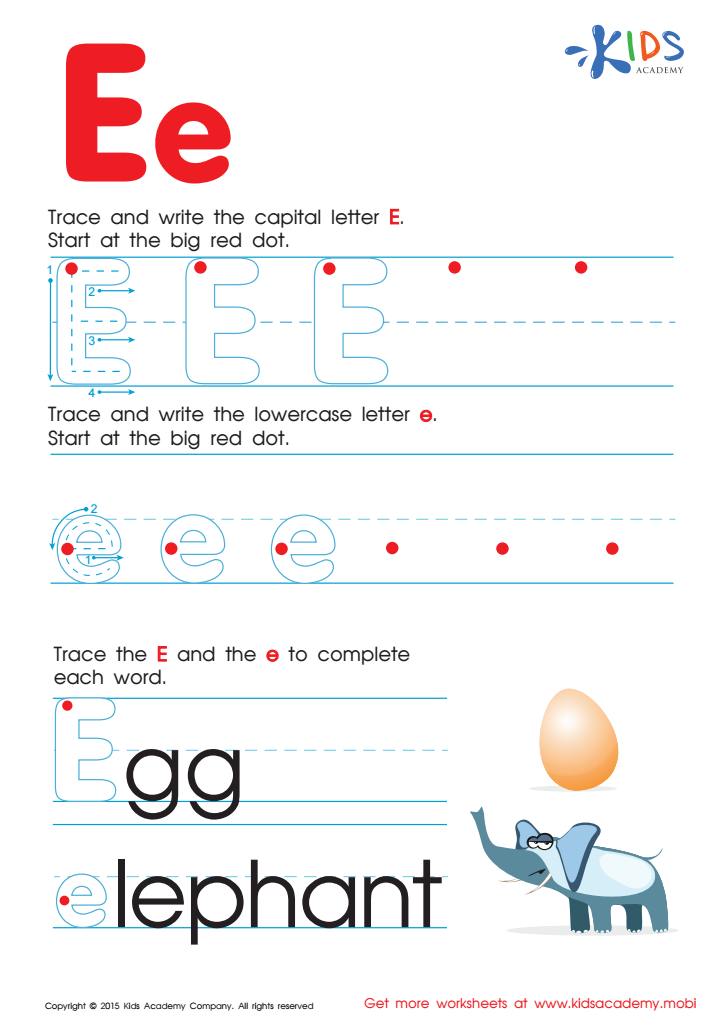
Letter E Tracing Page







Fine motor skills are essential for a child's development, particularly for 6-year-olds who are navigating early academic experiences. The ability to manipulate small objects, such as writing tools, scissors, and buttons, allows children to perform tasks that contribute to their independence and confidence. Mastering the normal letter "E" not only strengthens grip control and hand-eye coordination but also fosters the foundation for writing and artistic expression.
Parents and teachers should care about fine motor skills because these abilities are crucial for everyday school tasks like writing assignments, drawing, and crafting. Developing fine motor skills impacts a child's ability to engage in classroom activities effectively, influencing their learning experience and overall academic success.
Furthermore, when children struggle with fine motor tasks, it can lead to frustration and low self-esteem, potentially hampering their enthusiasm for learning. By focusing on enhancing fine motor skills through fun activities, children will not only improve their handwriting but also gain greater dexterity, precision, and control as they prepare for more complex tasks in the future. Thus, fostering these skills serves a dual purpose — promoting confidence while laying a strong foundation for successful learning experiences.