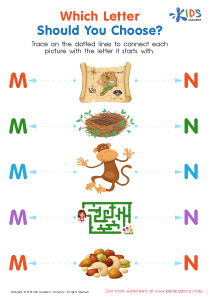
Lowercase letter writing Normal Lowercase/Small Letters Worksheets for 6-Year-Olds
3 filtered results
-
From - To
Discover engaging Lowercase Letter Writing worksheets designed specifically for 6-year-olds! Our printable resources guide young learners in mastering small letters with fun activities that promote fine motor skills and alphabet proficiency. Each worksheet features a variety of exercises, including tracing, filling in blanks, and creative writing prompts that encourage little ones to confidently practice their writing. Perfect for classroom use or home schooling, these worksheets make learning enjoyable while ensuring kids grasp the essential skills of lowercase letter formation. Help your child develop a strong foundation in writing with our interactive and educational worksheets designed to foster a love of learning!
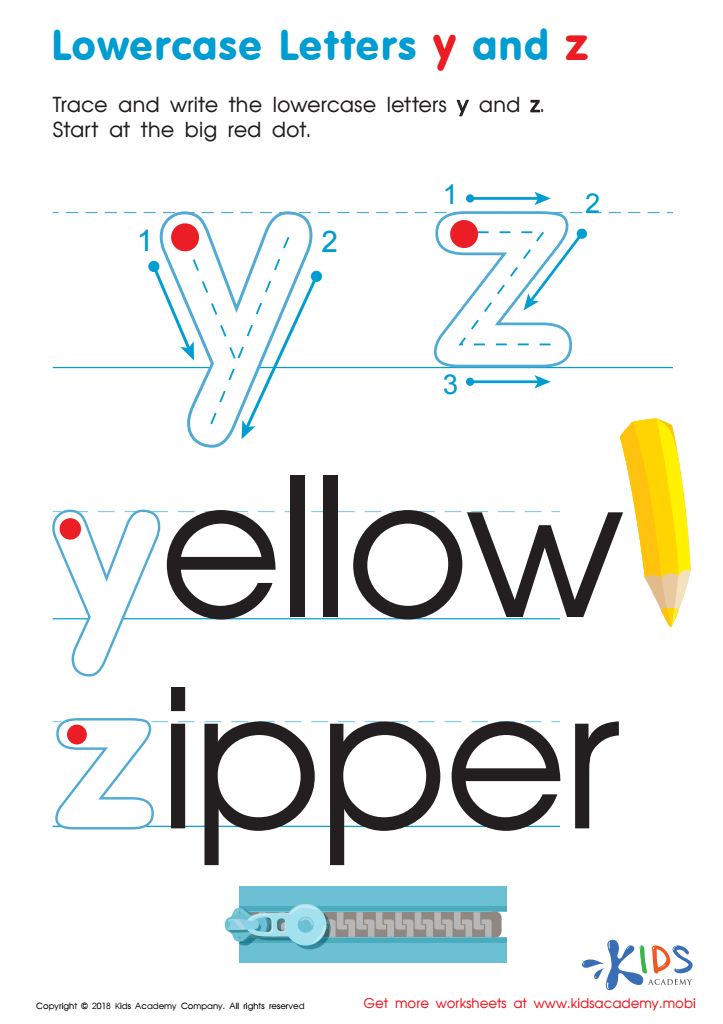
Lowercase Letters y z Worksheet
 Assign to My Students
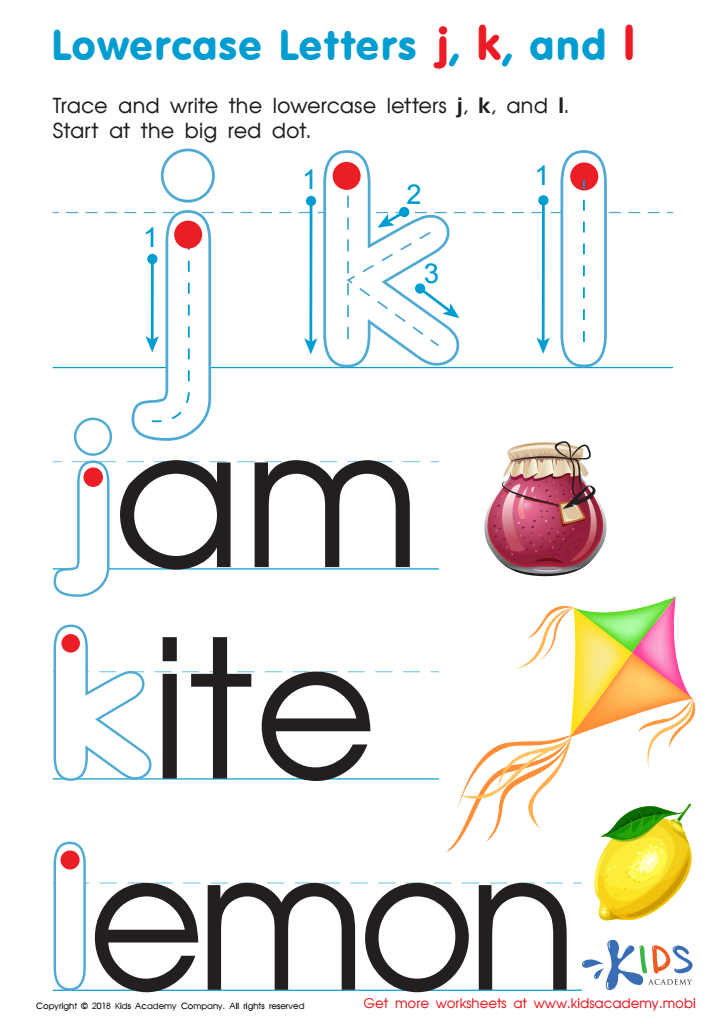
Lowercase Letters j k l Worksheet
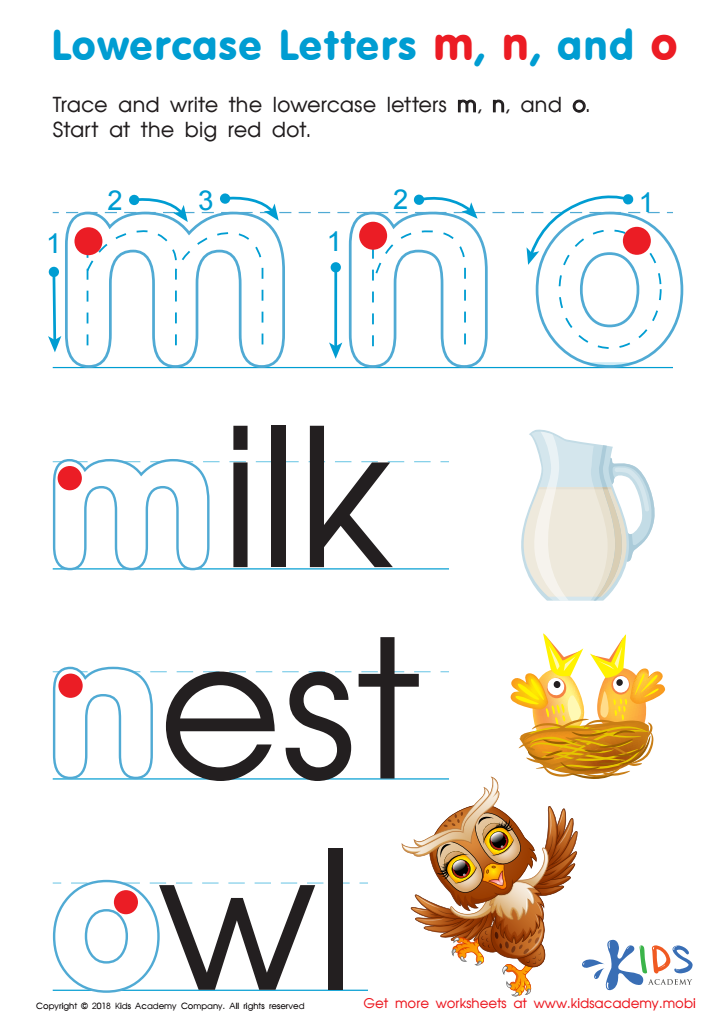
Lowercase Letters m n o Worksheet


Lowercase letter writing is a fundamental skill for 6-year-olds that lays the groundwork for effective communication and literacy development. Mastery of lowercase letters is essential for reading fluency, as most text is composed in this format. When parents and teachers focus on teaching normal lowercase letters, they help children understand the connection between sound and symbol, enhancing phonemic awareness and spelling skills.
Moreover, writing in lowercase promotes cognitive development. It requires fine motor skills and hand-eye coordination, as children practice forming each letter. This process not only improves their writing ability but also fosters confidence as they express their thoughts and feelings in written form.
Encouragement in writing lowercase letters can also foster a love for writing, leading to enhanced creative expression. Children become more engaged in storytelling and journaling, building a bridge between their imagination and communication skills.
Additionally, recognizing and utilizing lowercase letters aids in reading comprehension, as it helps children identify and differentiate between letters and words quickly. Overall, an emphasis on proper lowercase letter writing is crucial for both academic success and personal growth, making it essential for parents and educators to prioritize this skill.