
Fine Motor Skills Normal Phonics Worksheets for 6-Year-Olds
5 filtered results
Difficulty Level
Grade
Age
-
From - To
Subject
Activity
Standards
Unlock your child's potential with our Fine Motor Skills Normal Phonics Worksheets designed specifically for 6-year-olds! These engaging worksheets combine essential phonics practice with fun fine motor activities, enhancing coordination and dexterity while reinforcing foundational literacy skills. Your child will enjoy tracing letters, connecting dots, and completing creative tasks that boost writing readiness and letter recognition. Perfect for at-home learning or classroom activities, our worksheets provide a seamless blend of learning and play. Foster your child's love for reading and writing while developing crucial fine motor skills. Start your phonics journey today with our tailored worksheets!
Favorites
With answer key
Interactive
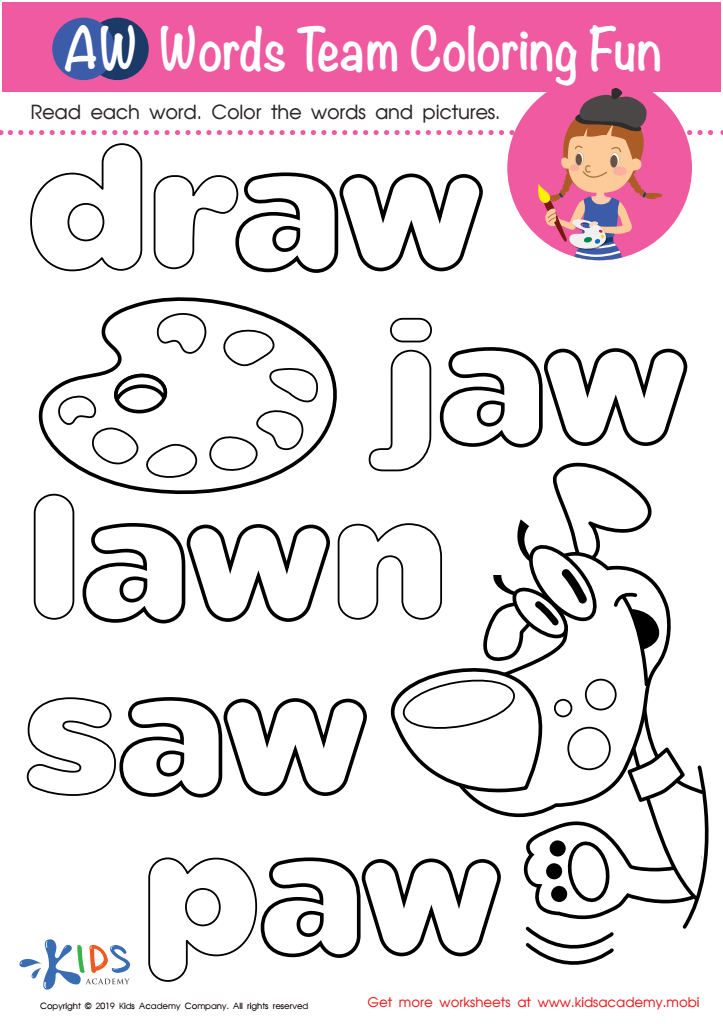
AW Words Team Coloring Fun Worksheet
Coloring words they can read is a blast for little learners! This worksheet offers emerging readers the chance to practice and gain confidence in reading words from the -aw family, while also improving fine-motor and creativity skills. Without knowing it, they'll learn about phonetic teams along the way!
Download (PDF)
 Assign to My Students
Assign to My Students
AW Words Team Coloring Fun Worksheet
Worksheet
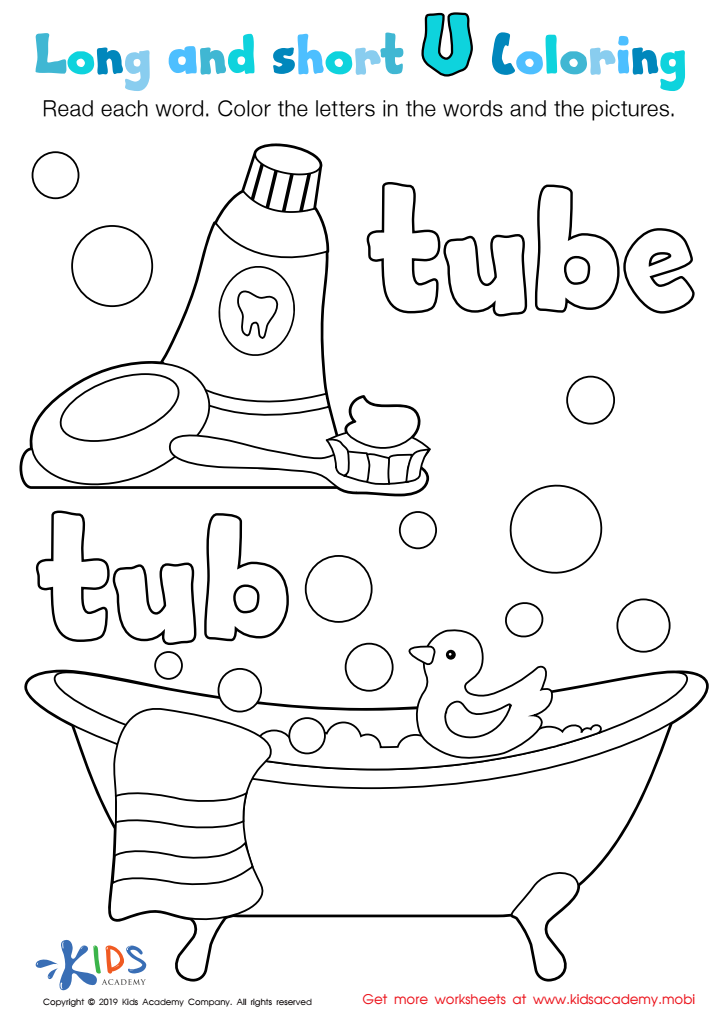
Long and Short U Worksheet
Revised: Spice up your lesson on long and short vowels with this fun printout! Kids read the words "tube" and "tub," then reinforce the sound by coloring in the words and pictures. It's a great way to make phonics class enjoyable!
Download (PDF)
Assign to My Students
Assign to My Students
Long and Short U Worksheet
Worksheet
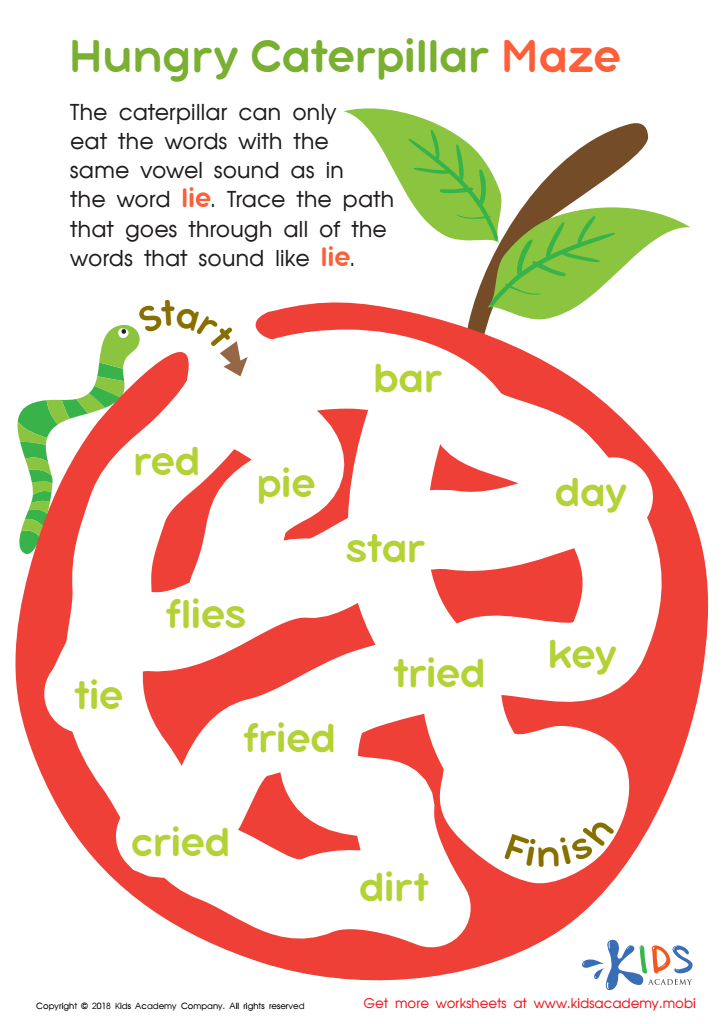
Hungry Caterpillar Maze Worksheet
Remind the kids that caterpillars turn into butterflies! This worksheet helps them practice their vowel sounds. They must trace the path of words that sound like ‘lie’ to help the caterpillar reach the finish line. It's a fun way to learn and explore!
Hungry Caterpillar Maze Worksheet
Worksheet
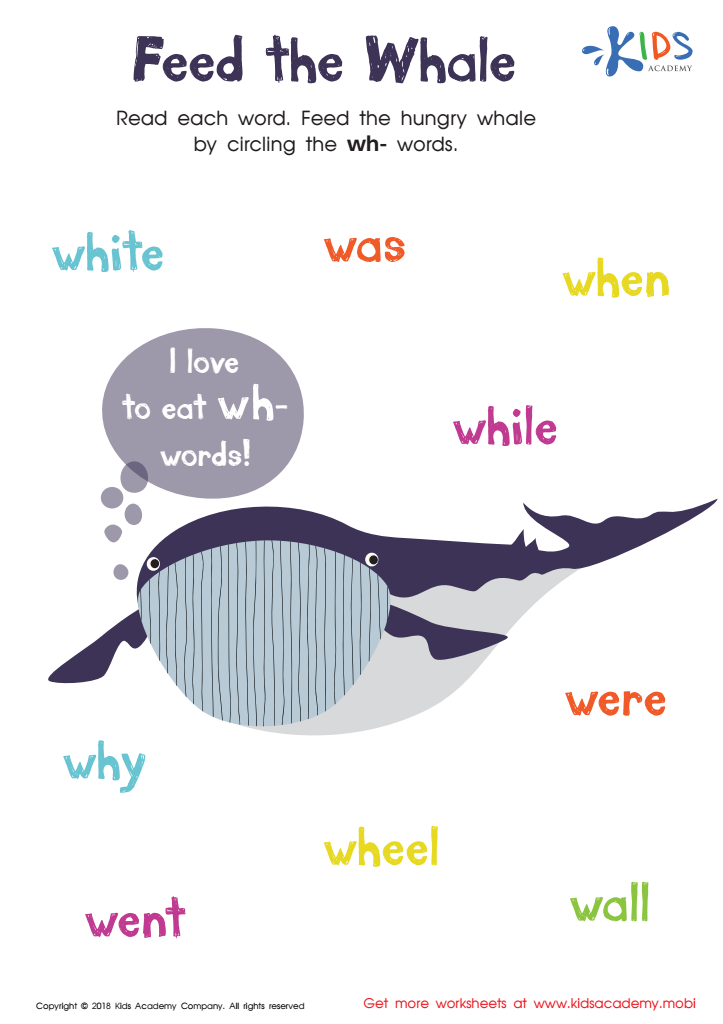
Feed the Whale Worksheet
Help your early reader build beginning consonant and blend recognition with this fun whale worksheet! They'll feed the whale wh- words, circle sight words, and build fine motor skills—all while discriminating between differently colored words.
Feed the Whale Worksheet
Worksheet
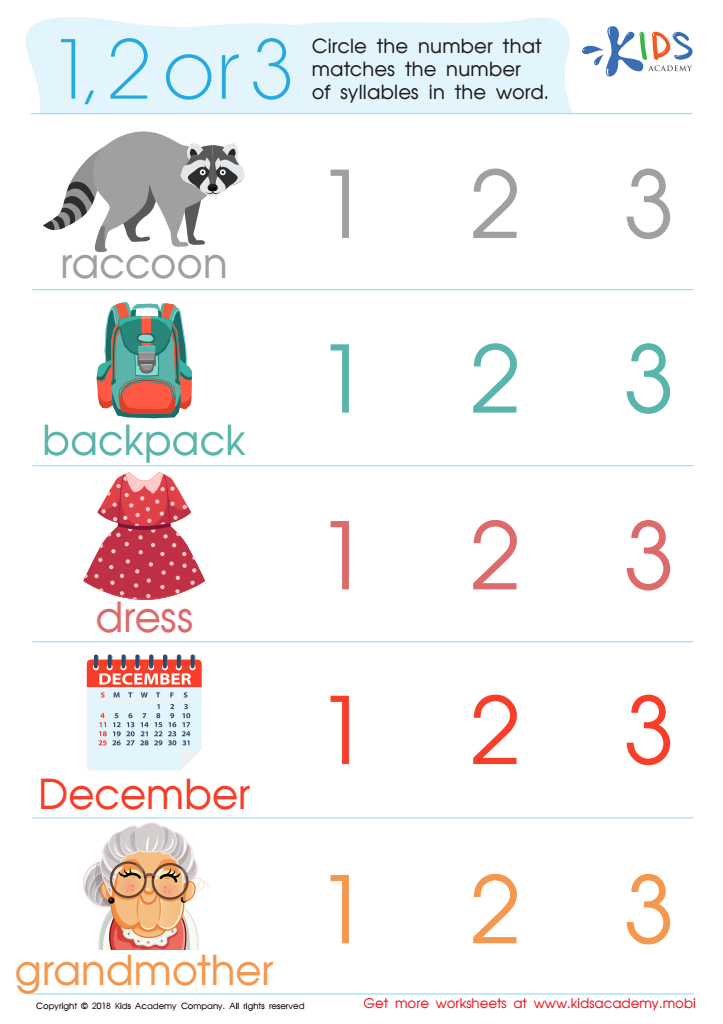
1, 2 or 3? Worksheet
Do your kids know about syllables? Test their understanding with this worksheet. Read the words aloud and ask them to say them with you. Help them circle the number that matches the number of syllables in each word. Perfect for expanding knowledge or testing how much they've already learned.
1, 2 or 3? Worksheet
Worksheet
Join Kids Academy for Free
Who is primarily going to use this learning content?








Fine motor skills are crucial for 6-year-olds as they enhance children’s ability to perform tasks that require dexterity, such as writing, drawing, and handling small objects. These skills are essential for academic success, particularly in early literacy development. Normal phonics instruction integrates these motor skills by involving activities that require children to manipulate letters, such as writing their names or forming words with letter tiles.
When parents and teachers prioritize fine motor skills alongside phonics, they lay a stronger foundation for reading and writing. Activities like coloring, cutting, and playing with building blocks not only improve coordination but also bring about greater confidence in their ability to express themselves.
Moreover, fine motor development contributes to cognitive growth, as it encourages problem-solving and creativity through hands-on activities. Improved fine motor skills can positively affect classroom behavior as children become more engaged and motivated learners.
By recognizing the significance of both fine motor skills and phonics, parents and teachers can create a nurturing environment tailored to foster early literacy. This proactive approach equips children with the essential tools needed for academic success and lifelong learning, enabling them to tackle future challenges with ease.







