
Phonics recognition Normal Phonics Worksheets for 6-Year-Olds
6 filtered results
Difficulty Level
Grade
Age
-
From - To
Subject
Activity
Standards
Explore our comprehensive Phonics Recognition worksheets designed specifically for 6-year-olds, fostering a solid phonics foundation crucial for reading success. These engaging worksheets help young learners recognize letter sounds, enhance their ability to decode words, and build essential early literacy skills. Using fun and interactive activities, children will confidently learn how to identify and pronounce phonemes, blending them for accurate word reading. Our expertly crafted resources make learning enjoyable, captivating young minds with vibrant visuals and age-appropriate tasks. Develop your child's reading skills with our reliable and effective phonics worksheets and witness their journey towards becoming proficient readers.
Favorites
With answer key
Interactive
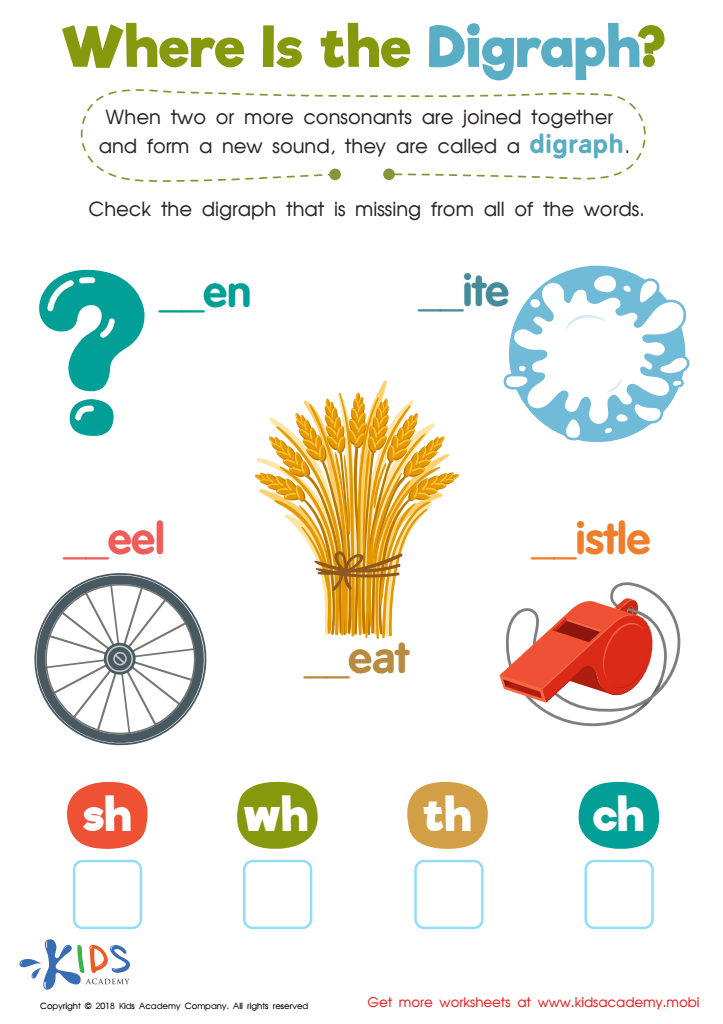
Where Is the Digraph? Worksheet
Teach your child about digraphs - two or more consonants that form one sound, like /wh/, /sh/, and /ch/. Show them words with these sounds and use this worksheet to help. Ask them which digraph is missing from the words and point out the pictures. 80 words.
 Assign to My Students
Where Is the Digraph? Worksheet
Worksheet
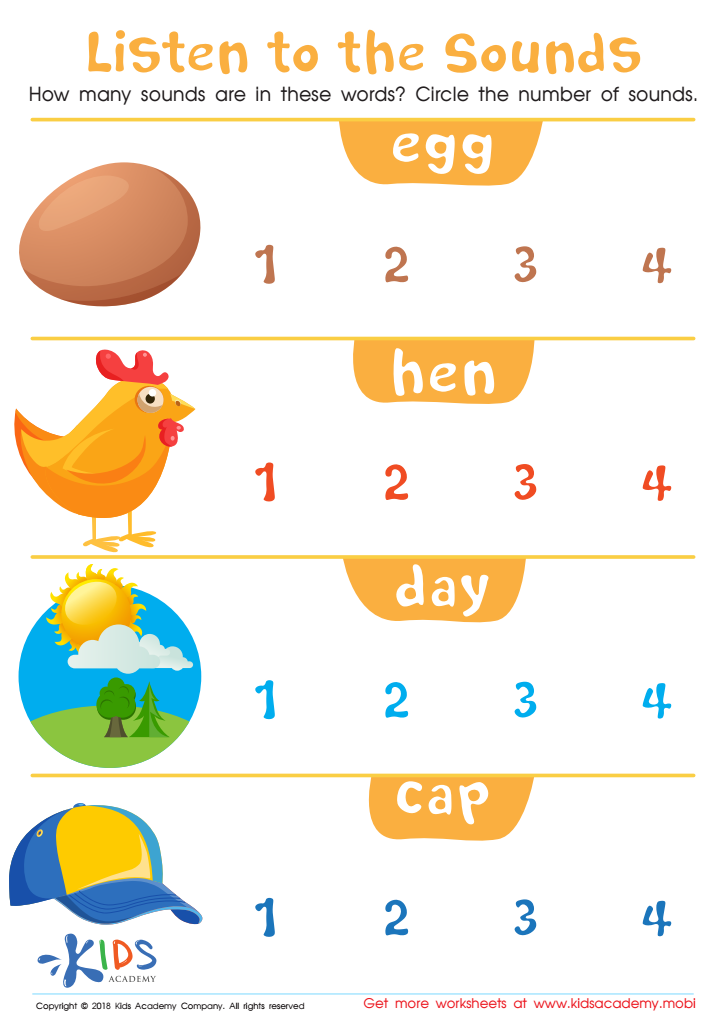
Listen to the Sounds Worksheet
This worksheet builds emerging readers' skills in using sounds for reading and spelling. It helps strengthen auditory processing by having them count the sounds in each word, then trace the corresponding number. Fun and cheerful!
Listen to the Sounds Worksheet
Worksheet
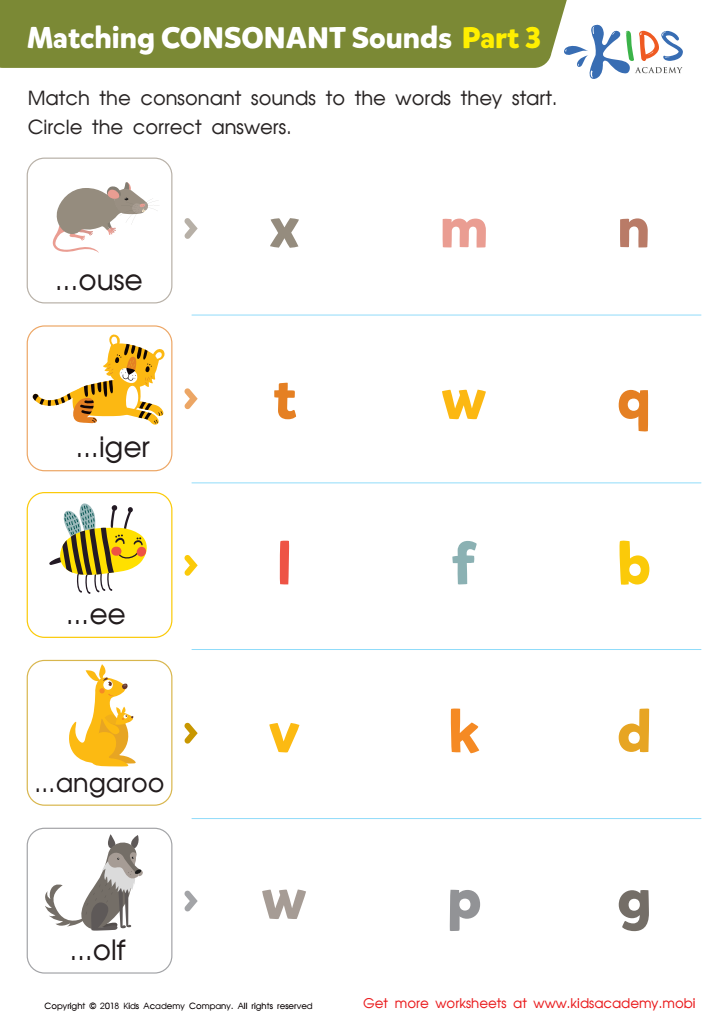
Matching Consonant Sounds: Part 3 Worksheet
Help your early learner match consonant sounds to words with this fun worksheet! Have them name the pictures and try out each letter in the corresponding column. When they hear the sound that matches, circle it. Have them write the letter in the box to complete the word. Work their way down the page until the critters' names all match with consonants!
Matching Consonant Sounds: Part 3 Worksheet
Worksheet
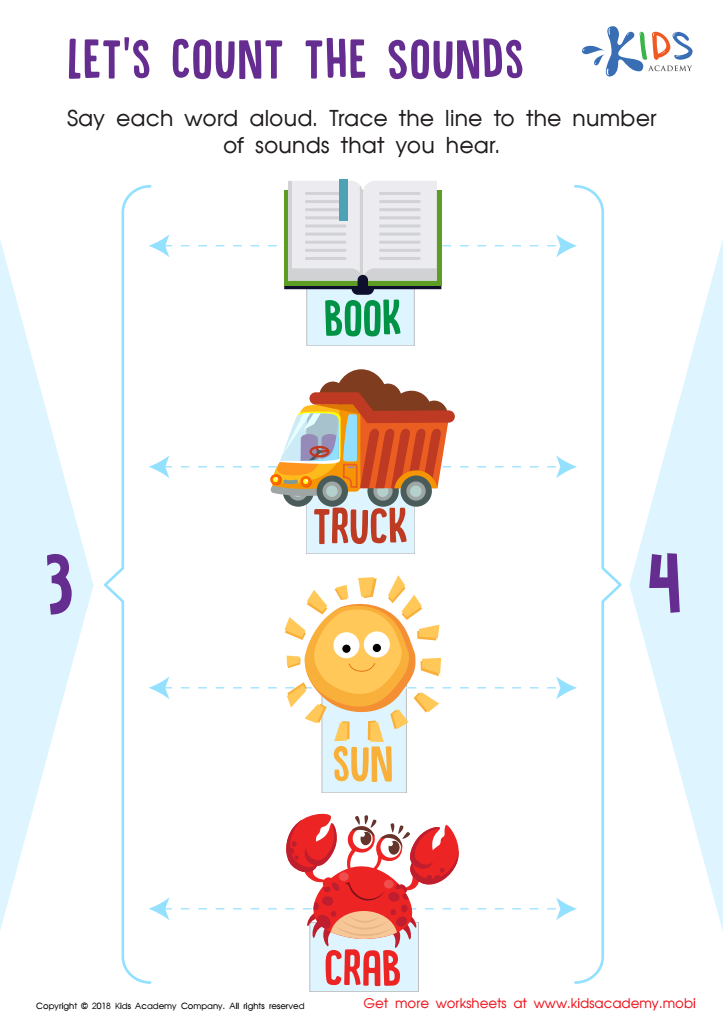
Let's Count the Sounds Worksheet
This bright and cheery traceable worksheet encourages children to practice auditory discrimination and phonological awareness. Using picture clues, they read each word and trace the line that represents the number of sounds heard. This builds decoding skills and helps them become successful readers.
Let's Count the Sounds Worksheet
Worksheet
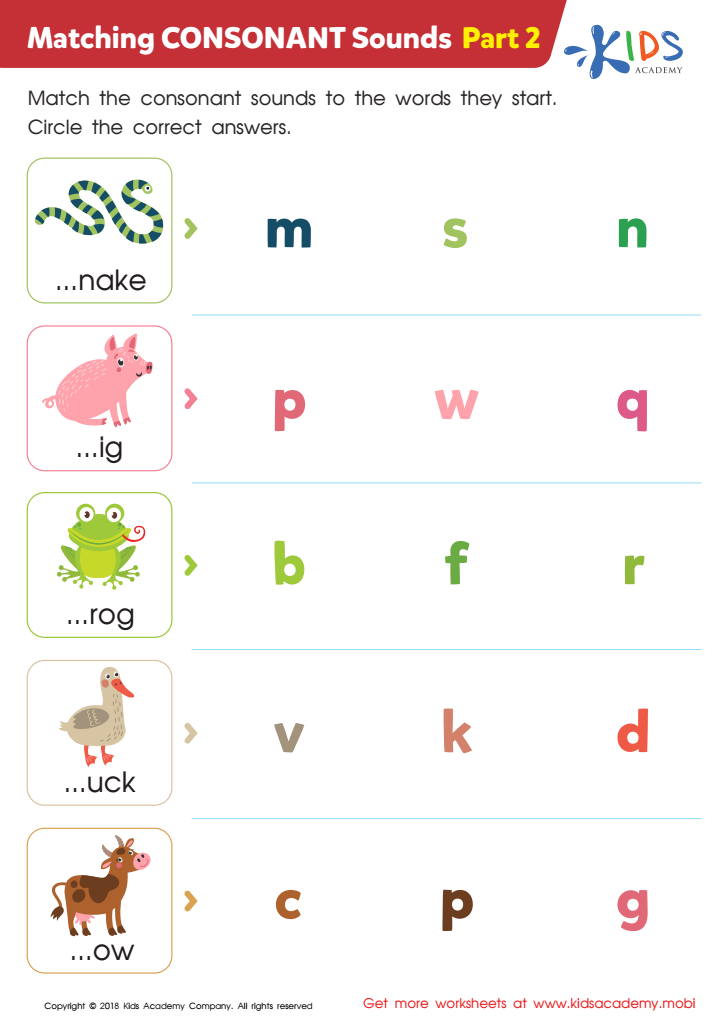
Matching Consonant Sounds: Part 2 Worksheet
Look at the picture, say the word and match the consonant sound with the letter. Coach your child to name the animal and complete the word. For extra challenge, write the missing letter in the box! This PDF worksheet helps kids learn to read words with familiar animal pictures.
Matching Consonant Sounds: Part 2 Worksheet
Worksheet
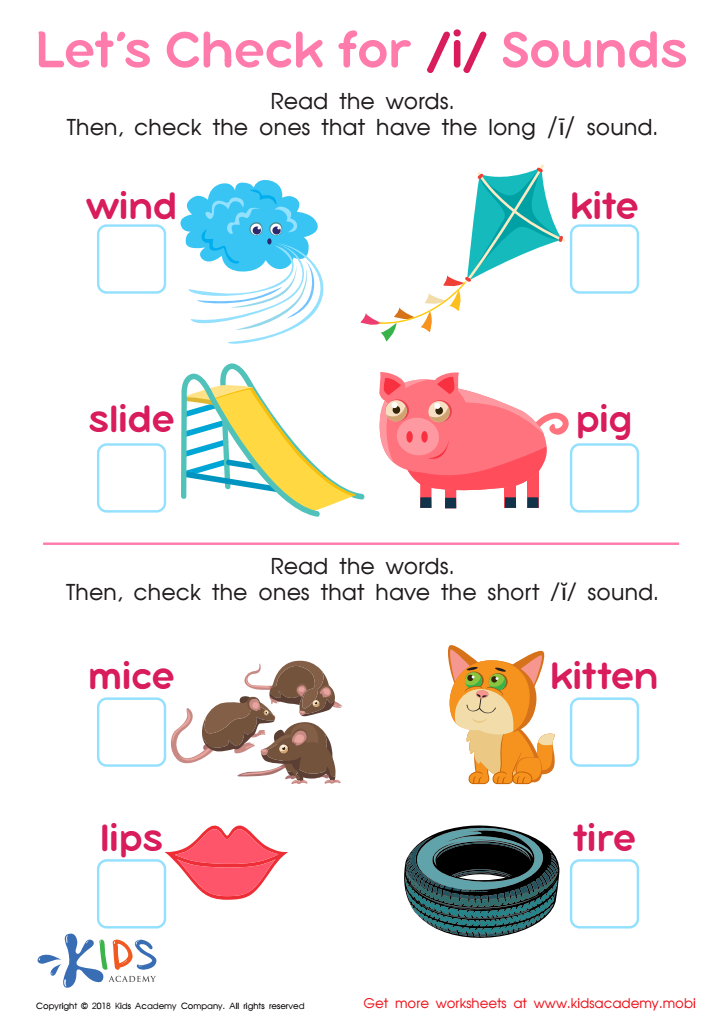
Let's Check for «i» Sounds Worksheet
This fun worksheet with pictures boosts phonics skills - differentiating between long «ī» and short «i» sounds in 1- and 2-syllable words. Kids use picture clues to read words, then check off the correct ones. It's a great way for new readers to practice early reading skills and find success on their own.
Let's Check for «i» Sounds Worksheet
Worksheet
Join Kids Academy for Free
Who is primarily going to use this learning content?








Phonics recognition plays a critical role in the early reading development of 6-year-olds. It refers to the ability of children to connect sounds with letters or groups of letters, crucial for decoding words. Parents and teachers need to recognize the importance of phonics because it provides a foundational skill set for reading fluency and comprehension.
When children learn phonics, they can break down new words into manageable sounds, making the process of reading less intimidating and more systematic. This early skill not only improves their ability to read independently but also enhances their spelling and writing abilities. Children who master phonics tend to develop a love for reading as they find it easier to understand and enjoy texts.
For educators and parents, investing time in phonics instruction means giving children tools they will use throughout their academic journey and beyond. Effective phonics teaching involves multisensory methods, like using songs, games, and visual aids, to cater to different learning styles.
Furthermore, early success in reading often leads to increased confidence and a positive attitude towards learning, contributing to overall academic performance. By prioritizing phonics recognition, parents and teachers actively support their child's cognitive development, fostering lifelong skills in literacy and communication.







