Spelling practice Normal Phonics Worksheets for 6-Year-Olds - Page 2
25 filtered results
-
From - To
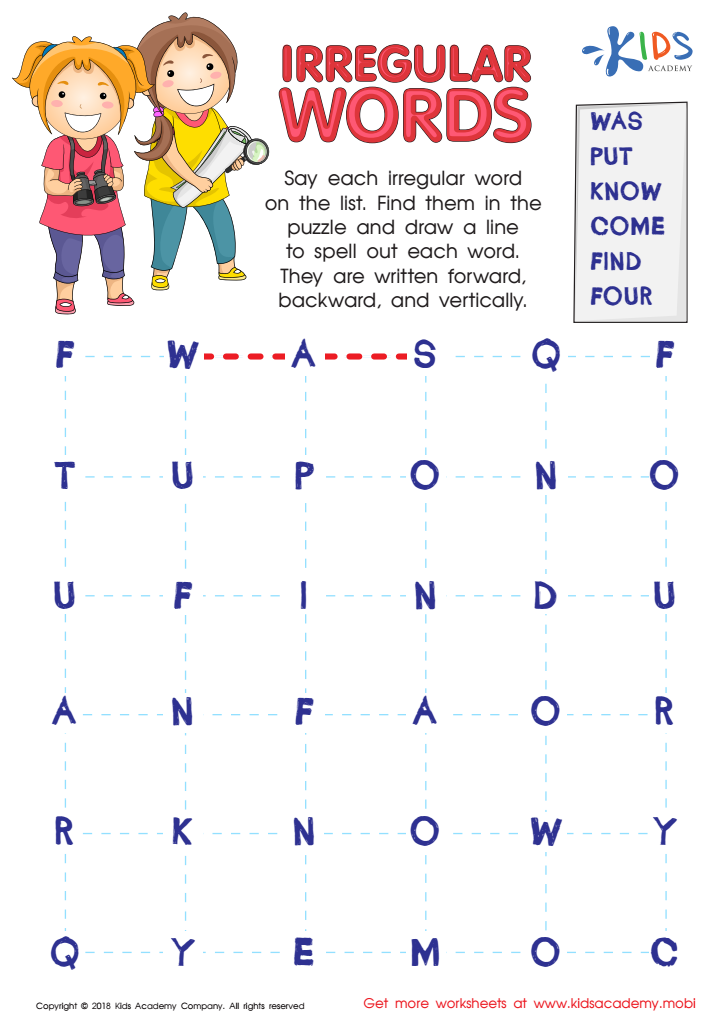
Irregular Words Worksheet
 Assign to My Students








Spelling practice rooted in normal phonics is crucial for 6-year-olds as it lays the foundation for essential literacy skills. At this age, children are typically developing their understanding of language structures, and phonics—which involves recognizing the relationship between sounds and their corresponding letters—is a key component in this learning phase. Engaging in regular phonics-based spelling practice helps children decode new words, enhancing their reading fluency and comprehension.
When parents and teachers prioritize phonics instruction, they equip children with the tools to independently figure out how to spell and read unfamiliar words, fostering both confidence and a love for learning. Phonics training also aids in developing better pronunciation and listening skills, as children learn to distinguish the subtle differences between sounds.
Additionally, early mastery of word recognition through phonics and spelling practice supports later academic success. Studies have shown a strong correlation between early literacy skills and later academic achievement, making this focus a crucial investment in a child's educational future. Finally, involving parents in spelling activities reinforces learning at home, creating a cohesive and supportive learning environment that benefits the child's overall development.







