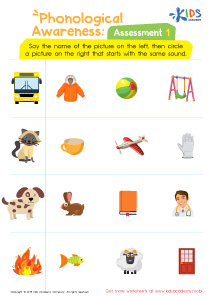
Phonics Skills Normal Two Letter Phonics Worksheets for 6-Year-Olds
4 filtered results
-
From - To
Enhance your 6-year-old's reading journey with our Phonics Skills Normal Two Letter Phonics Worksheets. Specially designed for emerging readers, these engaging worksheets cover essential phonics skills through focused two-letter combinations. Each activity boosts letter recognition, phonemic awareness, and early decoding abilities, providing a solid foundation for reading fluency. With vibrant visuals and interactive exercises, learning phonics becomes fun and effective. Ideal for both classroom and home use, our worksheets are the perfect tool to help your child master the building blocks of reading. Give your young learner the confidence to excel in their literacy development today!
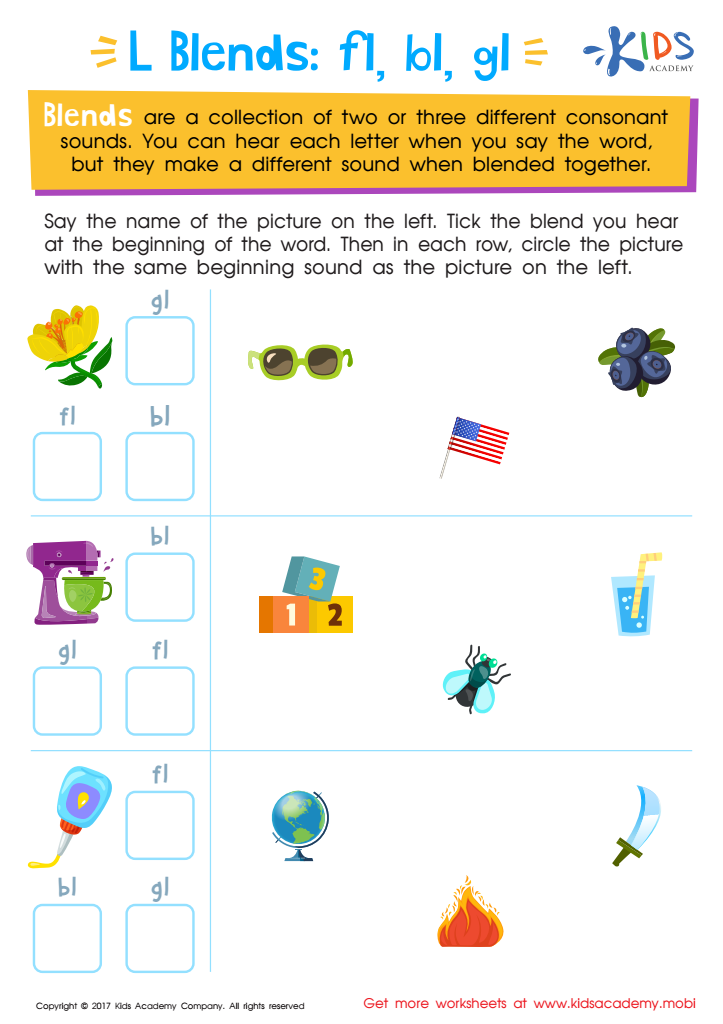
Blending Consonants: "Fl", "Bl" and "Gl" Printable
 Assign to My Students
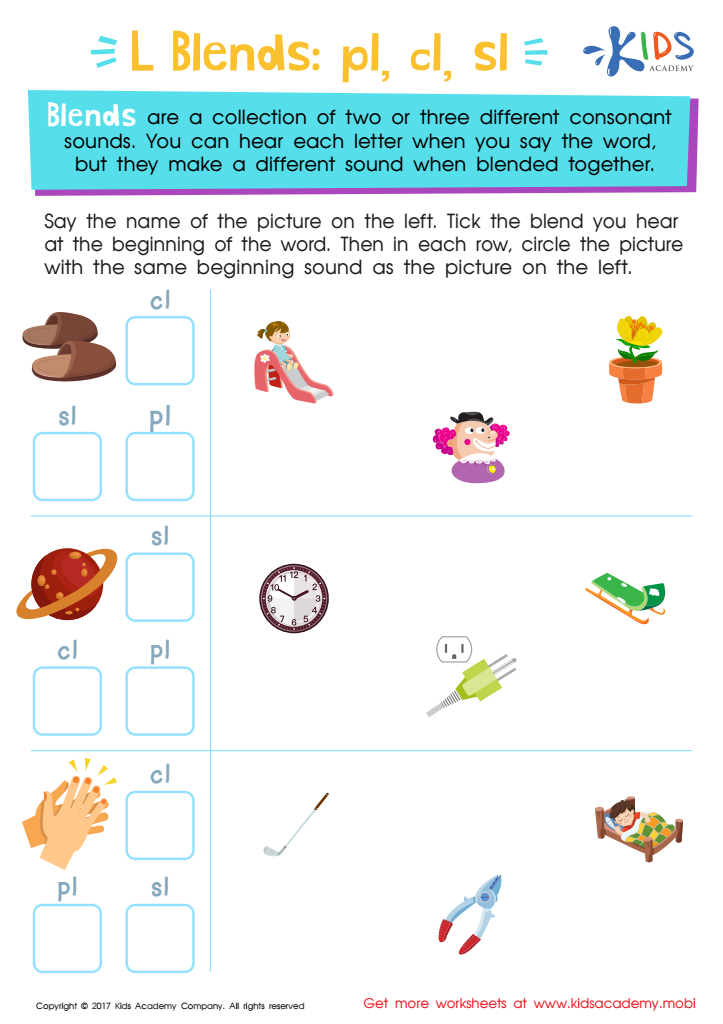
L Blends: "Pl", "Cl" and "Sl" Printable
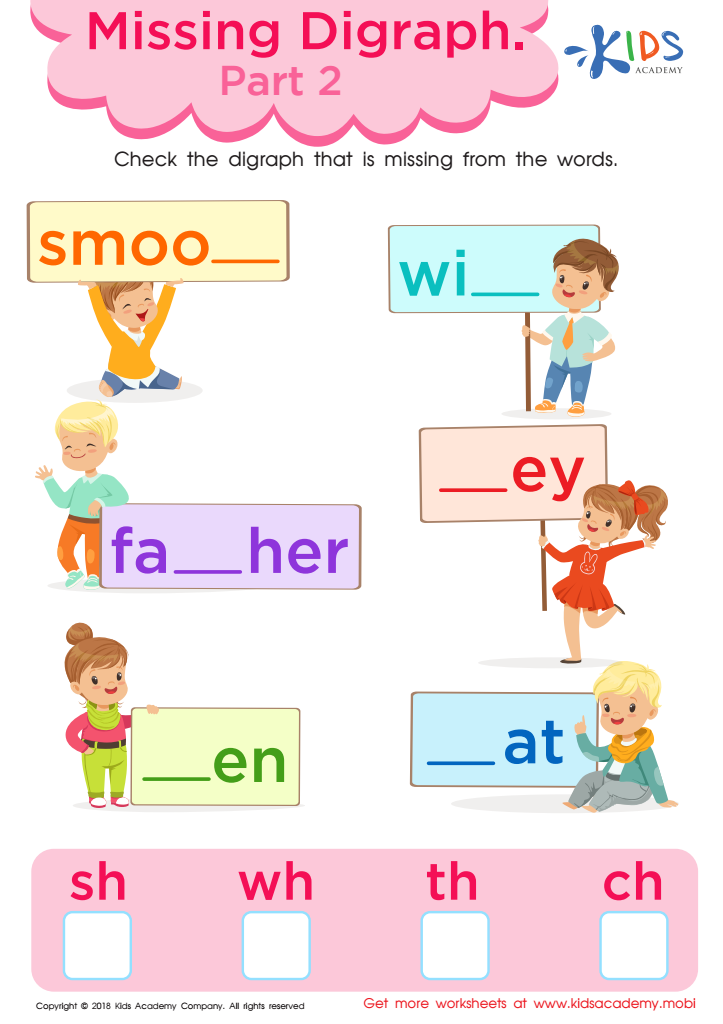
Missing Digraph: Part 2 Worksheet
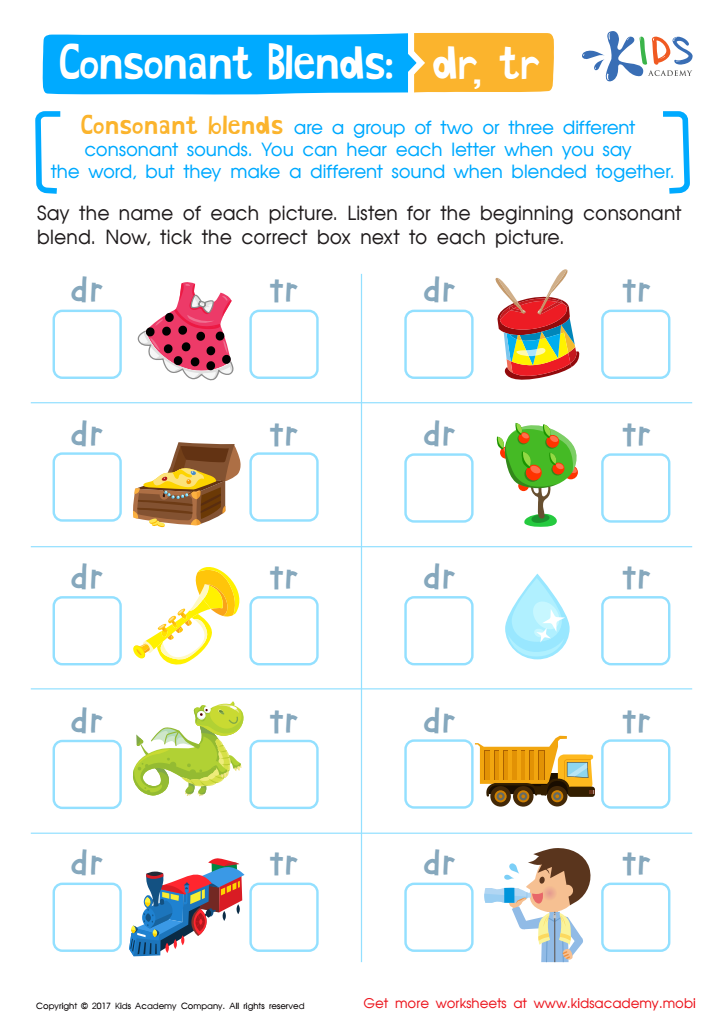
Consonant Blends: "Dr" and "Tr" Printable



Phonics skills are crucial for 6-year-olds as they form the foundation of a child's reading and writing abilities. Early mastery of normal two-letter phonics combinations, such as "sh," "ch," and "th," can significantly impact a child's literacy development. These skills help children decode words more efficiently, enhancing their reading fluency. When children can sound out words correctly, they not only read faster but also improve their comprehension, as they can focus on understanding the text rather than struggling to identify each word.
Parents and teachers should prioritize phonics instruction because it empowers children with the tools they need to become confident and independent readers. This early proficiency reduces frustration and fosters a love for reading, which is linked to long-term academic success. Moreover, early phonics skills are predictive of later spelling abilities. When children recognize and utilize these common letter combinations, they spell more accurately, boosting their overall writing skills.
Providing consistent and engaging phonics practice at an early age ensures that children develop solid reading habits, leading to better performance across all subjects in school. In summary, investing time and effort in teaching two-letter phonics not only supports a child's present literacy needs but also paves the way for their future educational achievements.