Visual discrimination skills Normal Upper & Lowercase Letters Worksheets for 6-Year-Olds
4 filtered results
-
From - To
Enhance your child’s visual discrimination skills with our "Normal Upper & Lowercase Letters Worksheets" designed specifically for 6-year-olds. These engaging worksheets focus on helping young learners recognize and differentiate between upper and lowercase letters. By using these easy-to-follow activities, children can develop critical reading and writing skills. Ideal for classroom use or at-home practice, these worksheets offer various exercises to reinforce letter recognition and improve attention to detail. Boost your child's confidence and foundational literacy skills with our expertly designed visual discrimination worksheets, perfect for early grade education and solidifying their alphabet knowledge.
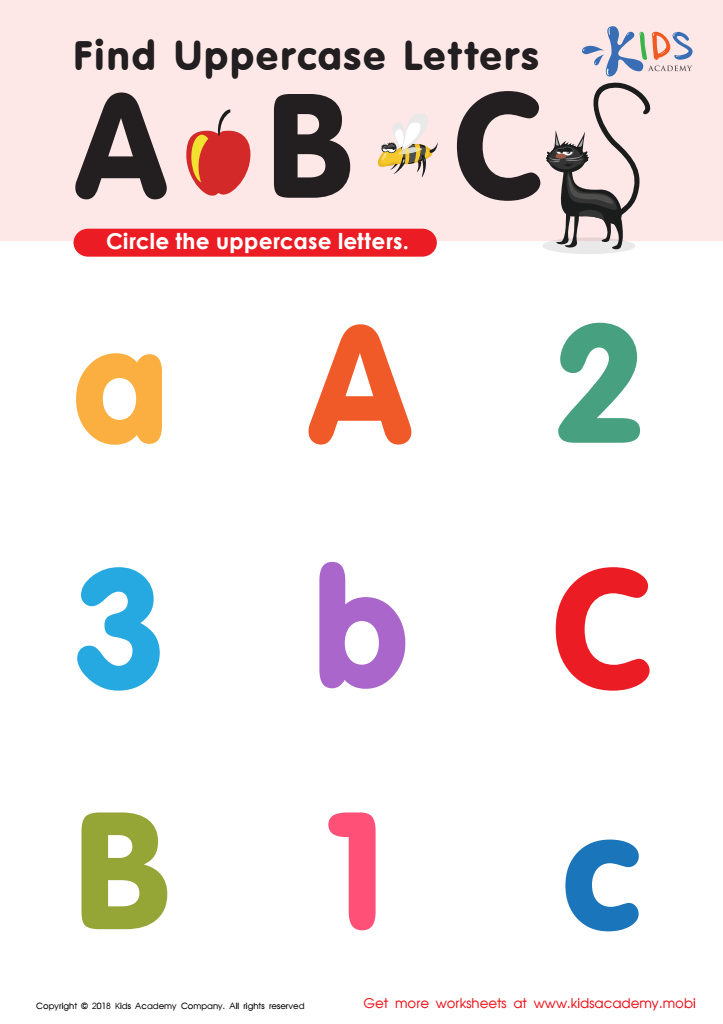
Find Uppercase Letters A, B, and C Worksheet
 Assign to My Students




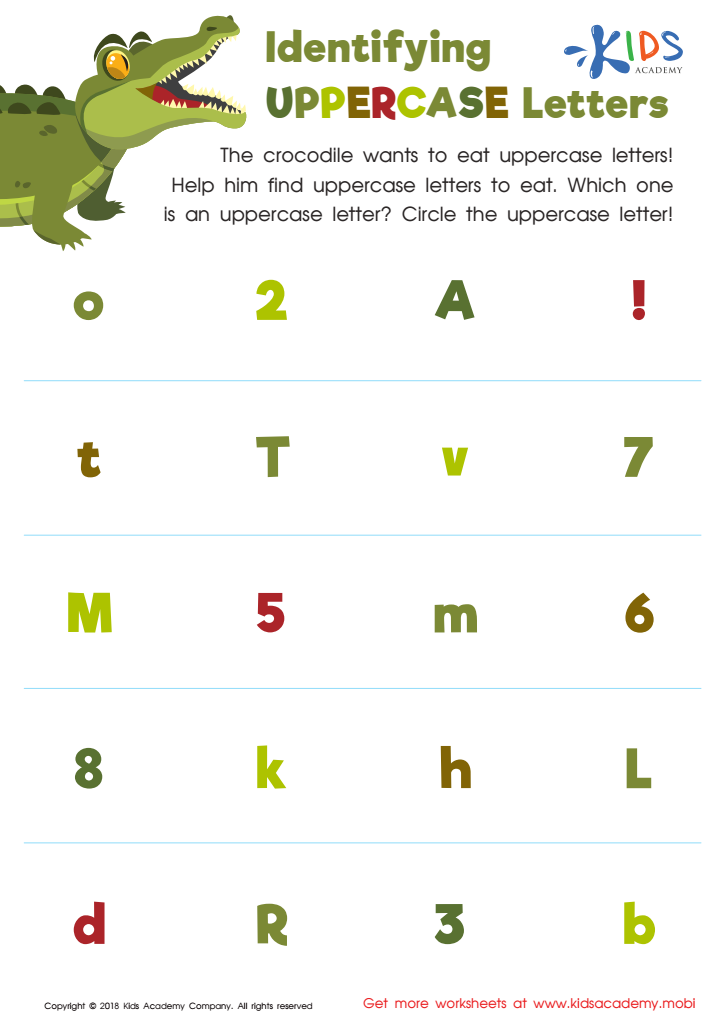
Identifying Uppercase Letters Worksheet
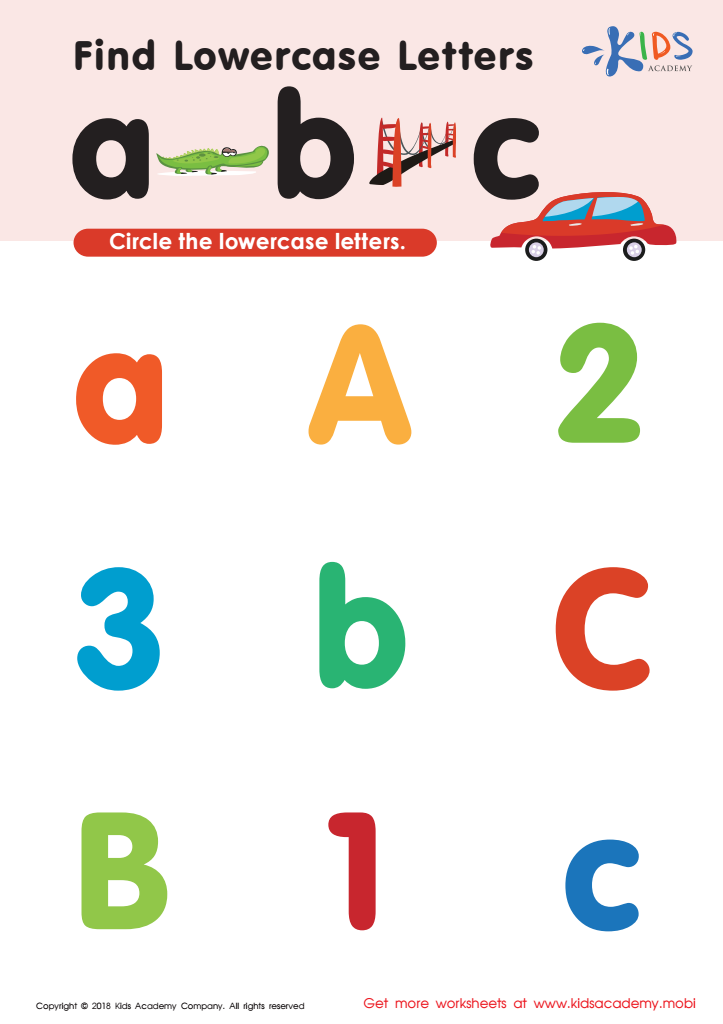
Find lowercase letters a b c Worksheet
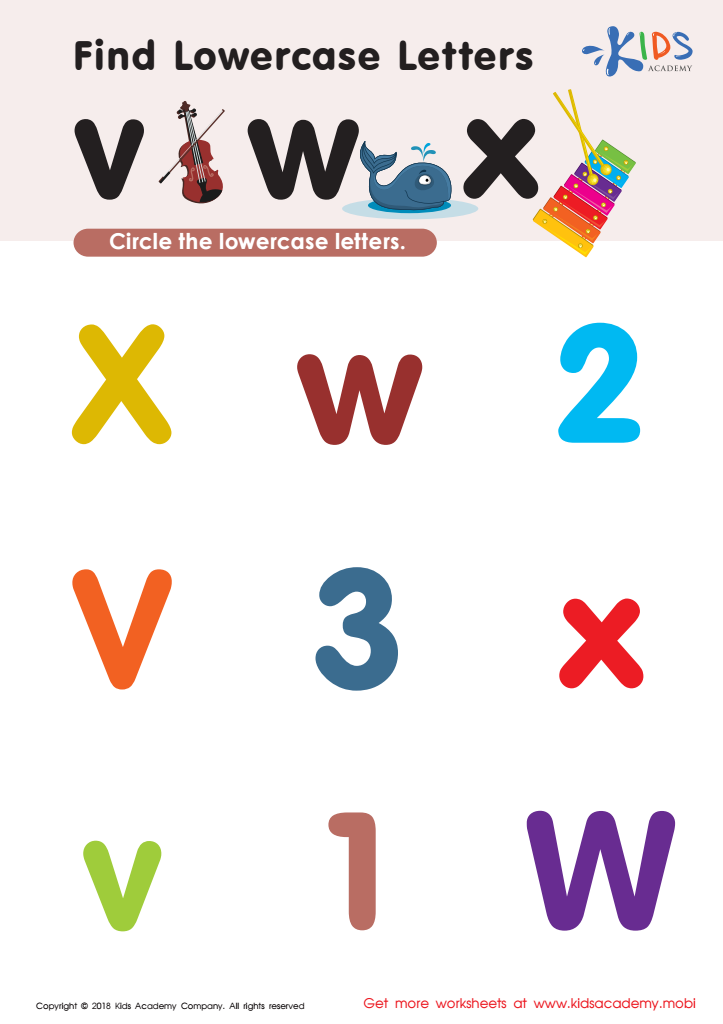
Find Lowercase Letters v w x Worksheet






Visual discrimination is the ability to detect differences and similarities in items, such as patterns, shapes, colors, and letters. For 6-year-olds, developing strong visual discrimination skills is crucial, particularly with upper and lowercase letters, because it directly impacts their ability to read and write effectively.
Reading requires recognizing and interpreting letters accurately. Misinterpreting letters, like confusing "b" and "d" or "p" and "q," can lead to difficulties in word recognition and reading comprehension. Visual discrimination helps children distinguish these subtle differences, ensuring they understand what they are reading.
In writing, understanding the differences between lowercase and uppercase letters is equally important. Each type serves different roles – uppercase letters often start sentences and signify proper nouns, while lowercase letters make up the majority of text. Children who can reliably identify and use both types demonstrate better organizational skills in writing and improve their communication clarity.
Furthermore, strong visual discrimination skills enhance overall academic performance. Children with well-developed abilities are more equipped to follow instructions accurately, complete puzzles, and understand mathematical problems involving shapes and patterns. Teachers and parents should foster these skills through activities like matching games, alphabet puzzles, and reading practice. Prioritizing visual discrimination sets a solid foundation for reading proficiency, writing clarity, and general cognitive development.







