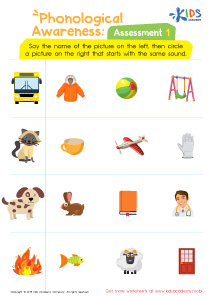
Vocabulary development Normal Vowels Worksheets for 6-Year-Olds
5 filtered results
-
From - To
Enhance your 6-year-old's vocabulary through engaging Normal Vowels Worksheets, meticulously designed to foster early language skills. These printable worksheets from Kids Academy focus on the fundamental vowels—A, E, I, O, U—helping children recognize, read, and write words effectively. Each activity encourages phonetic awareness, ensuring young learners develop strong reading practices. Suitable for various learning styles, the worksheets feature fun exercises including matching, tracing, and fill-in-the-blank tasks. Cultivate a love for language and empower your child with essential vocabulary skills through our expertly crafted and child-friendly resources.
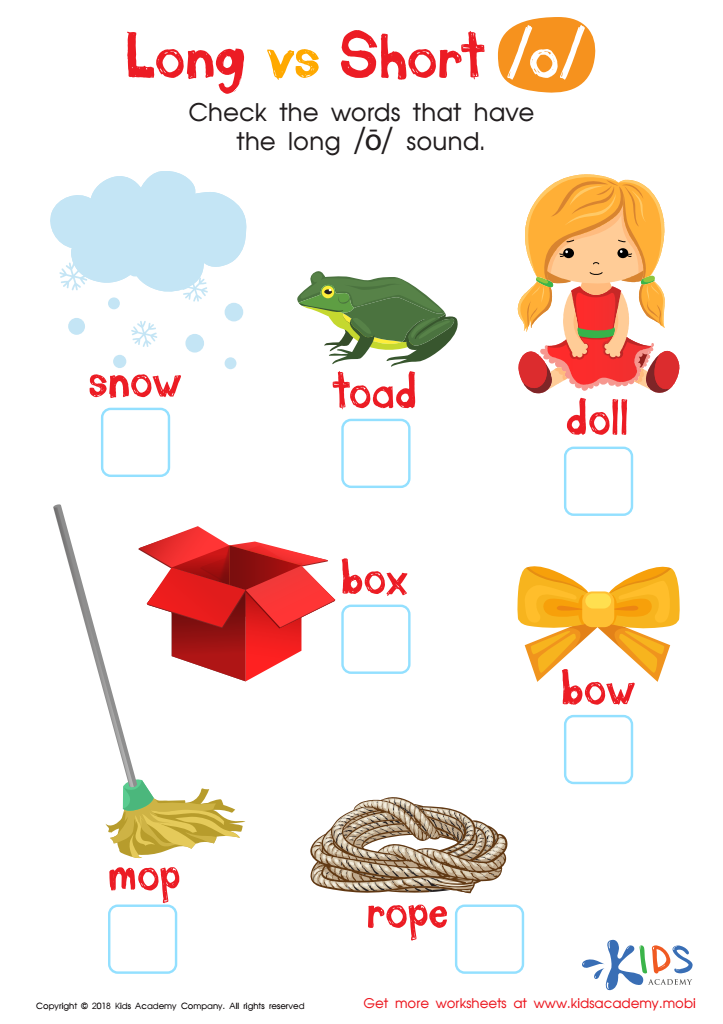
Long vs Short O Reading Worksheet
 Assign to My Students
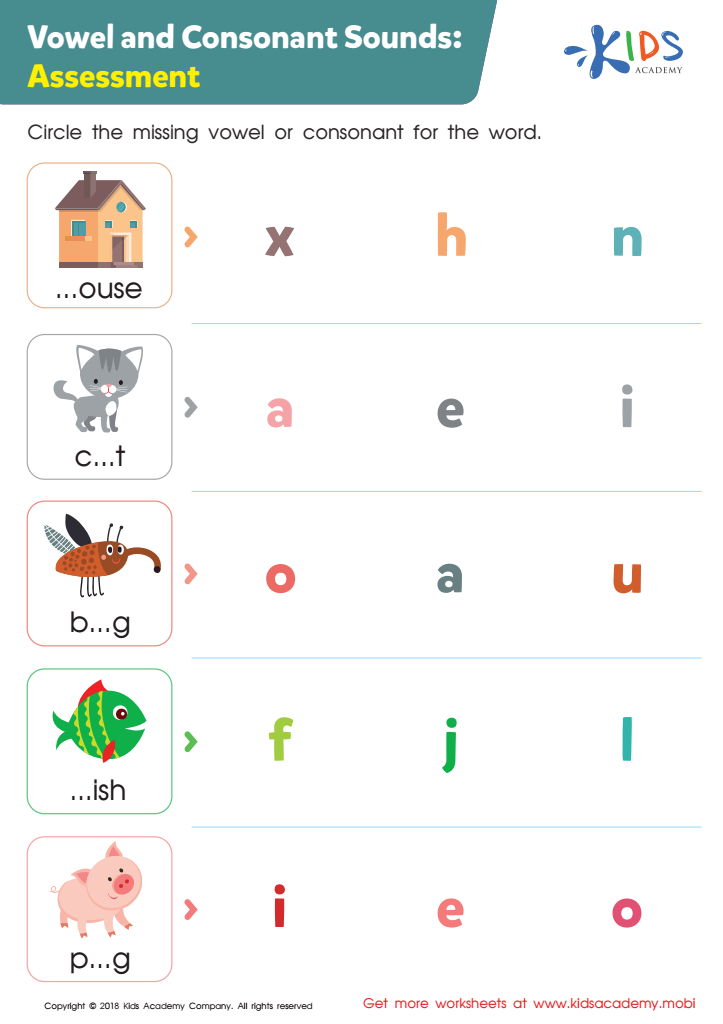
Vowel and Consonant Sounds: Assessment Worksheet
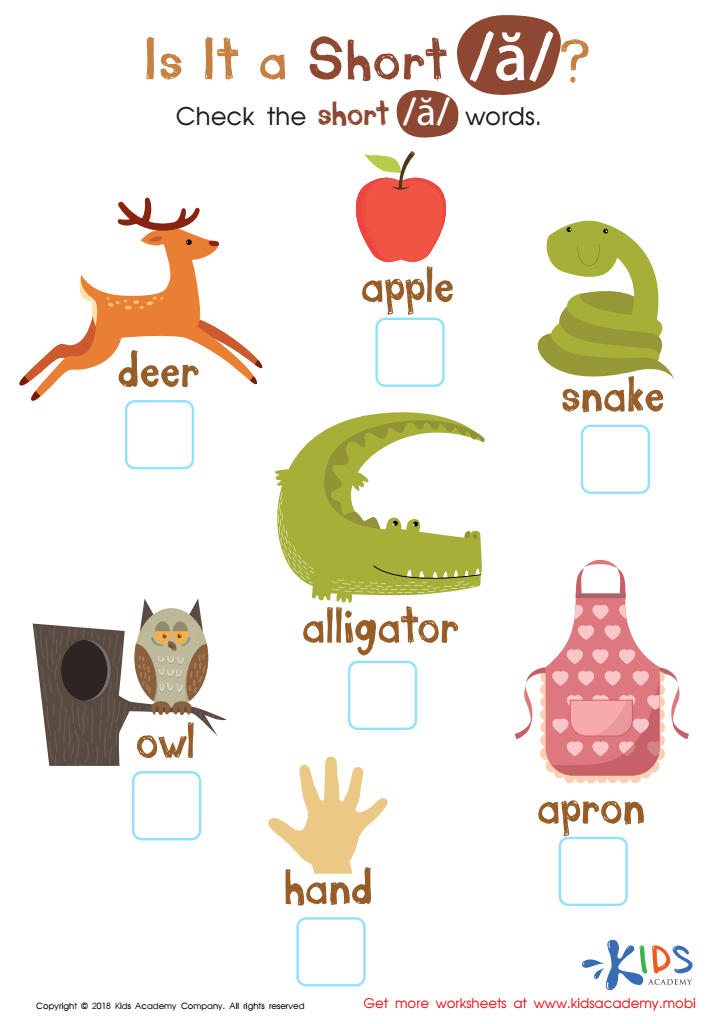
Is It Short A? Reading Worksheet
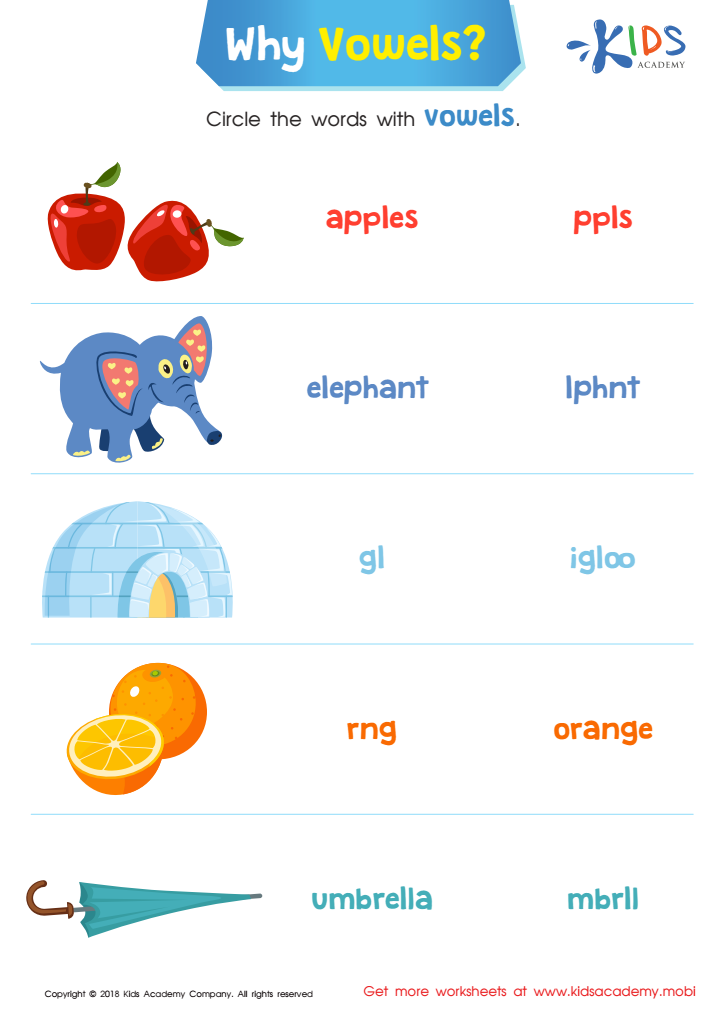
Why Vowels? Reading Worksheet
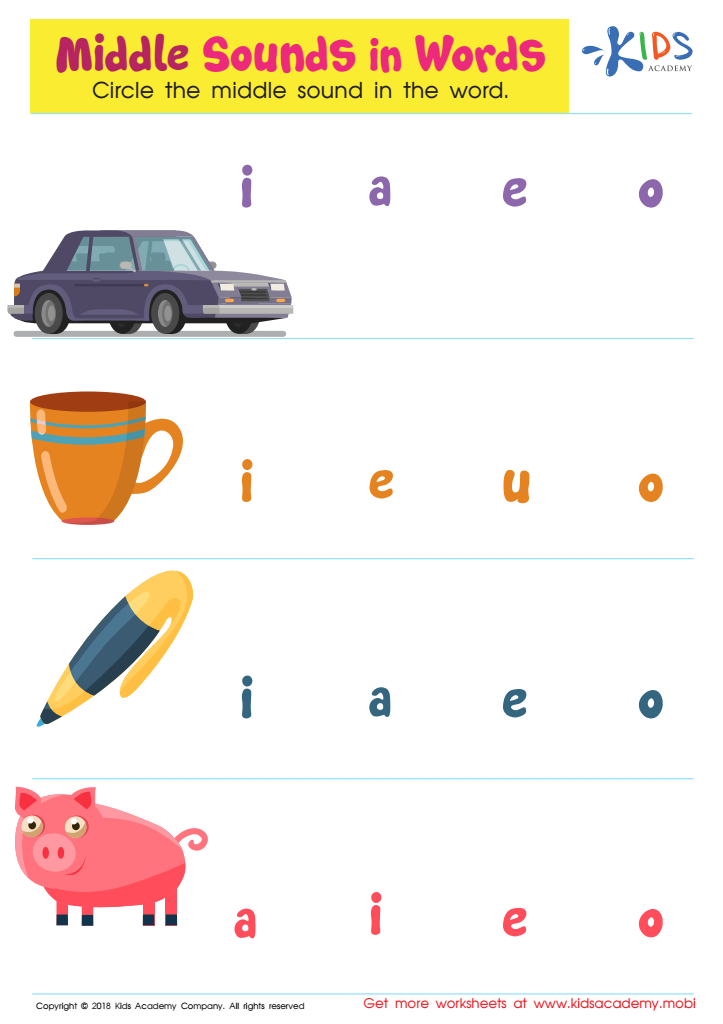
Middle Sounds in Words Worksheet





Vocabulary development and an understanding of normal vowel sounds are crucial for 6-year-olds for several key reasons. Firstly, a strong vocabulary acts as the foundation for effective communication. When children know and understand more words, they can express their feelings, thoughts, and needs more clearly. This boosts their confidence and social skills as they interact with others.
Secondly, vocabulary development is closely tied to reading comprehension. As children encounter new words in books, having a broad vocabulary enables them to understand and enjoy stories, fostering a love for reading. This directly impacts their academic success, as reading is integral to almost all subjects in school.
Normal vowel sounds form the building blocks of phonemic awareness, a critical pre-reading skill. When children grasp the vowel sounds and how they fit into words, they improve their decoding abilities, making it easier for them to learn to read and spell accurately. This, in turn, accelerates their ability to read fluently and comprehend texts at higher levels.
Lastly, the early years are a critical period for language acquisition. Incorporating diverse vocabulary and emphasizing vowel sounds can promote cognitive development and set a lifelong pattern of learning. Thus, parents and teachers should prioritize vocabulary and vowel education to foster robust language skills, ensuring children are well-prepared for future academic challenges.