Basic astronomy knowledge Normal Worksheets for 6-Year-Olds
3 filtered results
-
From - To
Unlock the wonders of space with our Basic Astronomy Knowledge Normal Worksheets for 6-year-olds. Designed to ignite young minds, these worksheets introduce fundamental concepts of astronomy, perfect for budding stargazers. Through engaging activities and fun exercises, children will learn about planets, stars, and the solar system, enhancing their curiosity and knowledge. Each worksheet is crafted to be both educational and entertaining, fostering a love for science from an early age. Parents and teachers can rely on these resources to build a solid foundation in astronomy, sparking imagination and promoting lifelong learning. Explore the universe with our age-appropriate astronomy worksheets!
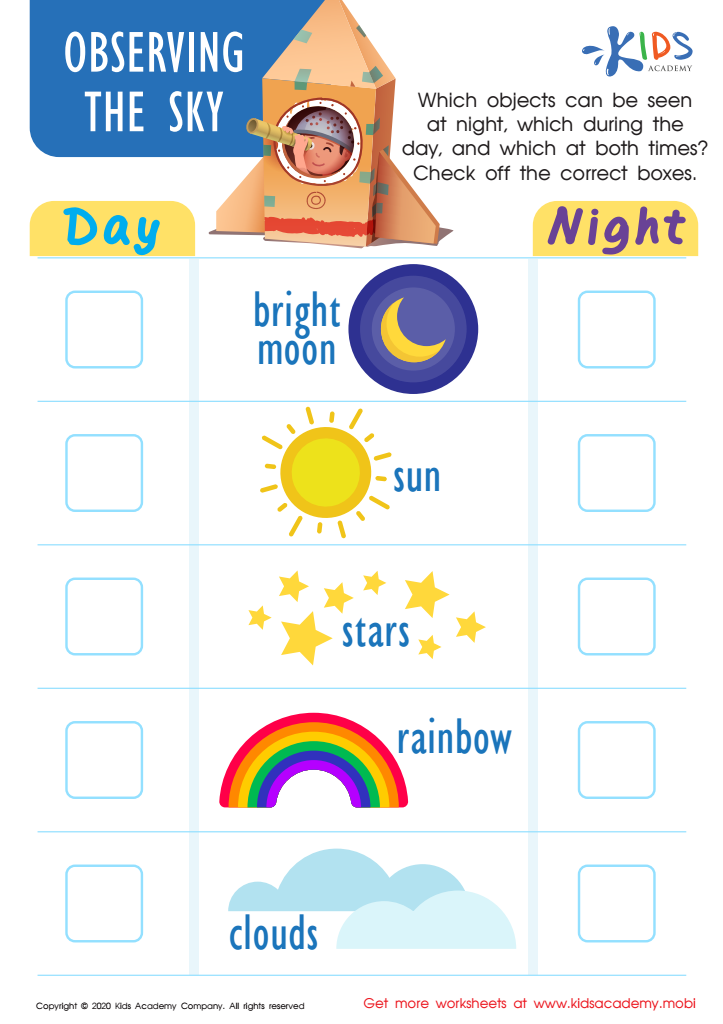
Observing the Sky Worksheet
 Assign to My Students
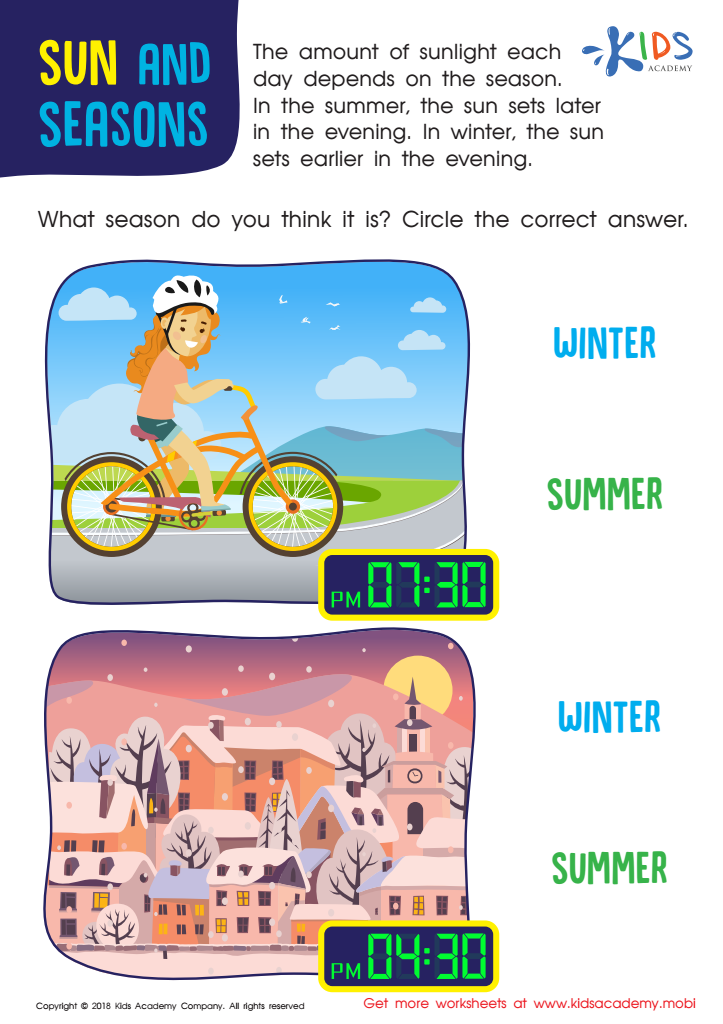
Sun and Seasons Worksheet
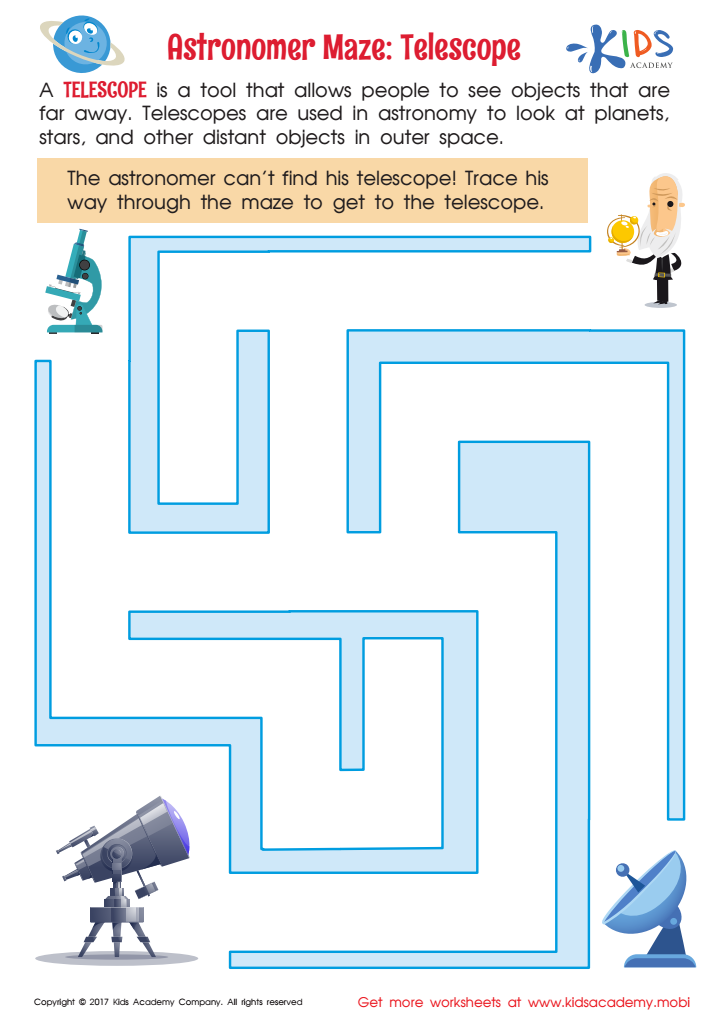
Astronomer Maze: Telescope Worksheet







Teaching basic astronomy to 6-year-olds is not only fascinating but also highly beneficial for their overall development. First, introducing children to astronomy at a young age fosters curiosity and a sense of wonder about the natural world. This excitement about discovery can ignite a lifelong passion for learning and exploration.
Moreover, basic astronomy lessons help develop critical thinking and observational skills. As children learn about the Moon, stars, and planets, they ask questions, make predictions, and observe patterns—skills that are foundational for scientific reasoning. Understanding basic concepts like the Earth's rotation or the phases of the Moon also boosts cognitive development by enhancing spatial awareness and comprehension of time.
In addition to intellectual growth, early exposure to astronomy can improve language skills. Learning new terms like "orbit," "planet," and "telescope" enriches vocabulary and stimulates communication. Discussing these concepts encourages children to express complex ideas and ask more detailed questions, thereby improving their verbal abilities.
Finally, basic astronomy knowledge promotes emotional and social development. Looking at the vastness of the sky can give children a sense of perspective, invoking feelings of wonder and belonging to a larger universe. Sharing this experience with peers or family members, whether through stargazing or interactive activities, can strengthen social bonds and teamwork.
Therefore, both parents and teachers should prioritize basic astronomy education for young children, as it nurtures intellectual, physical, and emotional growth.








