Basic measurement concepts Normal Worksheets for 6-Year-Olds
3 filtered results
-
From - To
Discover our engaging Basic Measurement Concepts worksheets, designed specifically for 6-year-olds. These interactive activities introduce young learners to essential measurement skills, helping them grasp ideas such as comparing lengths, weights, and volumes through fun exercises. Each worksheet is tailored to capture children's interest, with colorful visuals and relatable scenarios that promote hands-on learning. By practicing with these worksheets, kids will build confidence in their measurement abilities while developing critical thinking and problem-solving skills. Perfect for home or classroom use, our Basic Measurement Concepts worksheets pave the way for a solid foundation in mathematics. Unlock your child’s potential in measurement today!
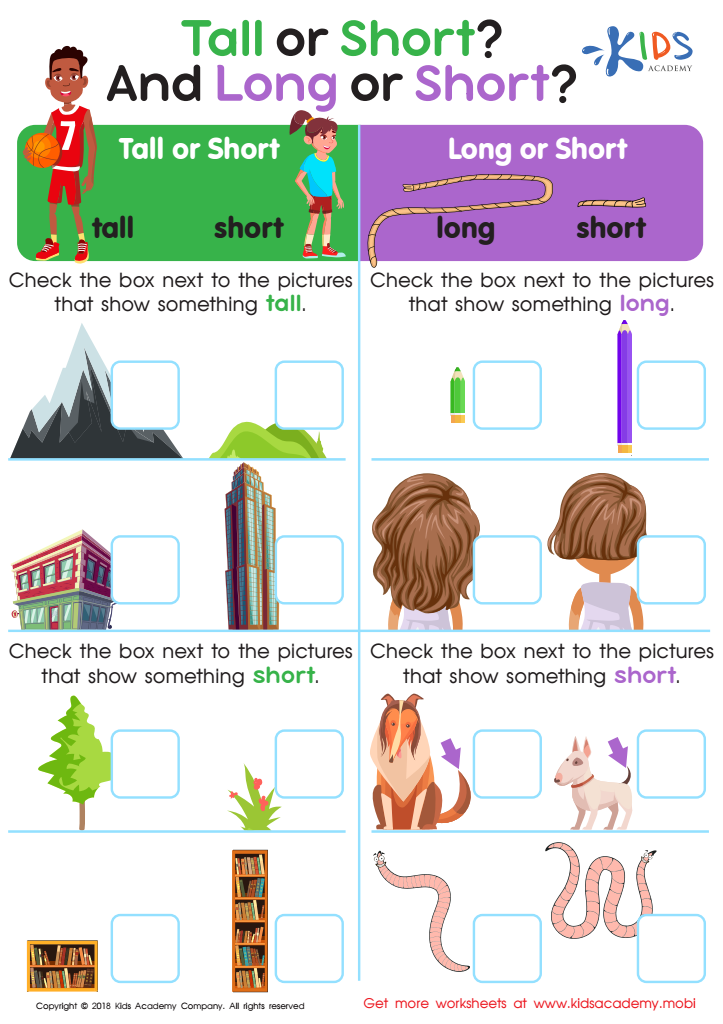
Tall or Short and Long or Short? Worksheet
 Assign to My Students
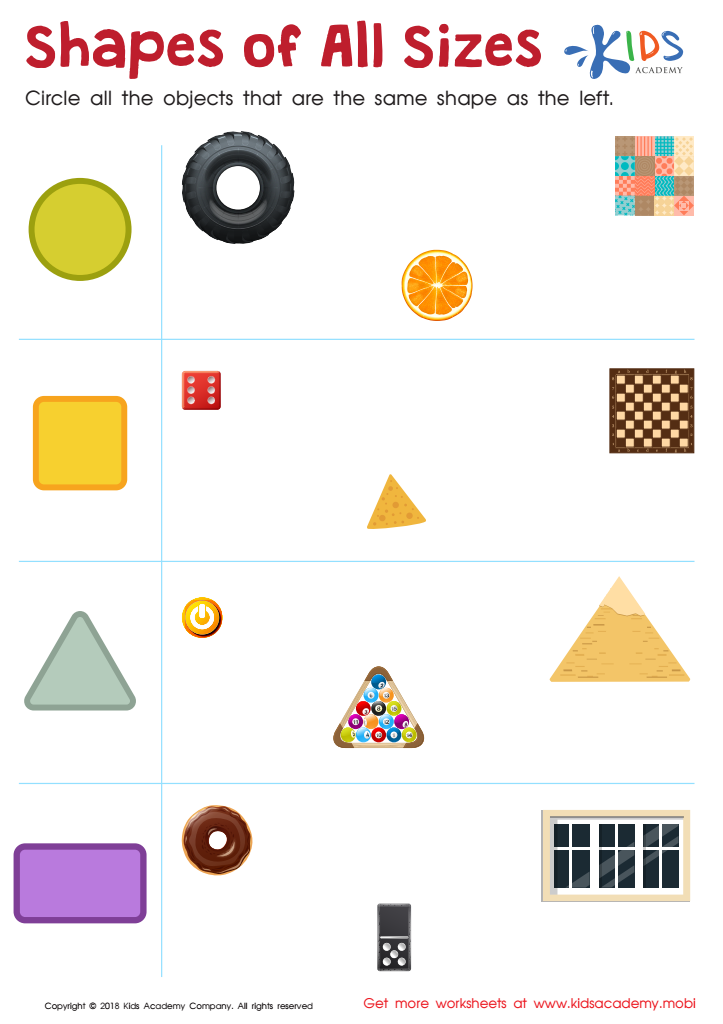
Shapes of All Sizes Worksheet
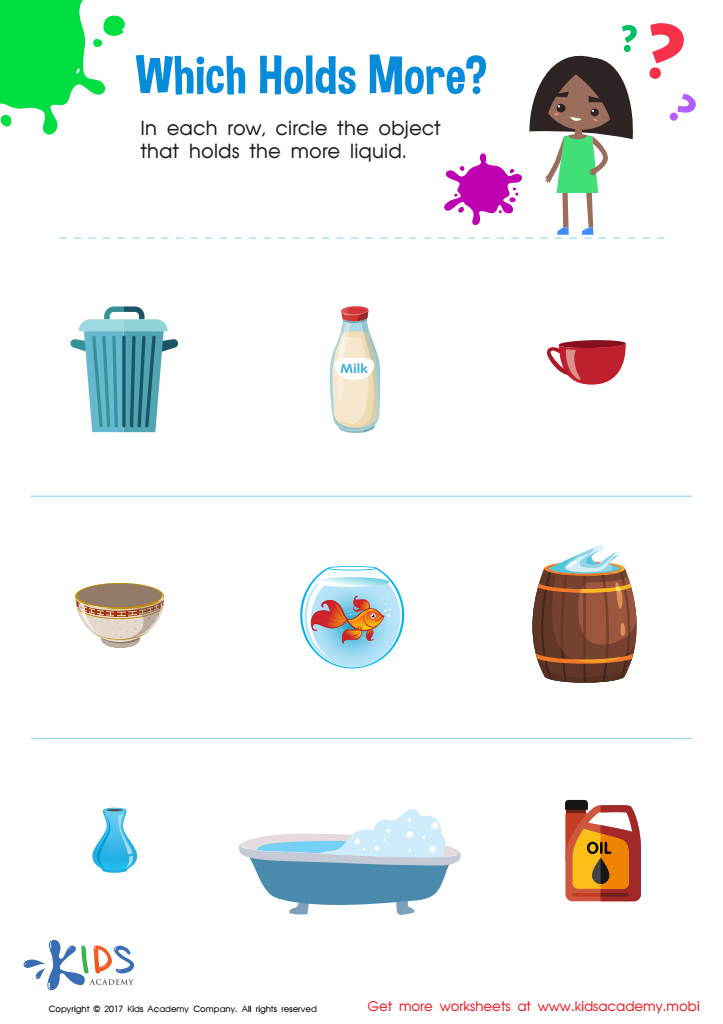
Which Holds More: Capacity Worksheet








Understanding basic measurement concepts is crucial for six-year-olds, as it lays the groundwork for their mathematical skills and everyday functioning. At this age, children are naturally curious about the world around them, and measurement provides a tangible way for them to engage with their environment. By introducing concepts like length, weight, volume, and time, parents and teachers can help children develop critical thinking and problem-solving abilities.
Measurement activities bridge the gap between play and learning; for example, using measuring cups in cooking or comparing the height of objects fosters an intuitive understanding of quantity and size. Moreover, these concepts support language development as children learn to express comparisons using terms like longer, heavier, or more.
Additionally, when children grasp measurement concepts, they gain confidence in their ability to interact with their surroundings. This foundational knowledge contributes to their performance in later grades, as measurement is an essential component of advanced mathematical concepts. Parents and teachers should prioritize teaching these basics to encourage exploration, promote logical reasoning, and spark interest in STEM fields, ultimately preparing young learners for a successful educational journey.








