Knowledge application Normal Worksheets for 6-Year-Olds
3 filtered results
-
From - To
Explore our “Knowledge Application Normal Worksheets for 6-Year-Olds,” designed to enhance critical thinking and problem-solving skills in young learners. These engaging worksheets are tailored to stimulate curiosity and help children apply their knowledge in practical scenarios. Each activity encourages children to connect concepts, fostering their ability to analyze situations and make informed decisions. Ideal for home or classroom use, our worksheets promote independent learning, creativity, and confidence. Download today to provide your child with an interactive and fun way to reinforce their understanding of essential skills. Begin their journey towards confident knowledge application in everyday life!
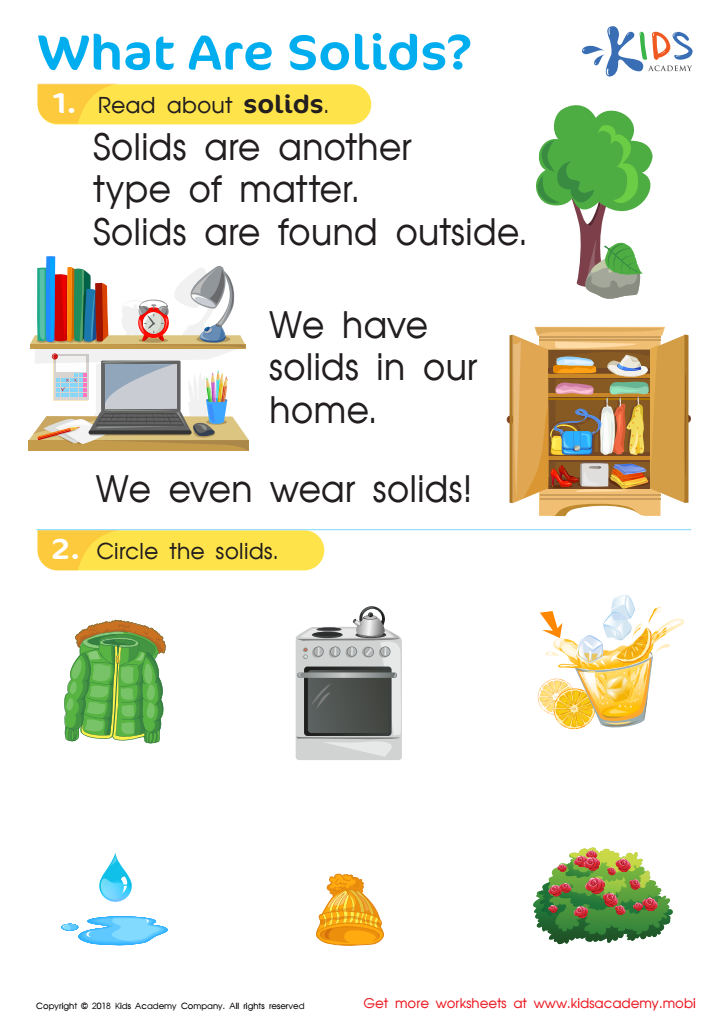
What Are Solids? Worksheet
 Assign to My Students
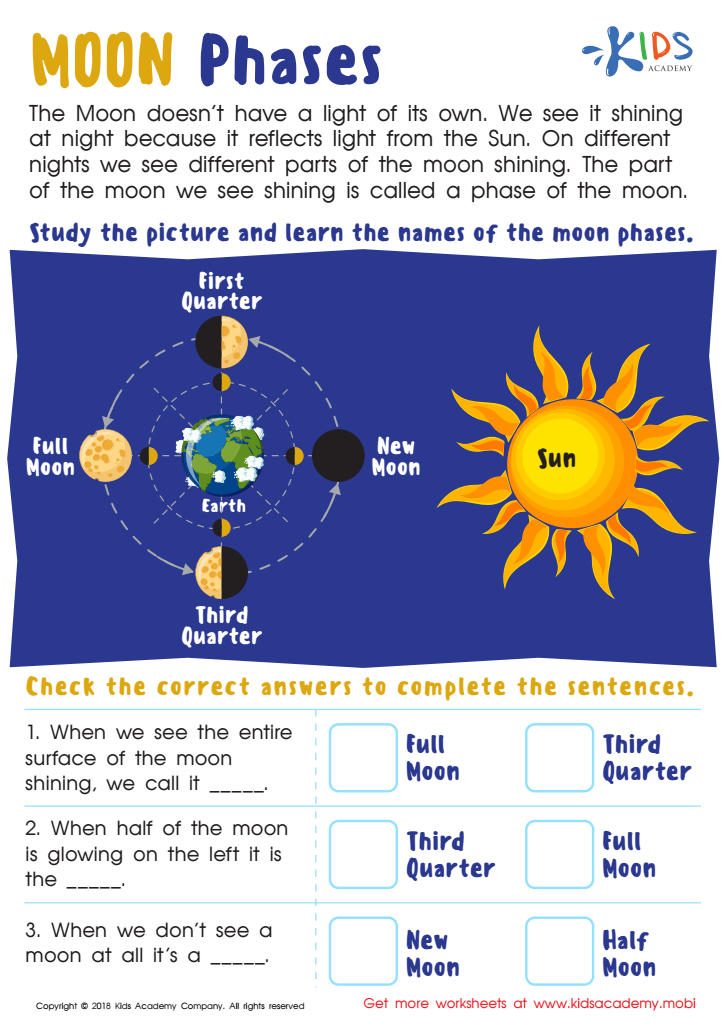
Moon Phases Worksheet
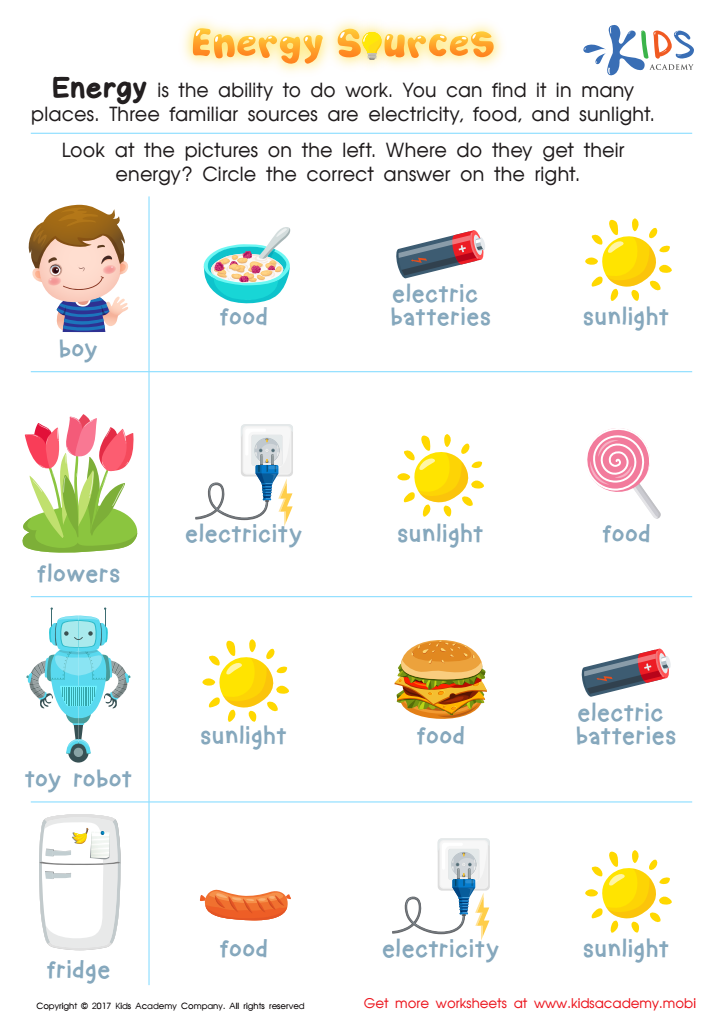
Energy Sources Printable





.jpg)


Knowledge application is crucial for 6-year-olds as it transforms theoretical learning into real-world skills. At this age, children are not merely memorizing facts; they are beginning to connect what they learn to everyday experiences. When parents and teachers prioritize knowledge application, they foster critical thinking and problem-solving abilities in young learners.
By encouraging children to apply what they've learned, educators can help students take ownership of their learning. This leads to increased engagement, motivation, and retention of information. For example, a child who learns about shapes can find and identify these shapes in their environment, enhancing their observational skills and making learning relevant.
Moreover, applying knowledge reinforces social skills as children often collaborate in completing tasks or solving problems. This social interaction is essential at a stage when they are developing emotional intelligence and teamwork skills.
Ultimately, when parents and teachers support knowledge application, they help children become active learners who approach problems creatively and adaptively. This foundation not only nurtures academic growth but also prepares them to navigate various real-life situations, setting the stage for lifelong learning and resilience. Supporting knowledge application lays a strong groundwork for both cognitive and social development during these formative years.








