Map reading skills Normal Worksheets for 6-Year-Olds
5 filtered results
-
From - To
Map reading skills are fundamental for young minds, and our carefully crafted worksheets for 6-year-olds make learning both fun and educational. These activities introduce children to basic concepts like identifying landmarks, understanding symbols, and following simple routes. Designed to engage young learners, the worksheets combine visual elements with easy-to-follow instructions, fostering critical thinking and spatial awareness. Perfect for classroom use or at-home practice, these exercises help kids develop confidence in navigating maps and understanding their surroundings. Explore our selection of normal map reading worksheets to inspire your child's curiosity and boost their geographical skills!
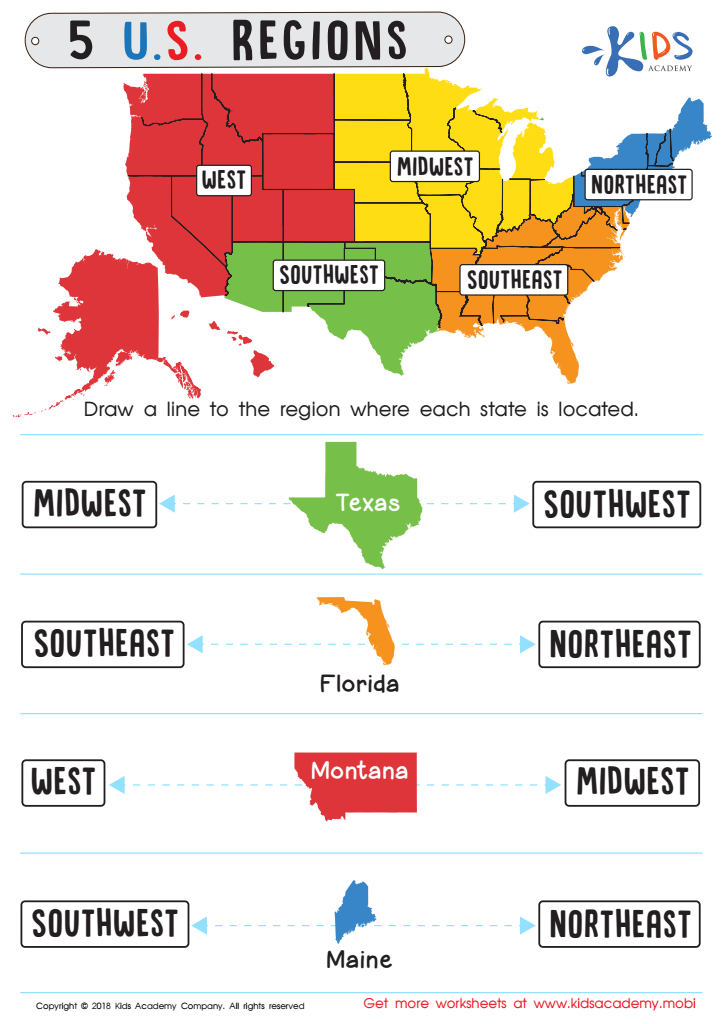
5 U.S. Regions Worksheet
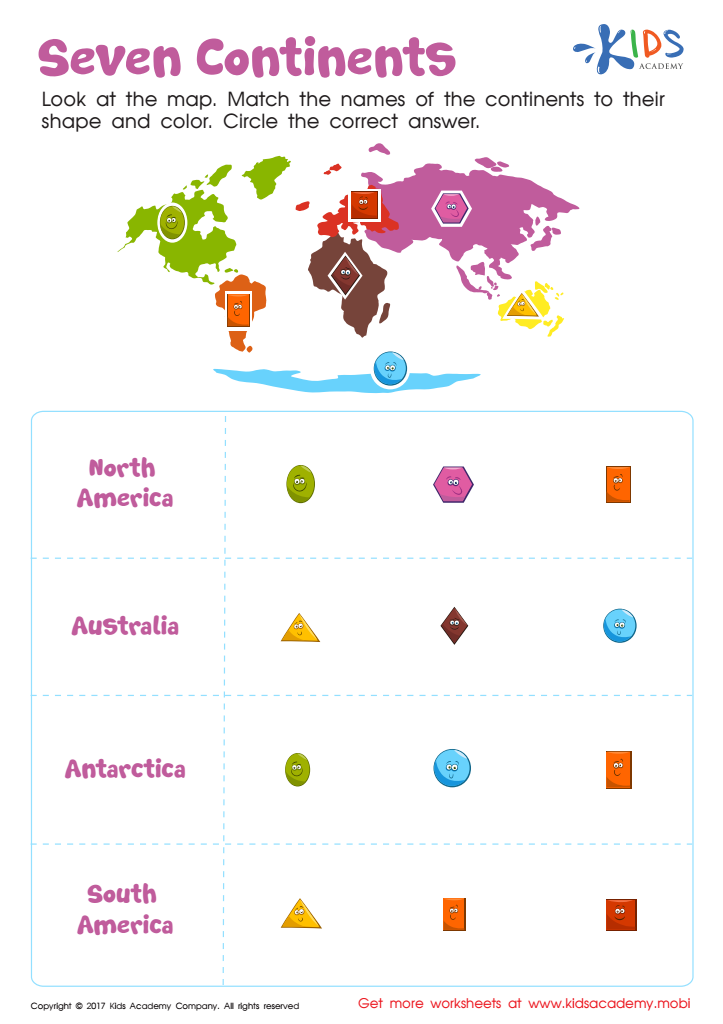
Seven Continents Worksheet
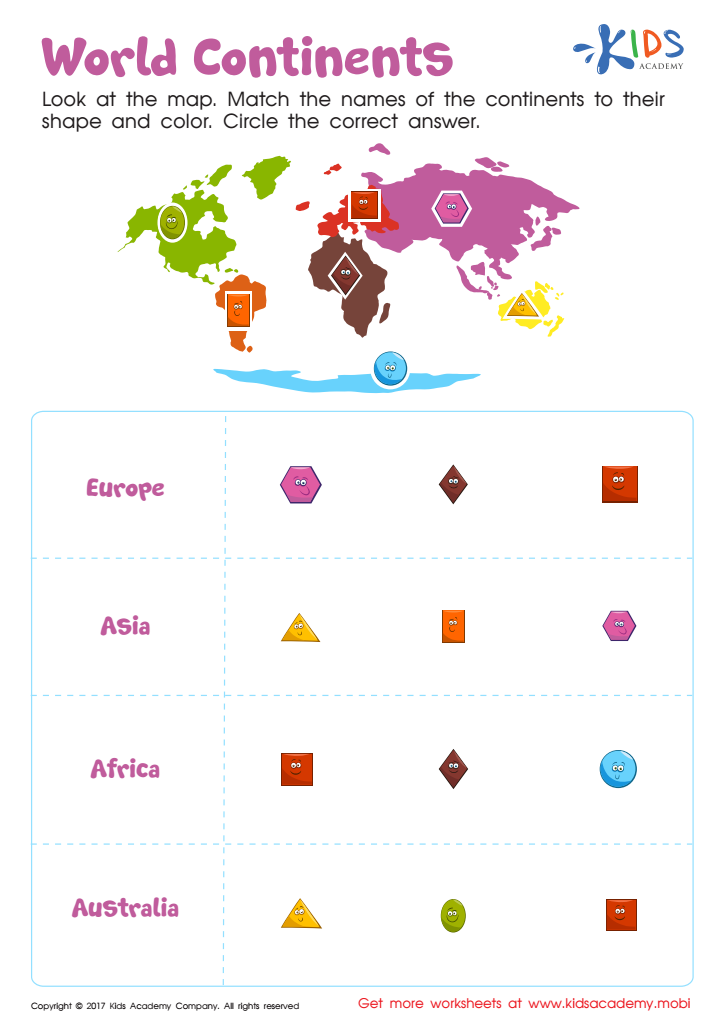
World Continents Worksheet
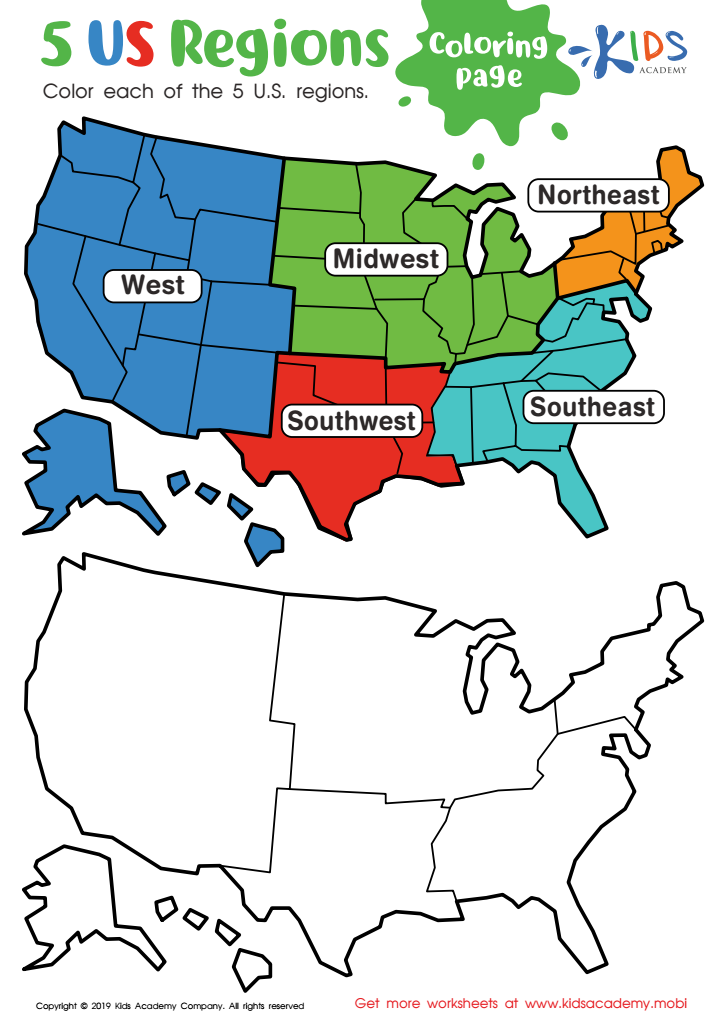
US Regions Coloring Page Worksheet
 Assign to My Students
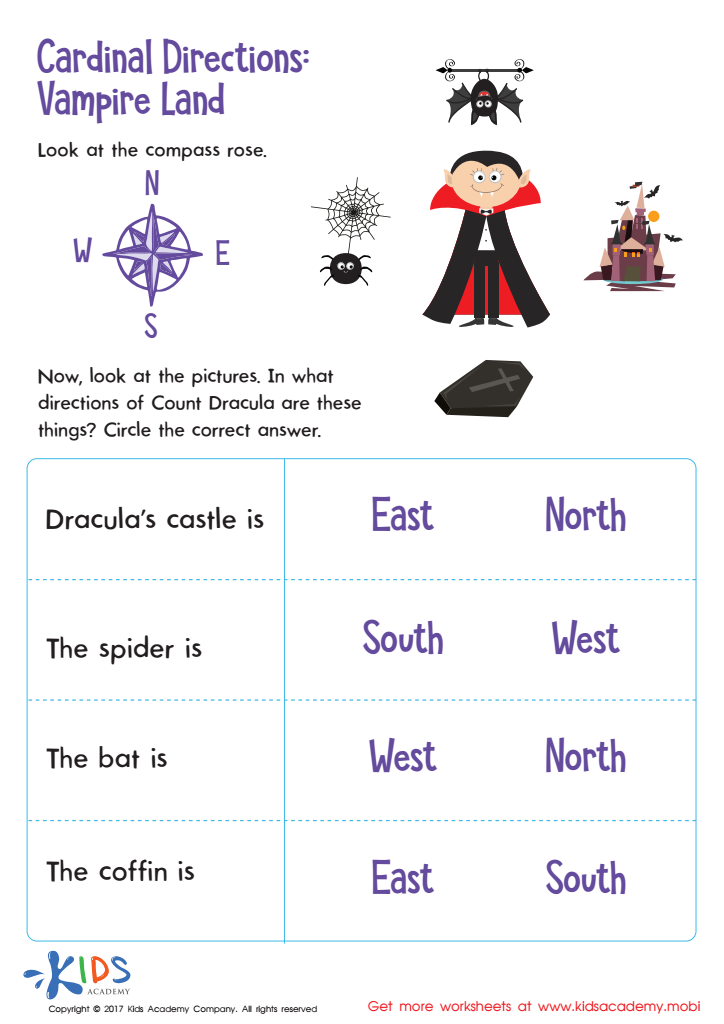
Cardinal Directions Printable




.jpg)
Map reading skills are essential for the cognitive and spatial development of 6-year-olds. At this formative age, children are expanding their understanding of the world around them, and maps provide an invaluable tool for enhancing this comprehension.
Firstly, maps stimulate a child's ability to think spatially and logically. Understanding directions, landmarks, symbols, and scales requires abstract thinking and problem-solving skills, enhancing their cognitive growth. As they learn to interpret maps, children also improve their visual literacy and attention to detail, which are foundational skills in many areas of learning.
Secondly, maps offer a hands-on, interactive learning experience. By engaging with maps, children learn to navigate their environment more independently. This exploration fosters a sense of curiosity and adventure, making learning active and enjoyable. It’s an exciting way for them to see the connection between real-world places and their representations on paper.
Additionally, maps help children grasp essential concepts like distance, direction, and location. These are fundamental math and geography skills that can aid in academic success. For social development, maps can serve as conversation starters, fostering communication and teamwork when kids share discoveries or navigate together.
In conclusion, developing map reading skills at a young age supports cognitive, spatial, mathematical, and social development. By nurturing these skills, parents and teachers provide children with tools for a richer understanding and exploration of the world.








