Number comparison Normal Math Worksheets for 6-Year-Olds
3 filtered results
-
From - To
Enhance your 6-year-old’s math skills with our engaging Number Comparison Normal Math Worksheets! Designed specifically for early learners, these worksheets help children understand the concepts of greater than, less than, and equal to. Our colorful and interactive activities make learning fun, while boosting confidence in number recognition and comparative analysis. Each worksheet provides ample practice opportunities to solidify understanding. Ideal for both classroom and home use, these printables are perfect for reinforcing foundational math skills at an age-appropriate level. Download now and watch your child's mathematical abilities flourish as they master number comparison with ease!
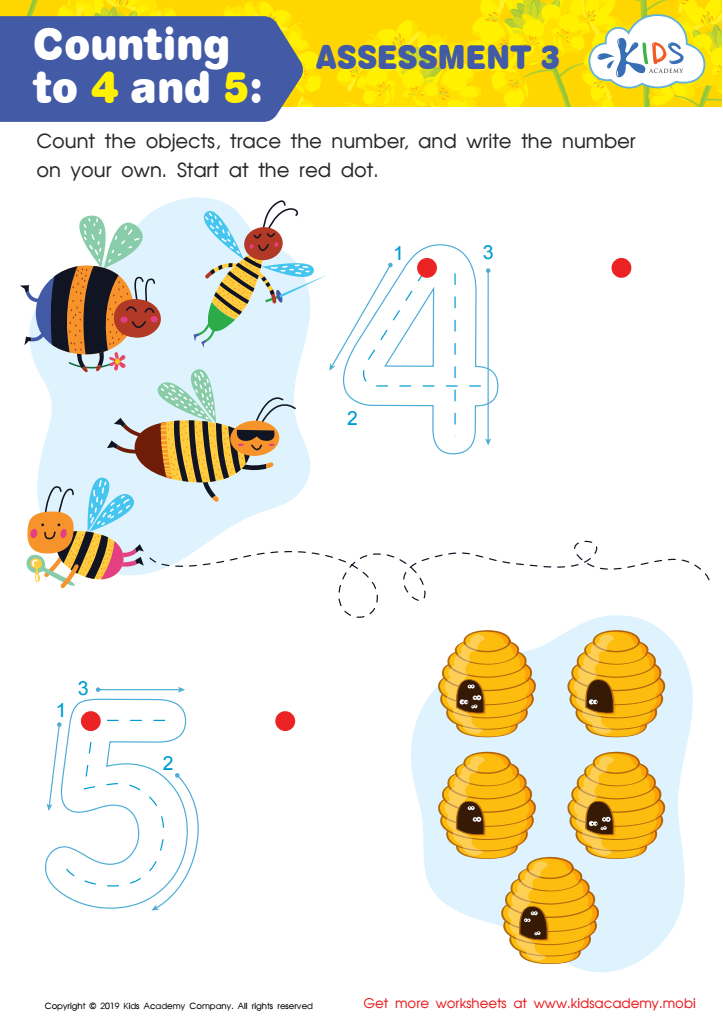
Counting to 4 and 5: Assessment 3 Worksheet
 Assign to My Students
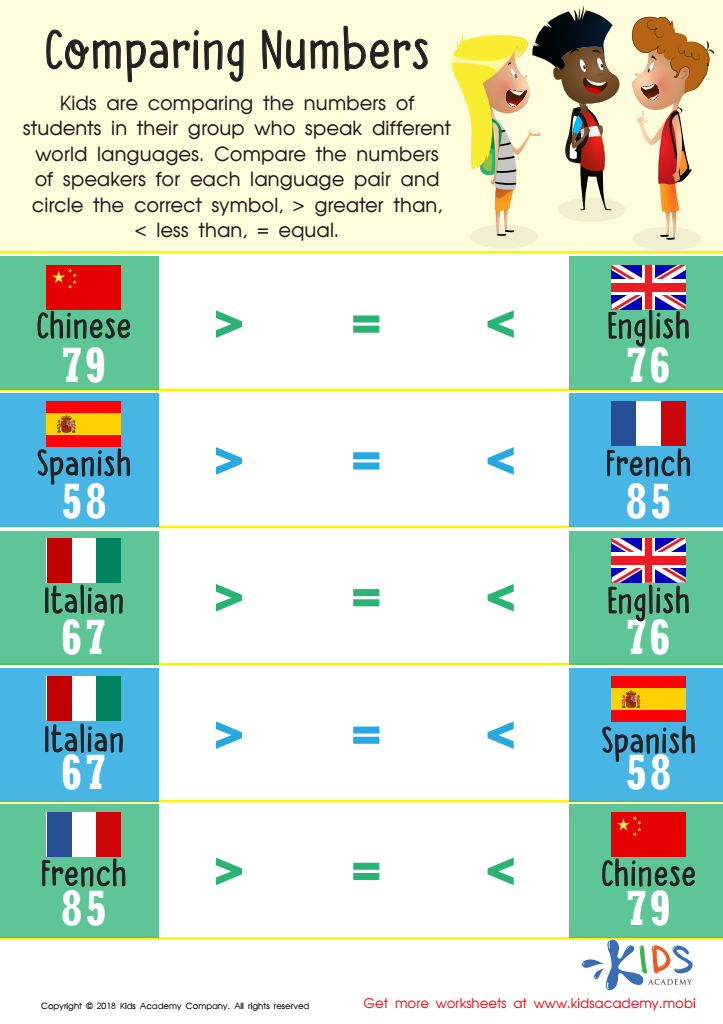
Comparing Numbers Worksheet for 1st Grade
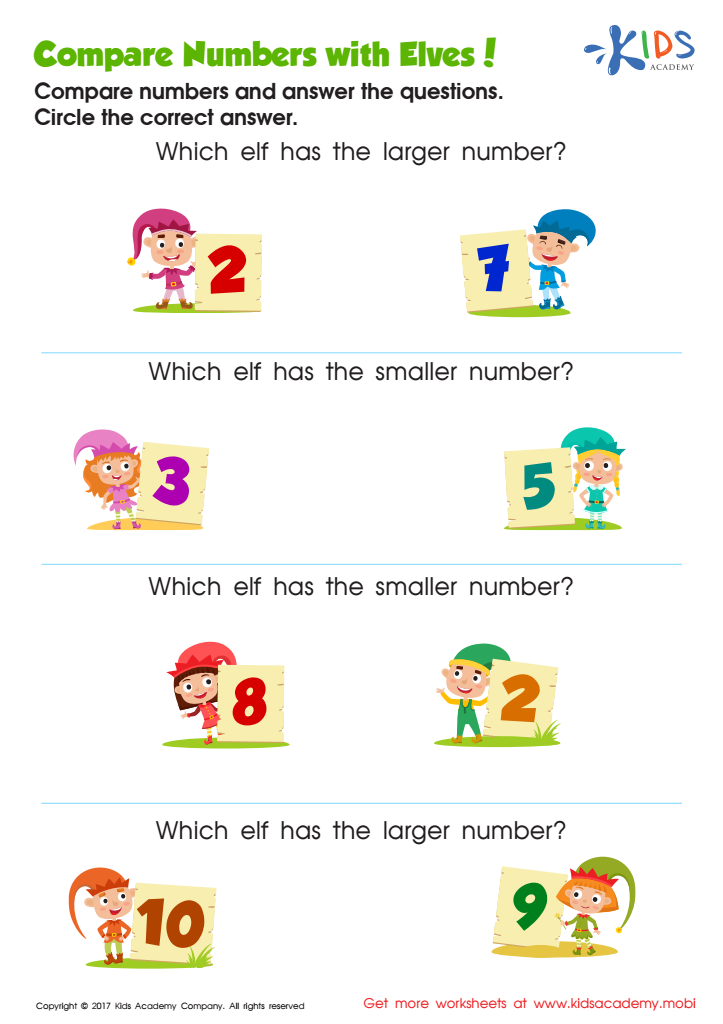
Comparing Numbers Worksheet for Kindergarten





.jpg)

Number comparison is a vital early mathematical skill that involves understanding the sizes or values of numbers relative to one another. For 6-year-olds, mastering this concept is crucial for several reasons. First, it lays the foundation for more advanced mathematical thinking. By learning to compare numbers, children develop critical reasoning skills that they will use in arithmetic, problem-solving, and beyond.
Additionally, number comparison builds confidence. When children successfully compare numbers, they gain a sense of accomplishment, which encourages them to tackle more complex challenges. This skill also fosters essential number sense, helping children understand relationships between numbers, promoting their ability to estimate and make informed predictions.
From a parental or educational perspective, cultivating number comparison skills enriches a child's overall academic development. Children are better equipped to handle word problems, engage in financial literacy, and develop a positive attitude towards math if they grasp these foundational concepts early on. Engaging in number comparison activities at home or in the classroom also promotes collaboration and social skills as children discuss their thought processes. Therefore, embracing number comparison in early education can have lasting benefits for a child’s future success in mathematics and their overall intellectual development.








