
Writing practice Normal Math Worksheets for 6-Year-Olds
3 filtered results
Difficulty Level
Grade
Age
-
From - To
Subject
Activity
Standards
Discover engaging writing practice normal math worksheets tailored specifically for 6-year-olds! Our resources are designed to foster essential math skills and improve handwriting in a fun and interactive way. These worksheets provide a variety of exercises that encourage children to practice writing numbers, mastering basic math concepts, and developing problem-solving abilities. Designed by educators, they promote cognitive and motor development while keeping young learners captivated. With colorful illustrations and easy-to-follow instructions, our worksheets make learning math enjoyable and effective. Explore our collection today and give your child the tools they need to succeed in their early educational journey!
Favorites
With answer key
Interactive
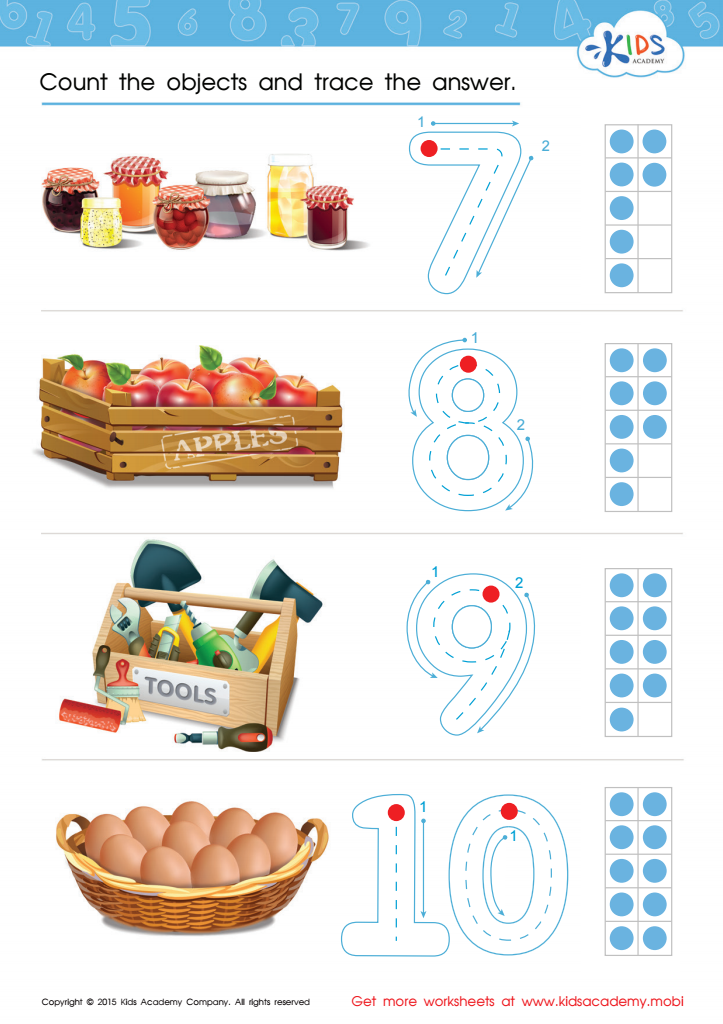
Count and Trace 7 – 10 Worksheet
Let your child develop a lifelong love of math with Kids Academy's printable math worksheet based on the innovative Singapore Math method. It uses funny pictures and graphs to help solve math problems. Check out our amazing collection of free printable math worksheets now!
 Assign to My Students
Count and Trace 7 – 10 Worksheet
Worksheet
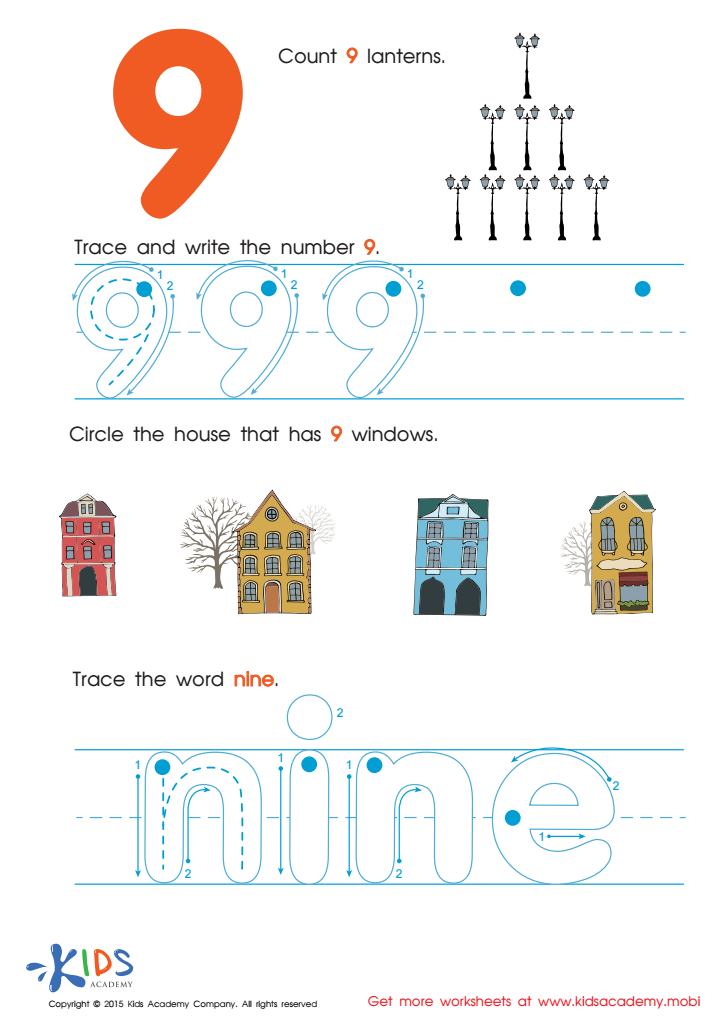
Tracing And Learning to Write Number 9 Worksheet
Explore our collection of learning numbers worksheets and make teaching numbers to preschoolers easier with Kids Academy. Trace numbers, circle houses with the specified number of windows, write the corresponding number words and revise previous numbers regularly to help kids learn.
Tracing And Learning to Write Number 9 Worksheet
Worksheet
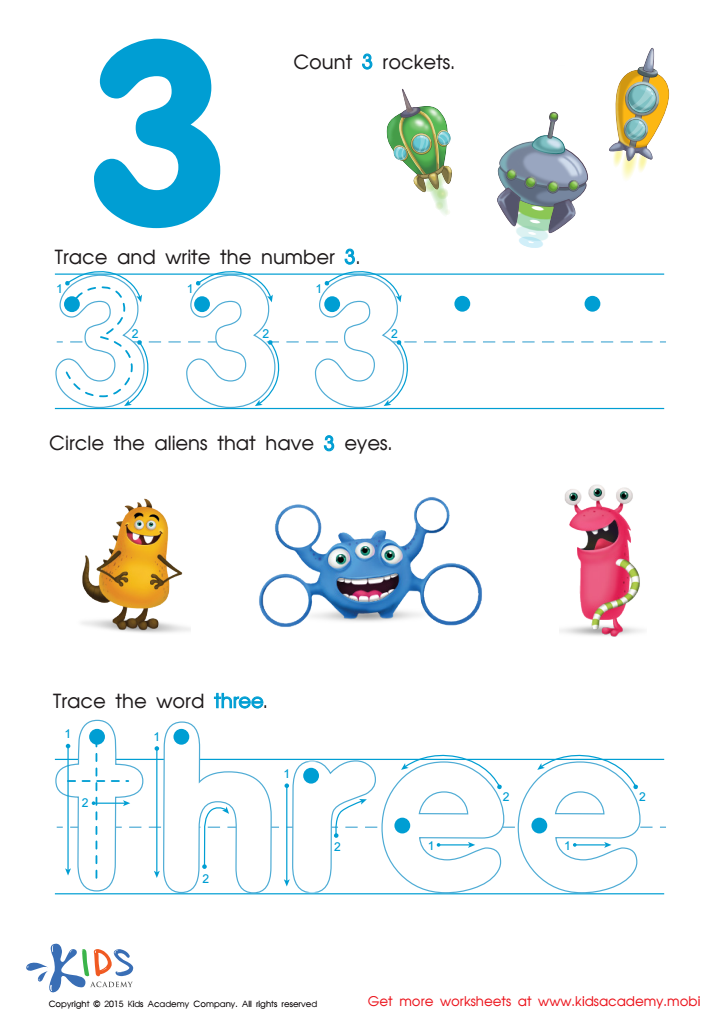
Learning Number Three Worksheet
Learn to count with aliens! Trace the number 3 and circle aliens with 3 eyes. Explore our web site for more number games and activities for preschoolers.
Learning Number Three Worksheet
Worksheet
Learning Skills
Join Kids Academy for Free
Who is primarily going to use this learning content?








Writing practice, particularly in the context of Normal Math, is crucial for 6-year-olds for several reasons. At this age, children are developing foundational skills in both literacy and numeracy, laying the groundwork for their future academic success. Writing practice encourages young learners to articulate their understanding of mathematical concepts, fostering critical thinking and problem-solving skills.
When children write about math—whether explaining their thought processes, documenting their calculations, or describing a problem—they deepen their understanding. This dual focus on writing and math helps bridge two fundamental areas of learning, ensuring that children comprehend not only how to solve problems but also why their approaches work. It also boosts their confidence in both subjects, as they directly communicate their thoughts and ideas.
Additionally, the act of writing enhances fine motor skills, which are essential for overall development. Parents and teachers should recognize the interplay between these skills—strong writing abilities can lead to improved communication in math and beyond, while also nurturing creativity and expression. By actively engaging children in writing about math, adults help cultivate a love of learning, encourage curiosity, and prepare children for more complex concepts ahead, making it a critical component of a well-rounded education.








