Handwriting practice Normal Numbers 0–10 Worksheets for 6-Year-Olds
3 filtered results
-
From - To
Introduce your 6-year-olds to the essential skills of number writing with our "Handwriting Practice Normal Numbers 0–10 Worksheets". These engaging worksheets are designed to help young learners master the correct formation and spacing of numbers, ensuring a strong foundation in math literacy. Each page offers ample practice for tracing and writing numbers 0-10, promoting fine motor skills, concentration, and attention to detail. Perfect for classroom or at-home practice, these worksheets provide a fun and effective way to build confidence and accuracy in writing numbers. Enhance your child's learning journey with these valuable educational resources.
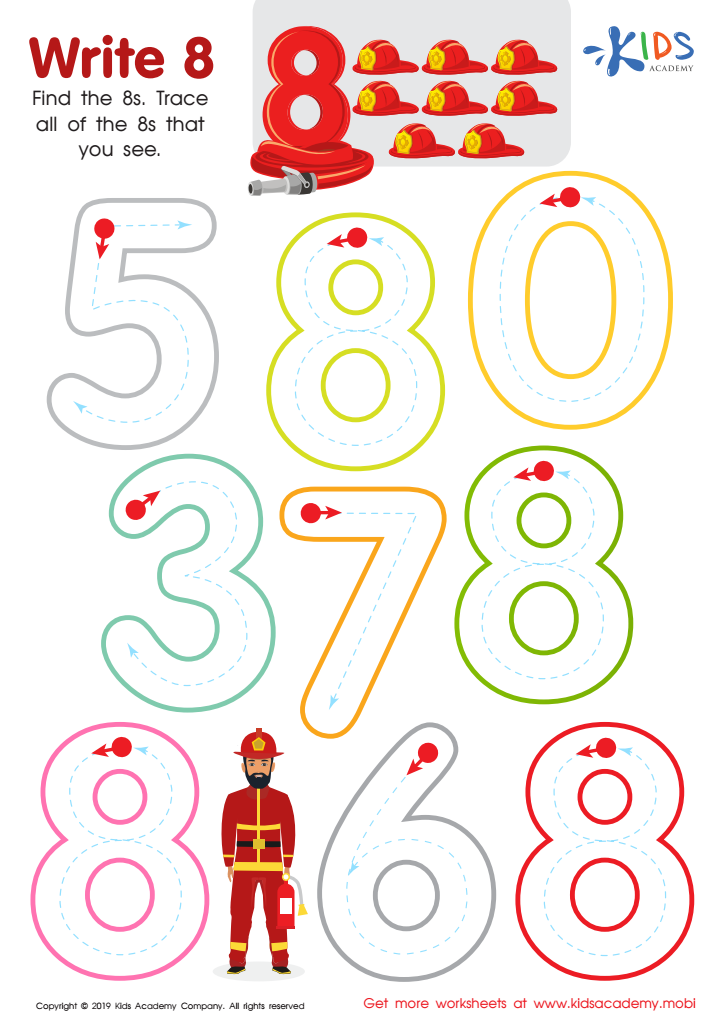
Write 8 Worksheet
 Assign to My Students
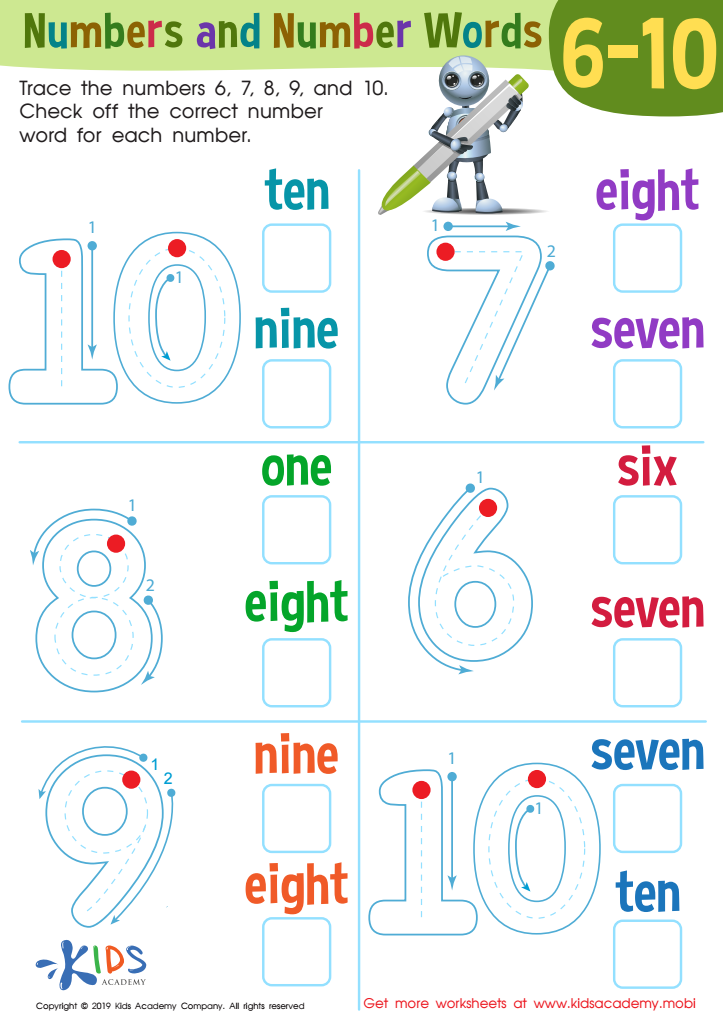
Numbers and Number Words 6–1 Worksheet
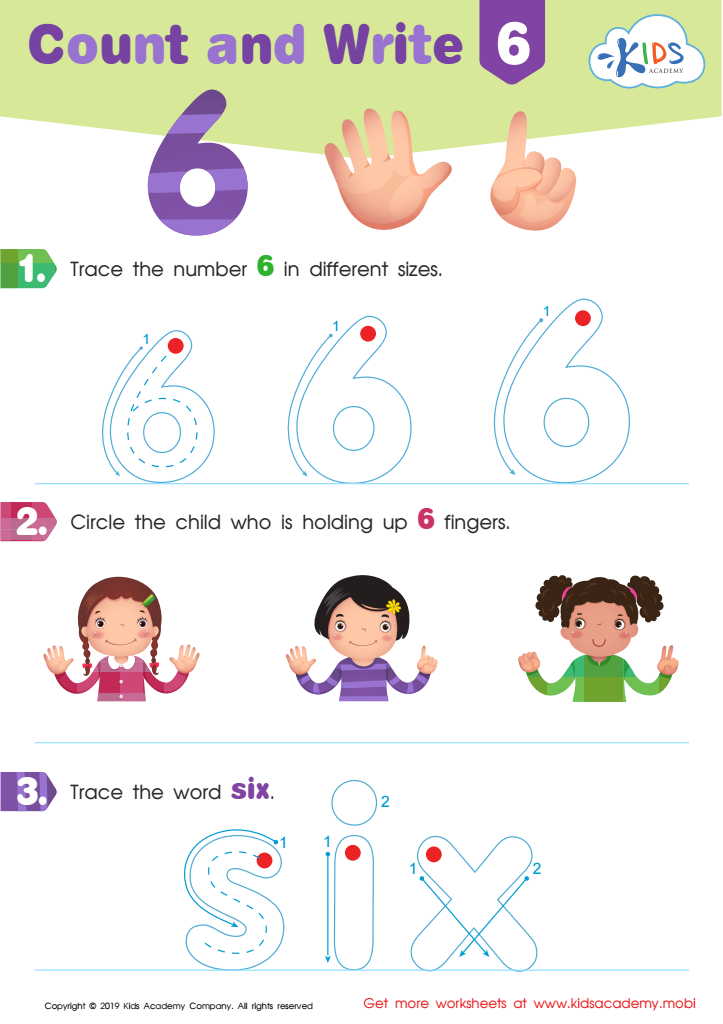
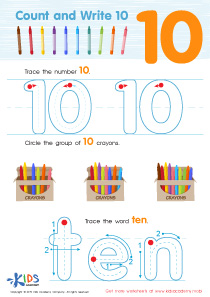
Count and Write 6 Worksheet








Handwriting practice for normal numbers 0–10 is crucial for 6-year-olds because it lays the foundation for essential mathematics and literacy skills. At this age, children are developing their fine motor skills, which are integral for tasks like writing, cutting, and tying shoes. Handwriting numbers helps refine these skills, ensuring better hand-eye coordination and control over writing instruments.
Consistent practice also reinforces the conceptual understanding of numbers. Recognizing, writing, and verbally expressing numbers solidifies their familiarity with numerical order, aiding in future arithmetic operations. This practice helps with cognitive development as children learn to associate symbols (numbers) with quantities, an elemental building block in Math.
Additionally, good handwriting habits developed early translate into effective communication skills. When numbers are clear and legible, students can accurately record and interpret data, which is vital in assignments and daily tasks. Teachers can assess a child’s progress more efficiently; parents witness their child’s development firsthand, fostering enthusiasm and pride in their learning journey.
Moreover, a structured practice routine builds discipline and concentration, qualities that benefit children across all areas of study. Consequently, emphasizing handwriting numbers 0–10 ensures children gain the comprehensive skill set necessary for academic success and everyday life scenarios.