
Critical Thinking Normal Building Vocabulary Worksheets for 6-Year-Olds
5 filtered results
Difficulty Level
Grade
Age
-
From - To
Subject
Activity
Standards
Equip your 6-year-old with essential language skills using our Critical Thinking Normal Building Vocabulary Worksheets. Our expertly designed worksheets ignite curiosity, foster a love for learning, and enhance critical thinking. Each worksheet offers engaging activities, encouraging kids to decipher meanings, draw connections, and develop a robust vocabulary. Perfect for young learners, these worksheets offer an entertaining blend of puzzles, word games, and reading exercises that make literacy exciting. Help your child build a strong linguistic foundation while honing critical thinking skills. Discover the joy of joyful learning today with our premier vocabulary worksheets tailored for 6-year-olds.
Favorites
With answer key
Interactive
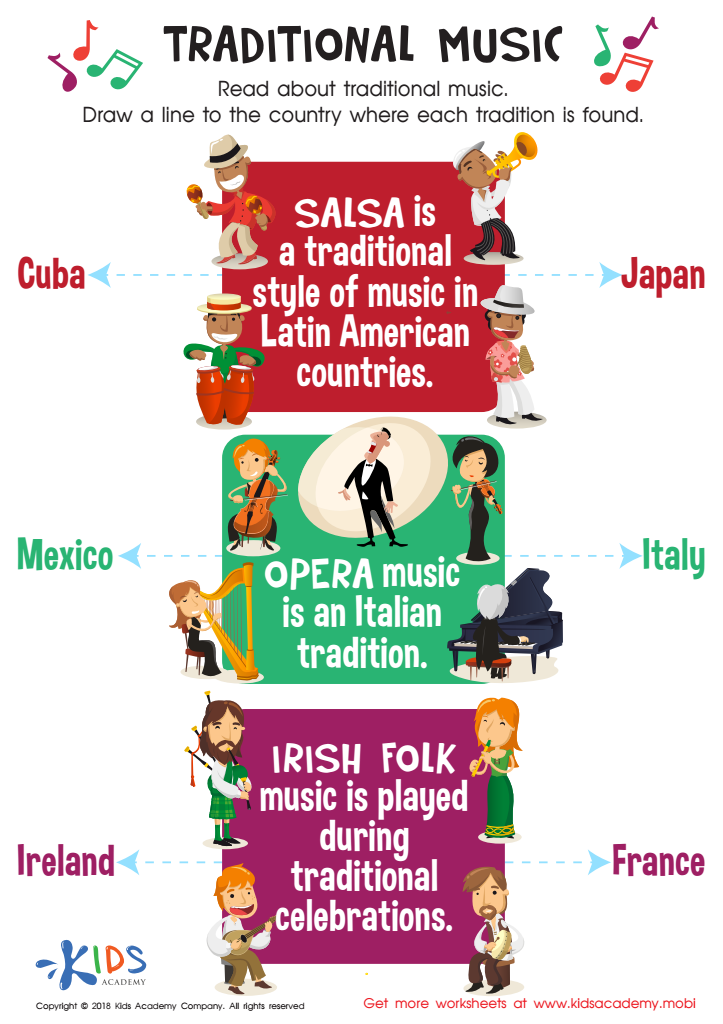
Traditional Music Worksheet
Exploring different countries' music is a great way for global learners to appreciate their place in the world. This worksheet helps them match music - like Salsa and Irish Folk - to various geographic regions with colorful visuals. It boosts reading comprehension while supporting their cultural understanding.
 Assign to My Students
Traditional Music Worksheet
Worksheet











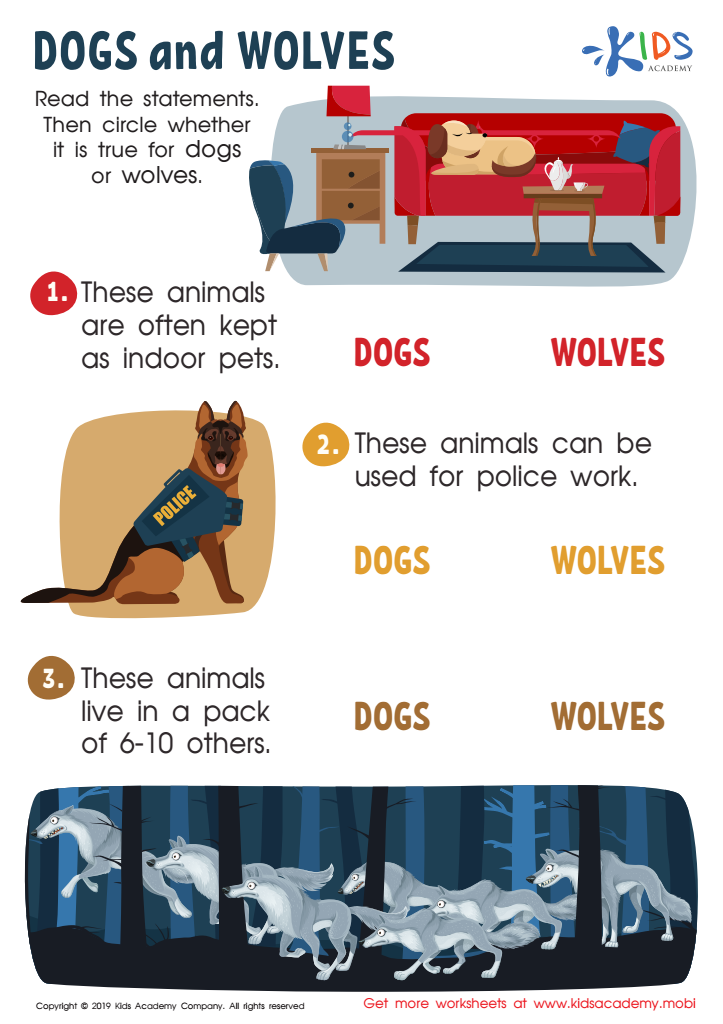
Dogs and Wolves Worksheet
Kids love dogs and wolves, so engaging them with text about them is key. This free, downloadable worksheet allows kids to read statements about dogs and wolves and use picture clues and prior knowledge to decide if the statements are true or false, strengthening their reading comprehension.
Dogs and Wolves Worksheet
Worksheet
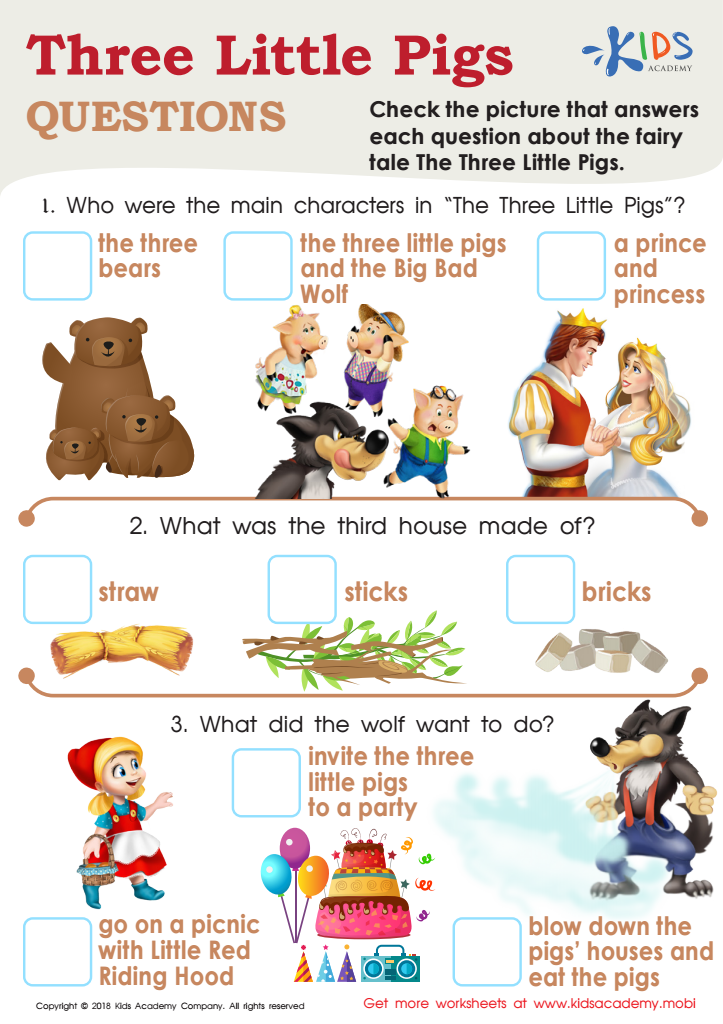
Three Little Pigs Questions Worksheet
Does your kid love bedtime stories? Test their classic fairytale knowledge with this worksheet! If they mention The Three Little Pigs, they're in luck - this pdf has them answering questions based off the classic fairytale. They'll check the picture that answers each question about the story. Is their fairytale knowledge up to scratch?
Three Little Pigs Questions Worksheet
Worksheet
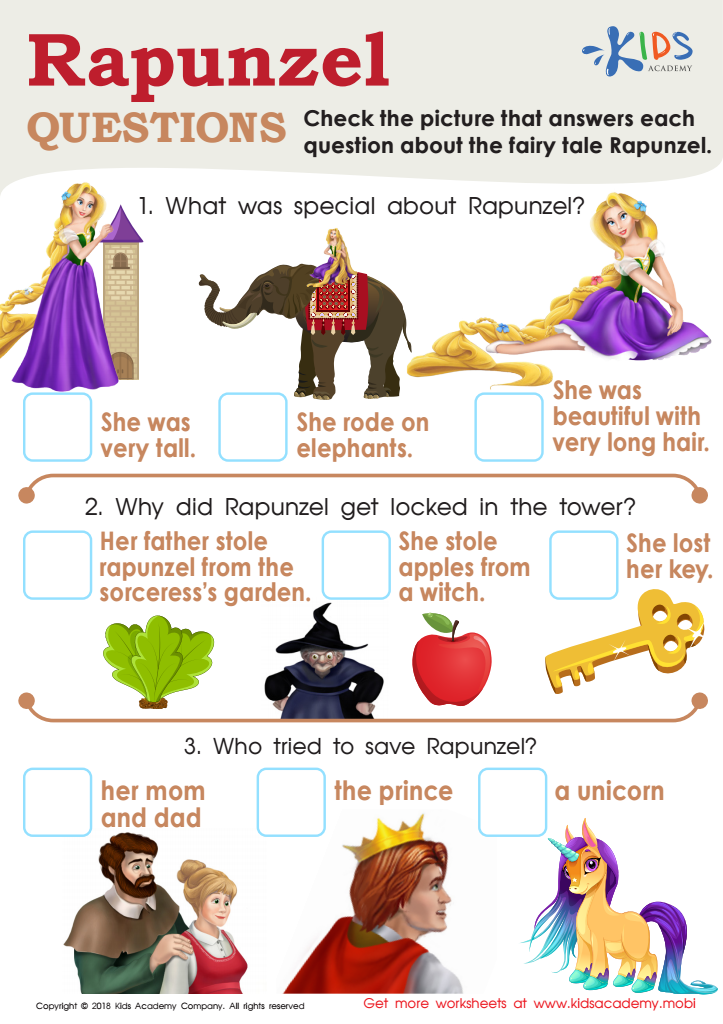
Rapunzel Questions Worksheet
Read the fairy tale 'Rapunzel' to your kids. For those who really enjoyed it, read it twice and ask questions to test their understanding. Then, get them to check the pictures related to the questions to test their comprehension of the story.
Rapunzel Questions Worksheet
Worksheet
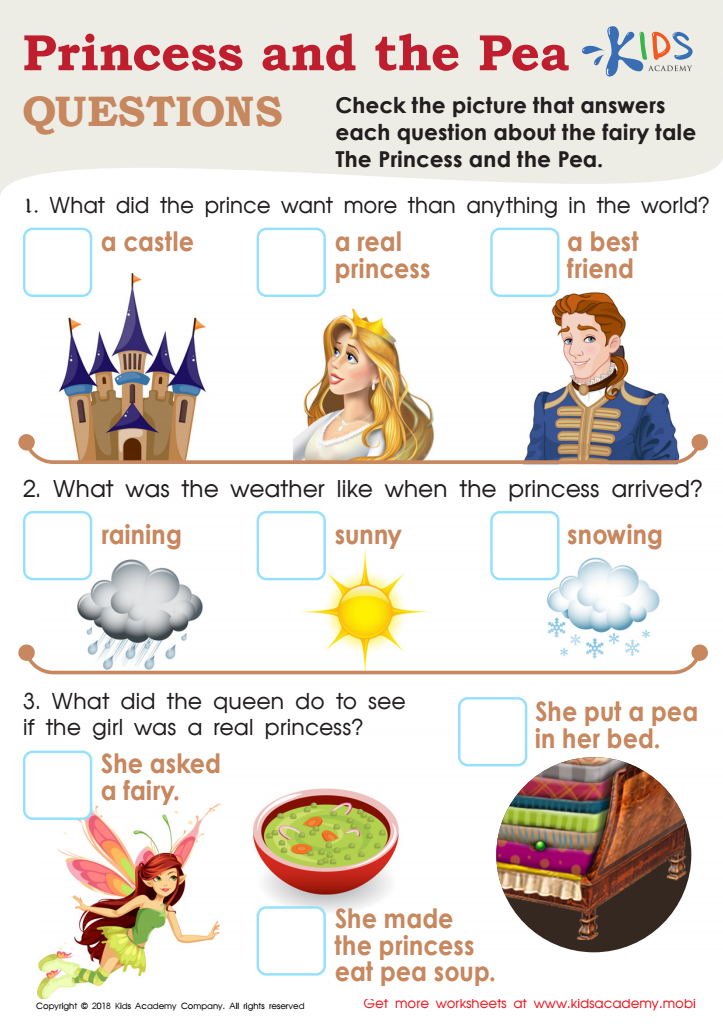
Princess and the Pea Questions Worksheet
Your kid knows The Princess and the Pea inside-out? Test their knowledge with this worksheet. Ask your little one to read the questions and match each one to the picture. It's a fun way to see just how much attention they've paid to their bedtime story.
Princess and the Pea Questions Worksheet
Worksheet
Join Kids Academy for Free
Who is primarily going to use this learning content?








Critical thinking and vocabulary development are crucial cornerstones in the academic and social growth of 6-year-olds. When parents and teachers focus on building critical thinking skills, they enable children to analyze information, make decisions, and solve problems effectively. These skills lay the foundation for not just academic success, but also for everyday decision-making and social interactions.
Vocabulary development, on the other hand, enriches a child's understanding and communication abilities. A robust vocabulary allows children to express themselves more clearly, understand stories and instructions better, and engage more fully in both verbal and written activities. A wide-ranging vocabulary also supports reading comprehension, which is essential for academic progress in all subjects.
Combining critical thinking with a strong vocabulary creates a synergy that propels children toward better reasoning and articulate communication. For example, being able to think critically about a story requires understanding of the words in the narrative. Conversely, discussing and analyzing the story will further enhance their vocabulary.
Furthermore, an enriched vocabulary and sharp critical thinking abilities boost self-confidence, helping children to participate more actively and confidently in class discussions and social situations. By investing in these skills early, parents and teachers provide children with tools that have lasting benefits, thoroughly preparing them for future academic and life challenges.








