Sound Association Normal Building Vocabulary Worksheets for 6-Year-Olds
3 filtered results
-
From - To
Our Sound Association Normal Building Vocabulary Worksheets for 6-Year-Olds help young learners enhance their vocabulary through fun, engaging activities. Designed to develop reading and phonetic skills, these worksheets focus on associating sounds with words, improving language proficiency. Perfect for home or classroom use, they feature colorful illustrations and interactive exercises that make learning enjoyable. Build a strong vocabulary foundation for your 6-year-old with our expertly crafted resources. Visit Kids Academy to download these amazing printables and support your child's linguistic growth with proven educational materials. Unlock the door to lifelong learning and literacy success!
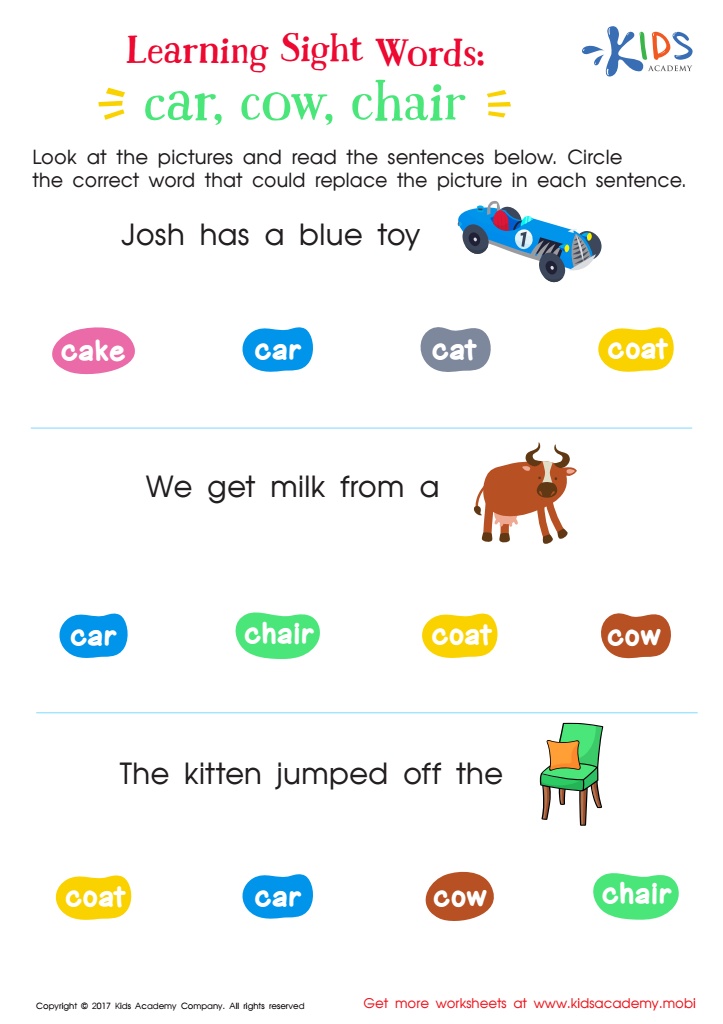
Car, Cow, Chair Worksheet Sight Words Worksheet
 Assign to My Students











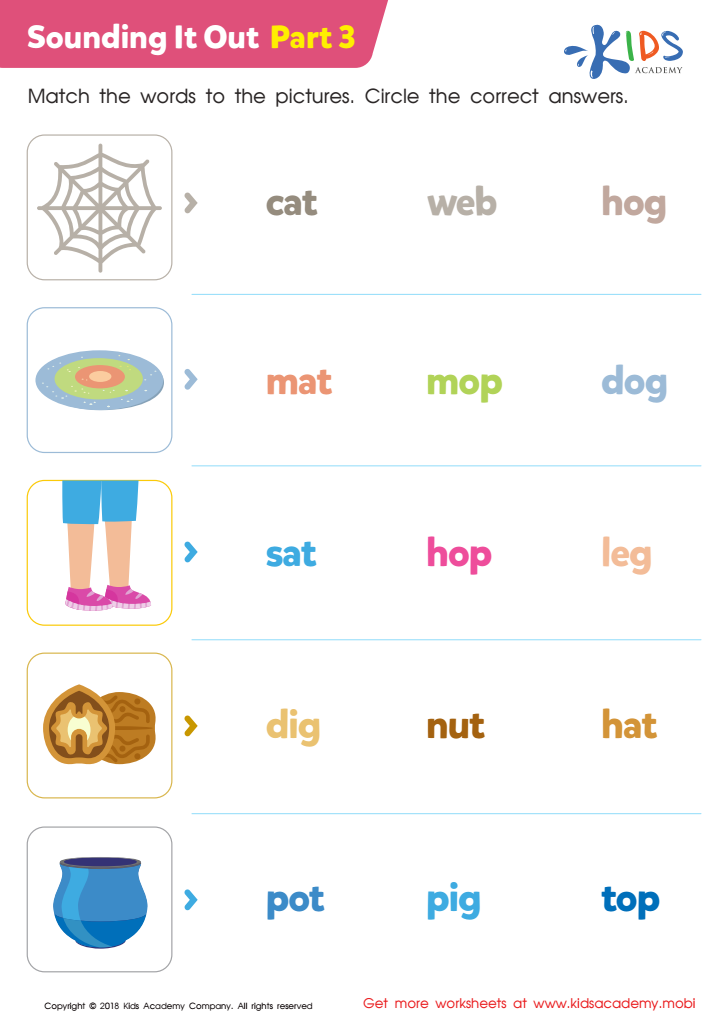
Sounding it Out: Part 3 Worksheet
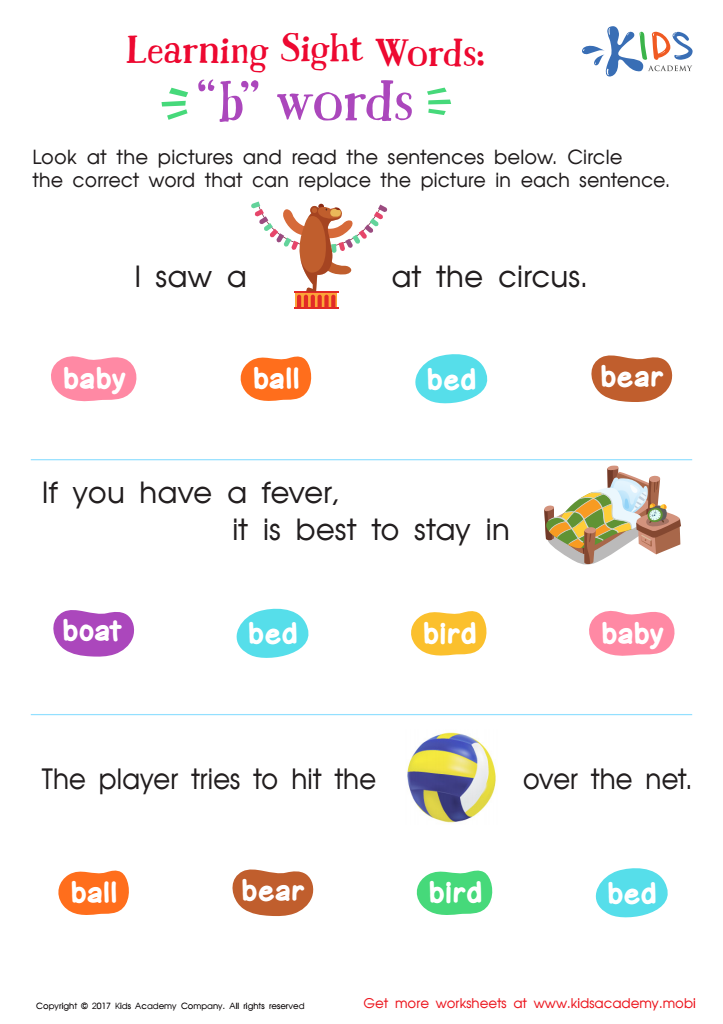
"B" Words Printable Sight Words Worksheet







.jpg)
Sound association and vocabulary building are crucial aspects of early childhood education, providing foundational skills that support lifelong learning. For 6-year-olds, these activities help bridge the gap between spoken language and literacy skills, such as reading and writing.
When children engage in sound association exercises, they learn to recognize the relationships between letters and their corresponding sounds (phonics). This understanding is essential for developing decoding skills necessary for word recognition and reading fluency. For instance, identifying that the letter 'b' makes the /b/ sound allows them to read words like "bat," "ball," and "boy."
Building vocabulary at this age enriches children’s language by expanding their word bank. A robust vocabulary aids in better comprehension – they grasp and interpret stories, instructions, and conversations more effectively. When children understand more words, they can express their thoughts and feelings more precisely, enhancing their communication skills.
Moreover, vocabulary knowledge is closely tied to academic success. Research shows that children who start school with a broad vocabulary perform better in reading comprehension and other academic areas.
By focusing on sound association and vocabulary building, parents and teachers give 6-year-olds the tools they need for reading proficiency, better comprehension, and effective communication, setting them up for academic and social success.








