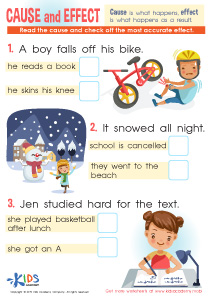
Vocabulary expansion Normal Reading Non-Fiction Worksheets for 6-Year-Olds
5 filtered results
-
From - To
Introducing our "Vocabulary Expansion Normal Reading Non-Fiction Worksheets for 6-Year-Olds" from Kids Academy! Designed to captivate young minds, these worksheets aim to boost vocabulary through engaging, age-appropriate non-fiction content. Each worksheet features interesting topics that help children improve their reading comprehension and word knowledge. By exploring real-world subjects, 6-year-olds can expand their vocabulary and develop a love for learning. Ideal for classroom and home use, our carefully crafted activities make vocabulary building fun and effective. Start your child’s journey to a richer vocabulary with Kids Academy's expertly designed worksheets today!
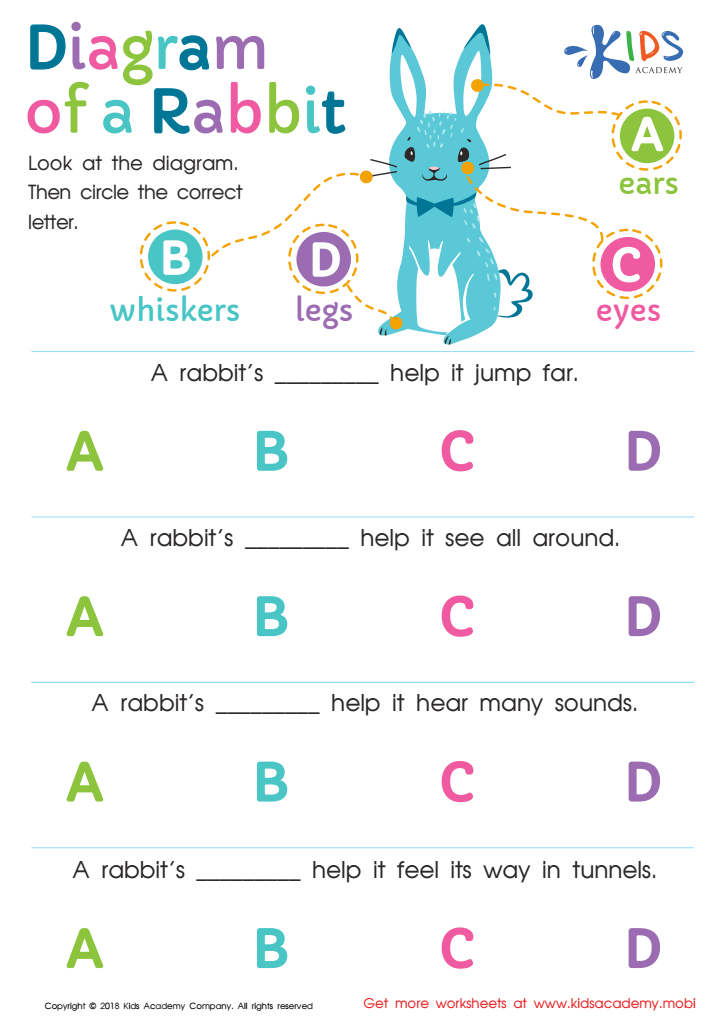
Diagram of a Rabbit Worksheet
 Assign to My Students
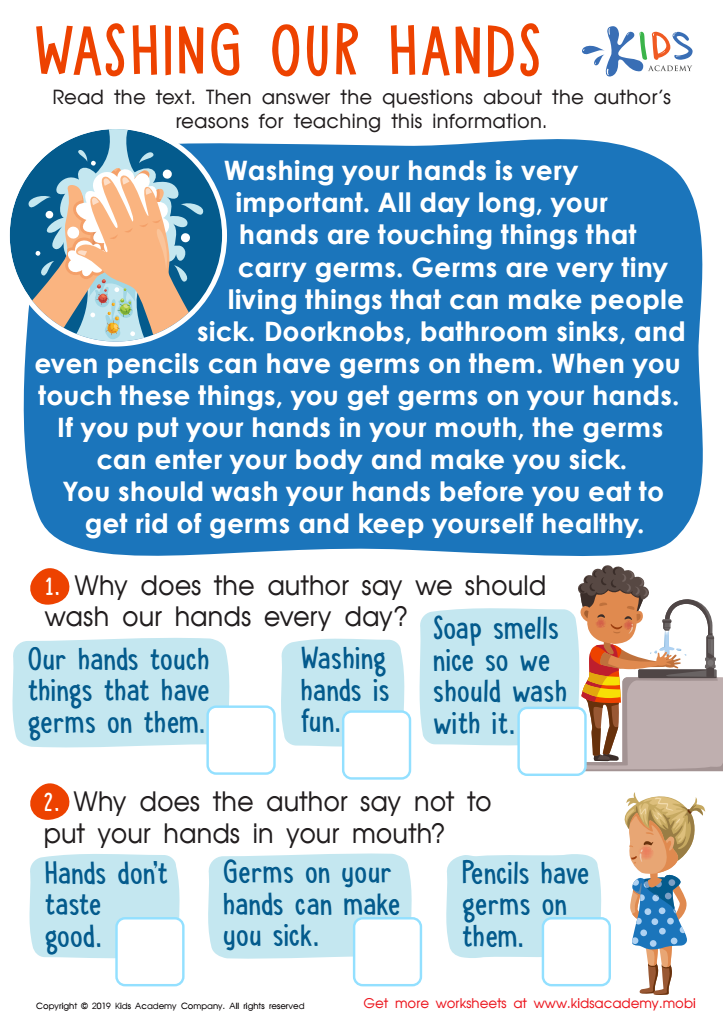
Washing Our Hands Worksheet
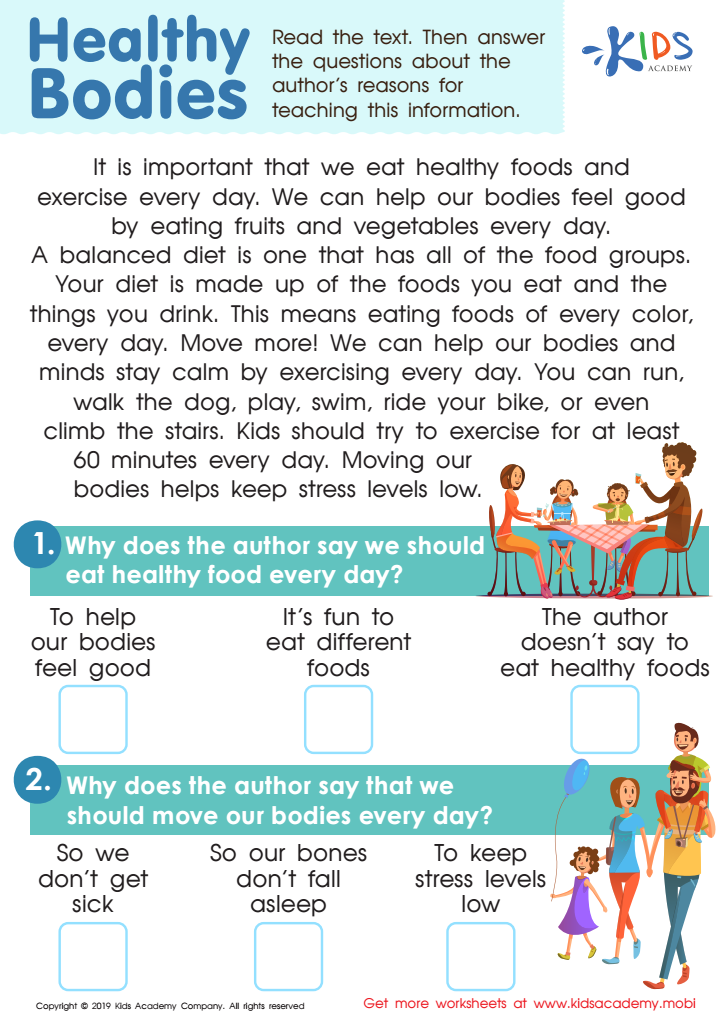
Healthy Bodies Worksheet
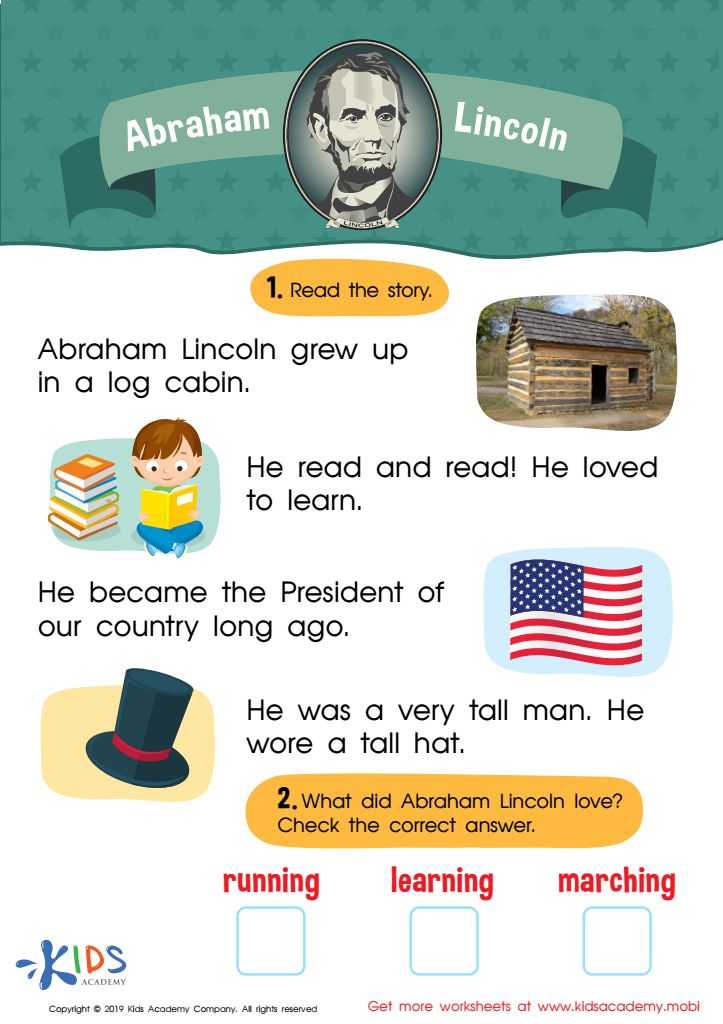
Abraham Lincoln Worksheet
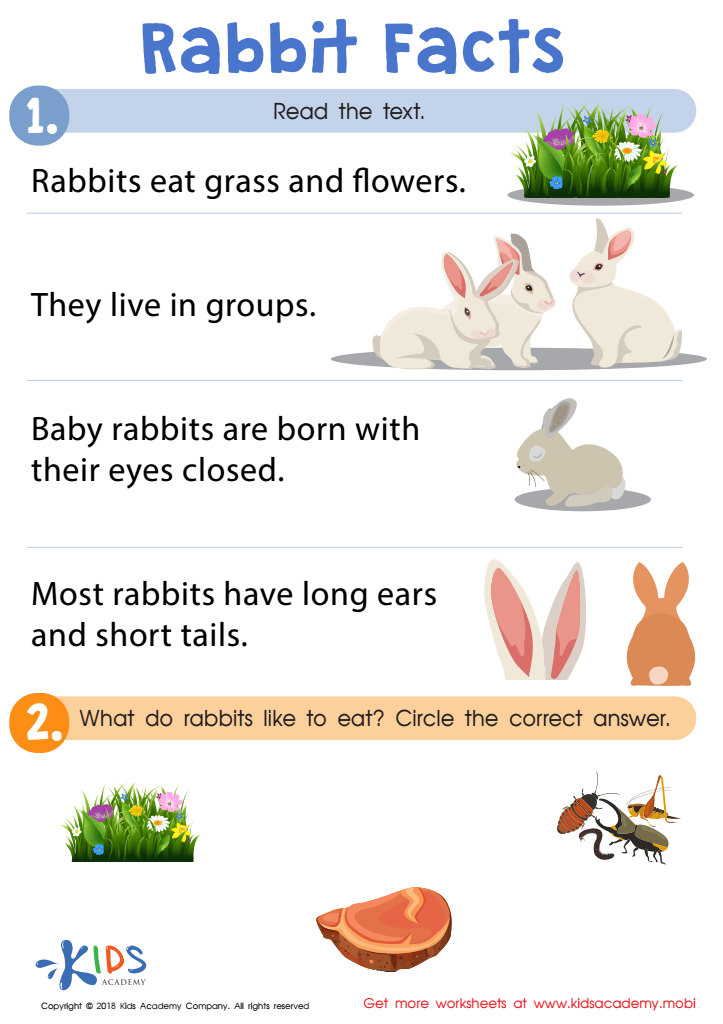
Rabbit Facts Worksheet








Vocabulary expansion is crucial for 6-year-olds because it lays the foundational blocks for their future learning and overall cognitive development. As children expand their vocabulary, they're not just learning new words; they're also enhancing their ability to understand and communicate complex ideas. This growth is particularly potent when engaging with non-fiction texts which introduce facts, concepts, and terminologies that are fundamental to their understanding of the world around them.
Exposure to a rich vocabulary through non-fiction reading equips young learners with the tools they need for academic success, especially in key subjects like science, history, and math. For instance, understanding terms like "evaporation" or "democracy" supports deeper comprehension in related subjects later on.
Additionally, a broad vocabulary improves listening and reading comprehension skills, fostering greater confidence and proficiency in communication. It aids in critical thinking and problem-solving as students can better process and articulate their thoughts. Moreover, non-fiction reading enhances curiosity and a love for learning by presenting information that nurtures inquisitive minds.
Parents and teachers who prioritize vocabulary expansion through non-fiction help children build linguistic dexterity, which significantly influences not only their academic path but also their lifelong ability to explore, understand, and succeed in the world.