Shape Recognition Normal Science Worksheets for 6-Year-Olds
3 filtered results
-
From - To
Discover the perfect "Shape Recognition Science Worksheets" designed specifically for 6-year-olds! These engaging and educational printables from Kids Academy spark curiosity and enhance learning skills. Each worksheet features fun activities that help children identify and differentiate between various shapes such as circles, squares, triangles, and more. As young learners embark on these exciting exercises, they will develop essential critical thinking and observational skills, making learning both enjoyable and effective. Ideal for classroom or home use, these scientifically curated worksheets offer a blend of entertainment and education, ensuring your child stays eager to learn and grow!
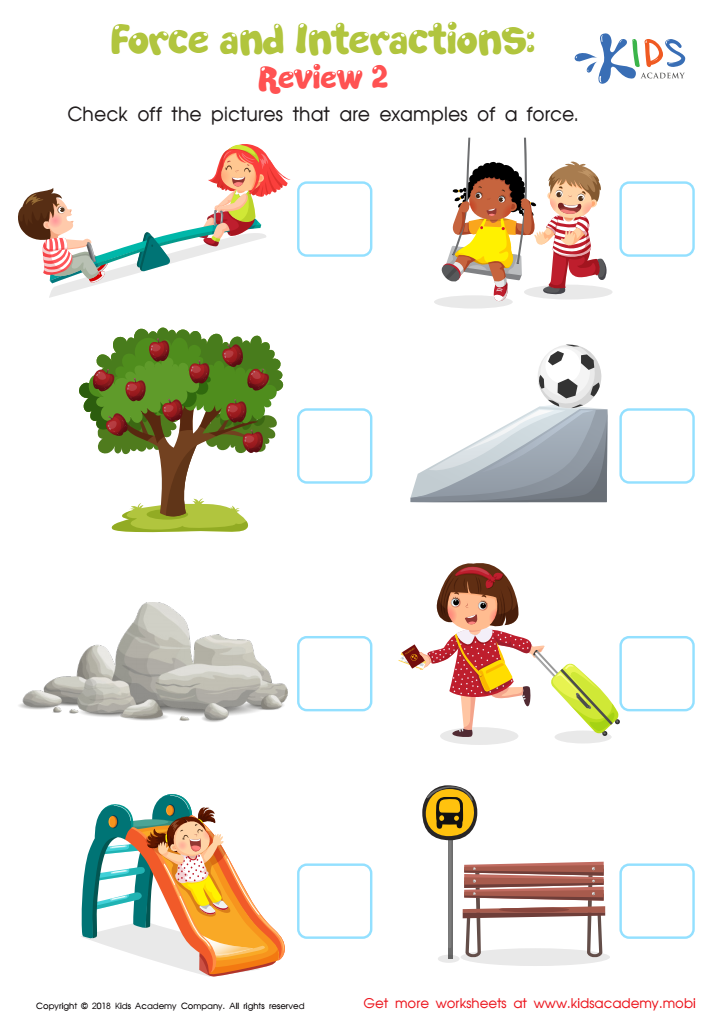
Force and Interactions: Review 2 Worksheet
 Assign to My Students
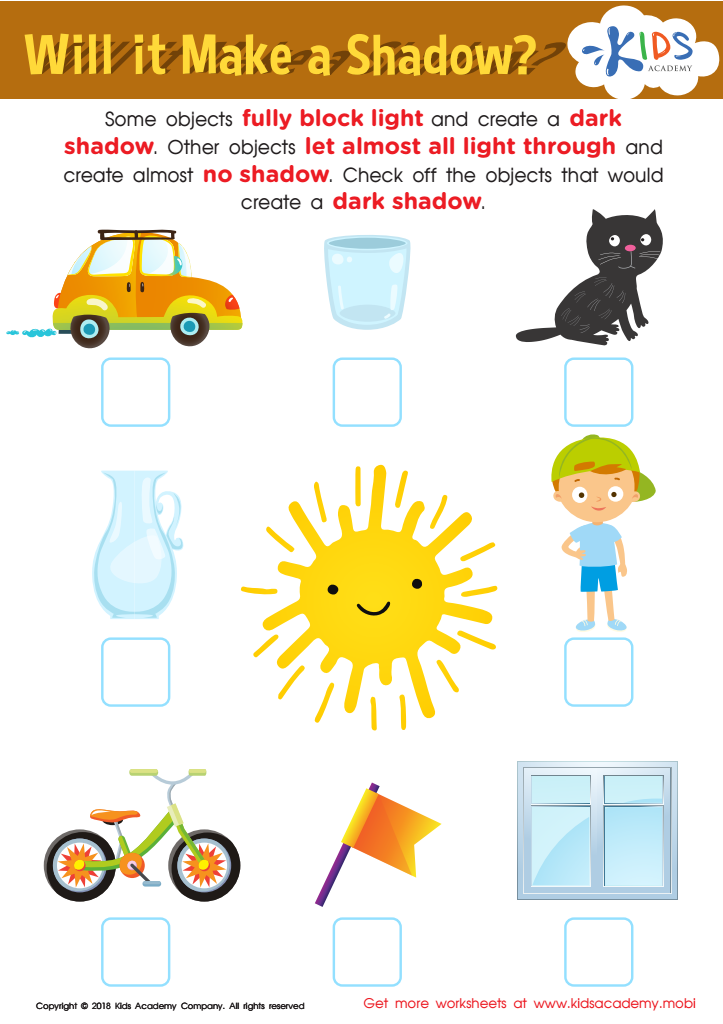
Will It Make a Shadow? Worksheet
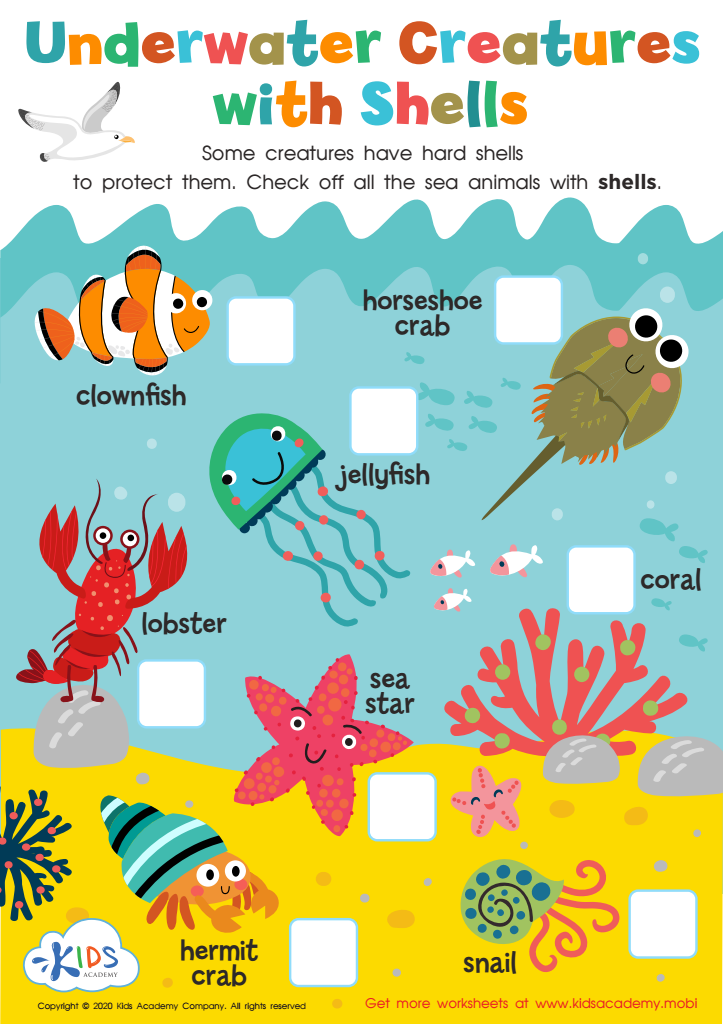
Underwater Creatures with Shells Worksheet



.jpg)




Shape recognition in early childhood, particularly around 6 years old, forms a foundational aspect of a child's cognitive development and mathematical understanding. It's important for parents and teachers to prioritize this area of normal science because it directly impacts several key developmental domains.
First, shape recognition enhances cognitive skills by helping children discriminate between different forms, sizes, and spatial relationships. This fundamentally aids their problem-solving and analytical abilities, which are critical skills in both academic and daily life contexts.
Second, early exposure to shapes prepares children for geometry and math more broadly. Recognizing and understanding shapes is a preliminary step toward grasping more complex mathematical concepts such as symmetry, area, patterns, and the properties of different geometrical figures.
Third, shape activities support fine motor skills. When children draw, cut out shapes, or manipulate objects, they refine their hand-eye coordination and dexterity, which are essential for writing and other tasks.
Lastly, shape recognition boosts visual perception and literacy. Identifying shapes within letters (e.g., uppercase A as a triangle) early on supports reading and writing skills. This interconnectedness underscores why attention to shape recognition fosters holistic early development crucial for lifelong learning.
In sum, well-rounded shape recognition activities should be an essential component of a balanced early childhood education curriculum and at-home learning strategy.







