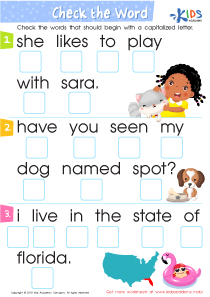
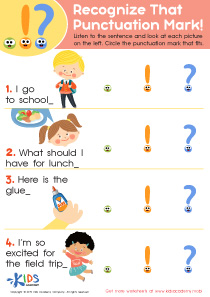
Capitalization rules Normal Writing Worksheets for 6-Year-Olds
3 filtered results
-
From - To
Discover our engaging Capitalization Rules Normal Writing Worksheets designed specifically for 6-year-olds! These interactive resources provide young learners with essential tools to master the fundamental rules of capitalization. With fun activities and colorful visuals, children will learn to identify and correctly use capital letters in sentences, names, days of the week, and more. Our worksheets encourage creativity while reinforcing key writing skills, making learning enjoyable and effective. Ideal for classroom or home use, they help foster a strong foundation in writing for young learners. Explore our Capitalization Worksheets today and watch your child's confidence and skills soar!
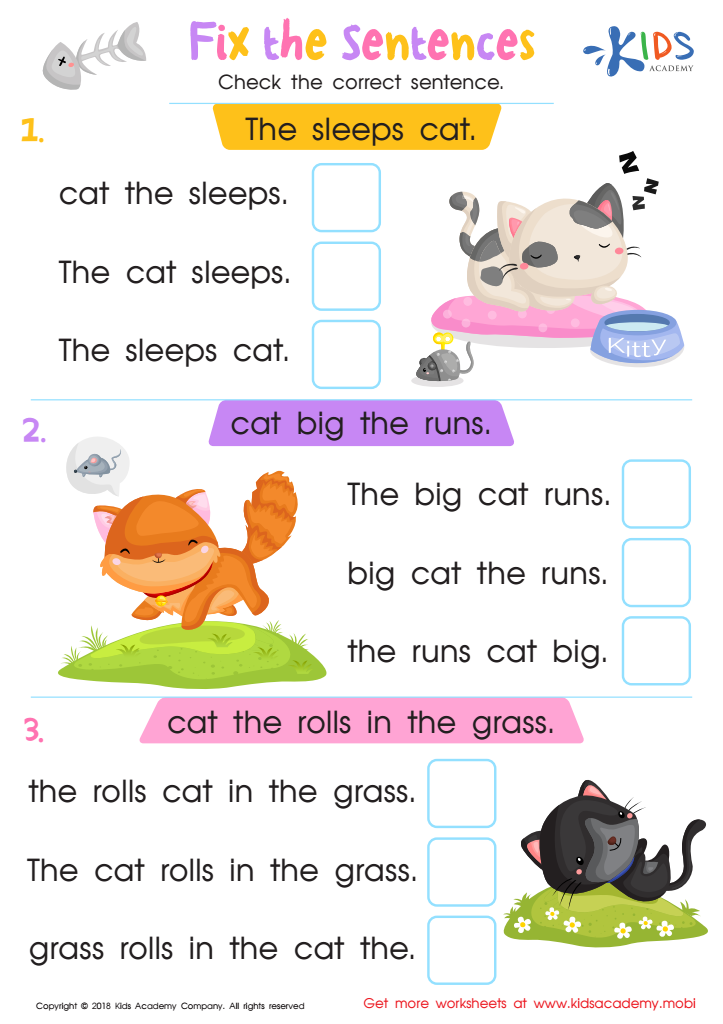
Fix the Sentences Worksheet
 Assign to My Students
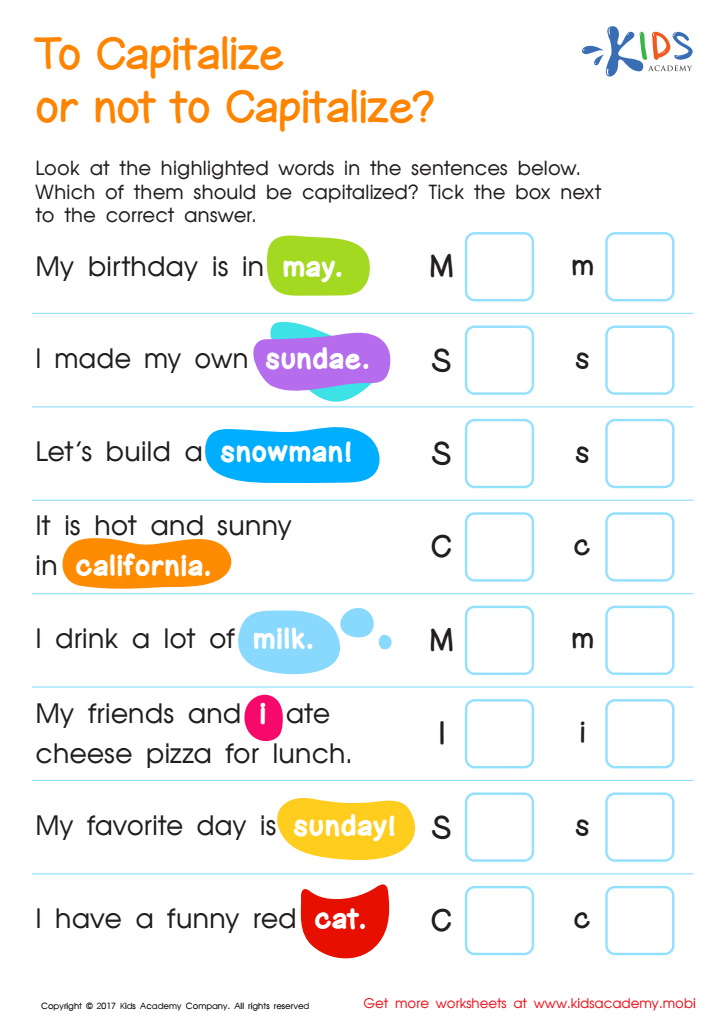
Capitalization: To Capitalize or Not? Printable
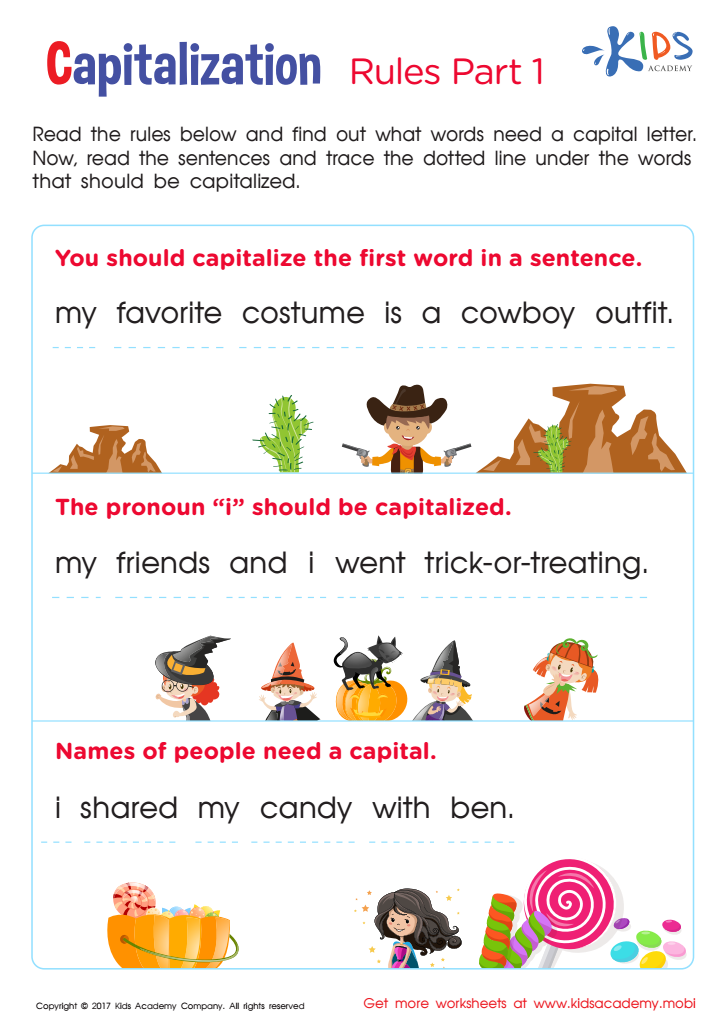
Capitalization Rules: Part 1 Worksheet







Capitalization rules are essential for teaching 6-year-olds how to enhance their writing and communication skills. Parents and teachers should care about this because these rules form the foundation of clear and effective writing. When children learn to capitalize properly, they not only make their written words easier to read, but they also convey their ideas more clearly.
Understanding basic capitalization rules, such as capitalizing the first word of a sentence or proper nouns, helps children recognize the importance of beginnings and names in their writing. This awareness encourages them to pay closer attention to detail and promotes a sense of pride in their work.
Additionally, mastering capitalization aids in building children’s reading skills. When kids see capital letters, they learn to identify sentence starts and distinguish between different types of words, enriching their vocabulary and comprehension.
Furthermore, these skills support children in real-life situations, such as writing letters to friends or filling out forms. Overall, caring about capitalization rules nurtures good writing habits, enhances literacy development, and boosts confidence, setting a strong foundation for future academic success.