Vocabulary development Normal Writing Worksheets for 6-Year-Olds
4 filtered results
-
From - To
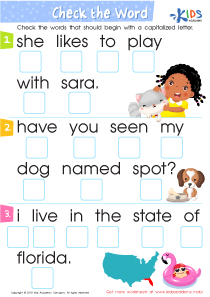
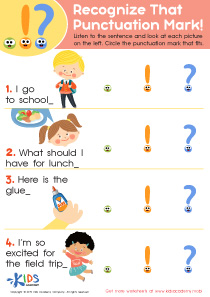
Our "Vocabulary Development: Normal Writing Worksheets for 6-Year-Olds" are specially designed to bolster early literacy skills and enrich children's vocabulary. Tailored for young learners, these engaging worksheets integrate fun activities like matching games, fill-in-the-blank, and picture labeling, making language learning interactive and enjoyable. Each worksheet focuses on expanding word knowledge and usage, essential for developing confident writing skills. Crafted by educational experts, our resources provide a structured yet playful approach to learning, ensuring kids build a strong foundation in vocabulary while fostering a lifelong love for language. Ideal for both home and classroom settings.
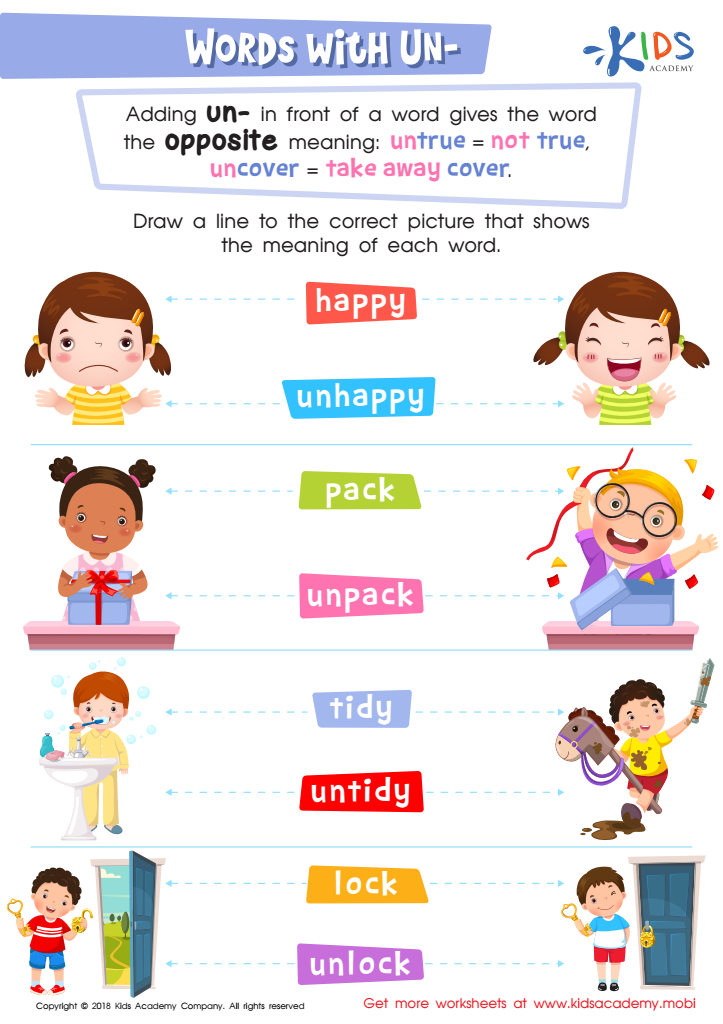
Words with Un– Worksheet
 Assign to My Students
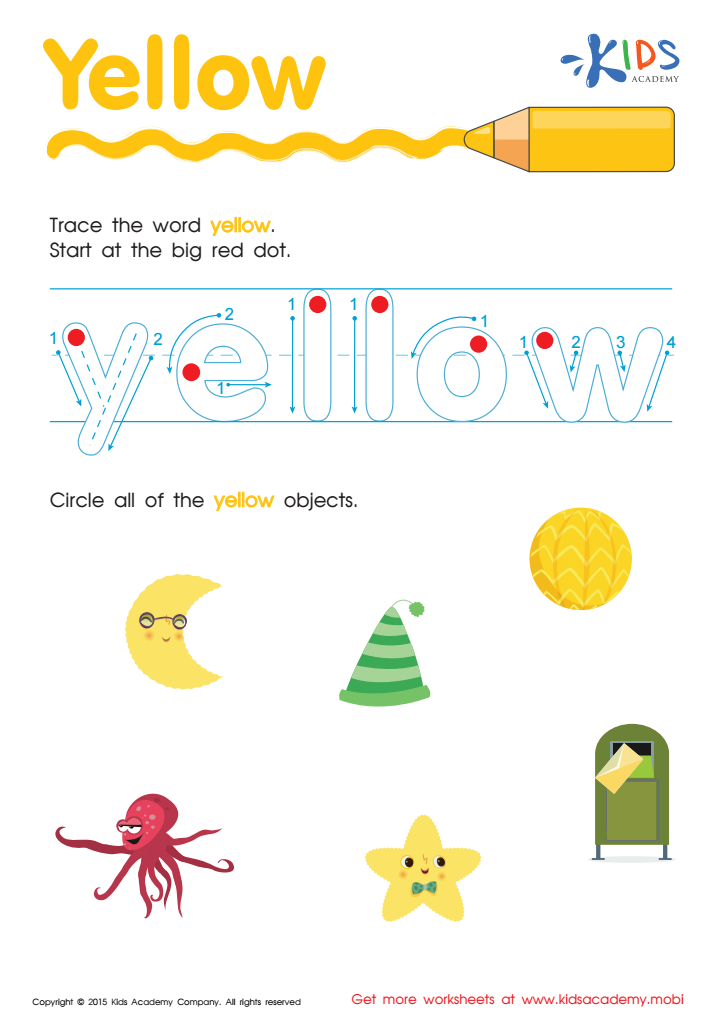
Yellow Tracing Color Words Worksheet
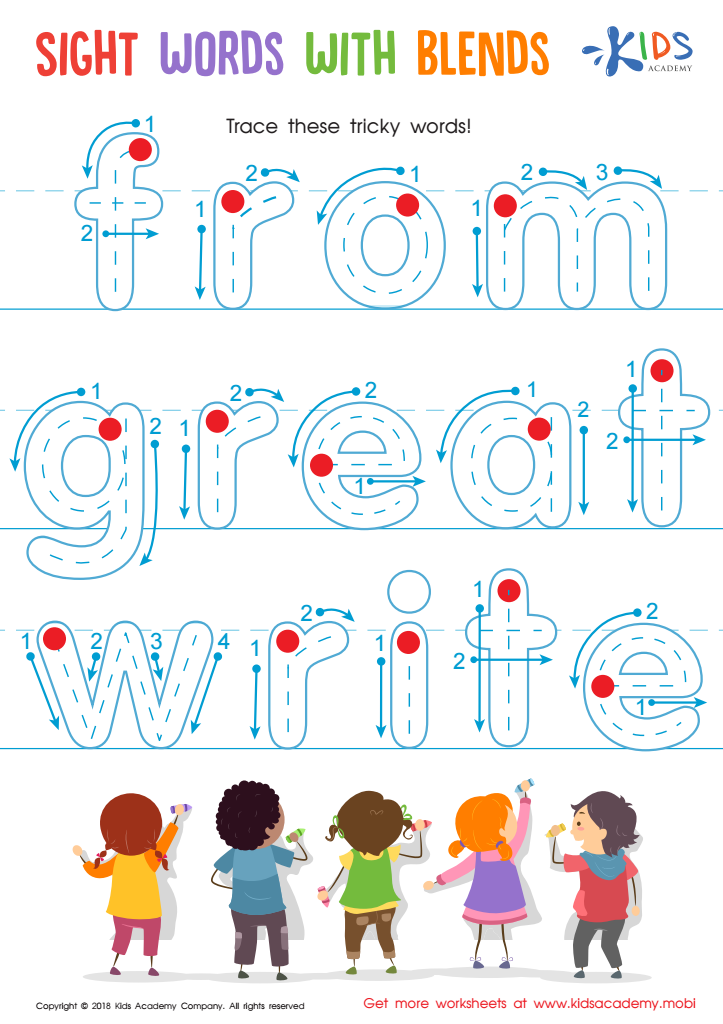
Sight Words with Blends Worksheet
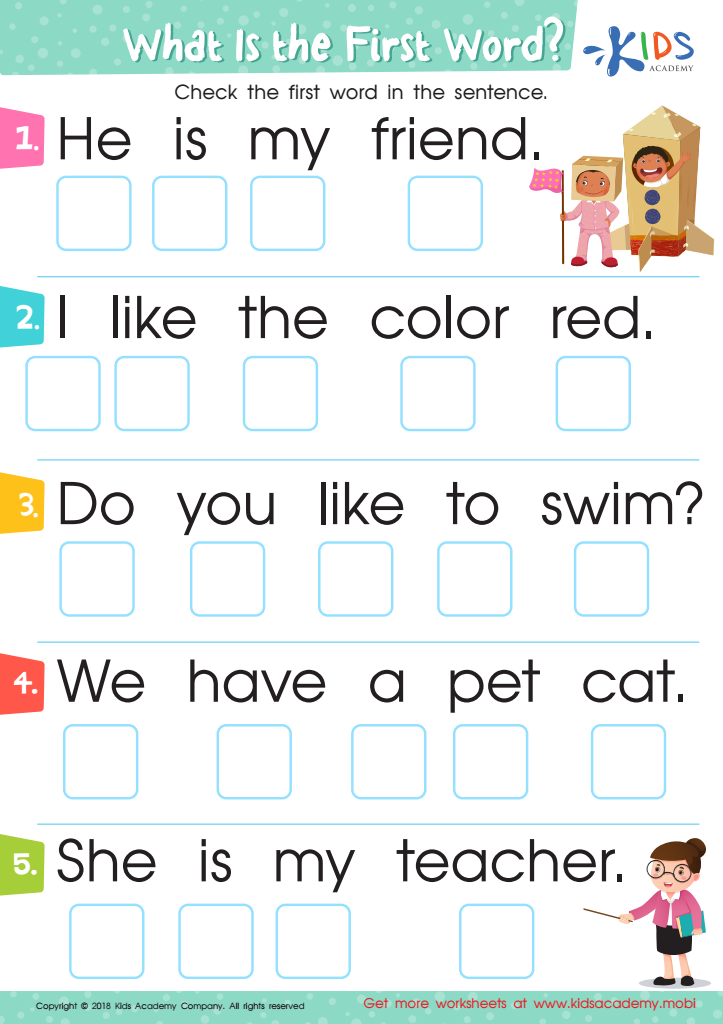
What is the First Word? Worksheet








Vocabulary development is crucial for 6-year-olds as it lays the foundation for their future academic and social success. At this age, children are rapidly expanding their understanding and use of language, which directly impacts their reading comprehension, communication skills, and overall cognitive development.
For parents and teachers, fostering vocabulary growth means equipping children with essential tools for expressing their thoughts, feelings, and ideas effectively. A robust vocabulary allows children to understand instructions, ask questions, and engage in meaningful conversations, which are vital abilities both in the classroom and at home.
Moreover, a strong vocabulary contributes to better reading skills. Young readers with a richer vocabulary can decode text more easily and understand stories in depth, making reading a more enjoyable and rewarding experience. This early success in reading sets the stage for lifelong learning and a positive attitude towards education.
Additionally, vocabulary development supports social-emotional growth. Six-year-olds with a vast vocabulary can navigate social situations more adeptly, articulate their emotions, and resolve conflicts with words rather than frustration or aggression.
In essence, by emphasizing vocabulary development, parents and teachers are not just teaching words; they are nurturing critical thinking, enhancing academic performance, and developing children’s ability to connect and thrive in their world.