
Handwriting improvement Normal Alphabet Worksheets for Ages 7-8
3 filtered results
Difficulty Level
Grade
Age
-
From - To
Subject
Activity
Standards
Enhance your child’s penmanship with our Handwriting Improvement Normal Alphabet Worksheets for ages 7-8. Crafted to support developing writers, these worksheets focus on refining handwriting skills through a comprehensive array of fun and engaging activities. Kids will practice letter formation, spacing, and consistency, key elements of neat writing. Perfect for home or classroom use, they aim to boost confidence and foster a love for writing. With a variety of exercises tailored to young learners, our worksheets ensure an enjoyable learning experience while building a strong foundation for flawless handwriting. Explore and watch your child's writing skills flourish!
Favorites
With answer key
Interactive
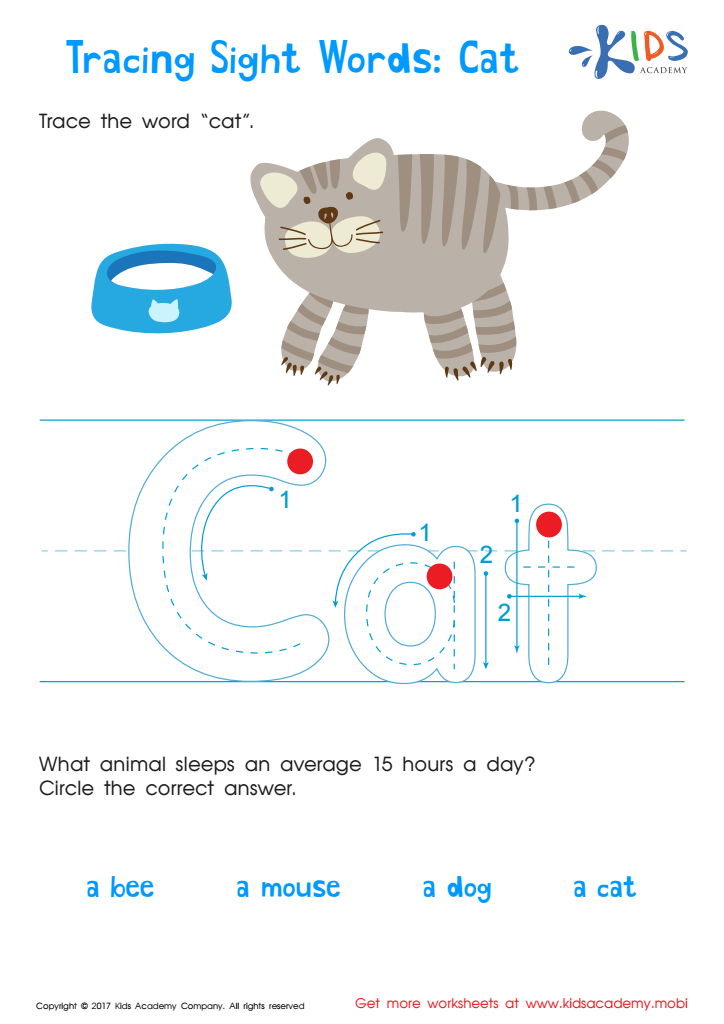
Cat Printable Sight Words Worksheet
Encourage your child's literacy with this fun sight words worksheet: cat PDF! It helps build a solid foundation for reading, featuring activities such as reading and tracing the word cat, and finding it amongst other sight words. With its cute cat, Kids Academy makes learning to read a delight!
 Assign to My Students
Cat Printable Sight Words Worksheet
Worksheet

Letter J Tracing Page
Trace and write the letter "J" with our ABC worksheet - start at the big red dot! Have fun completing words like jewelry, jellyfish and more. Check out our kindergarten activities for more alphabet practice.
Letter J Tracing Page
Worksheet

Letter B Tracing Page
Ready to learn the Alphabet? Put your pencil on the red dot and trace & write both capital & lowercase "B". Then have a look at the pictures. Catch the bee, cross the bridge & write the letters to complete the words. More ABC worksheets for kindergarten available!
Letter B Tracing Page
Worksheet
Join Kids Academy for Free
Who is primarily going to use this learning content?







Handwriting improvement in the normal alphabet for children aged 7-8 plays a crucial role in their early academic development. At this age, children transition from learning through play to formal education, requiring clear, legible handwriting to communicate effectively. Improved handwriting fosters better reading comprehension and serves as the foundation for future academic success.
When children write legibly, they engage more deeply with the content, strengthening their cognitive skills and retention capabilities. Additionally, proper handwriting techniques can prevent future issues like hand fatigue or improper grip, promoting better neuromuscular development. For parents and teachers, emphasizing handwriting improvement helps children build confidence and independence, enhancing their spontaneity and ability to express themselves creatively.
Handwriting also has social implications: peers and educators are more likely to take clear writing seriously, which positively reinforces the child's self-esteem and willingness to participate in classroom activities. Further, the discipline and practice involved in handwriting carry over to other areas of learning, cultivating a sense of perseverance and attention to detail.
In summary, prioritizing handwriting skills for primary-aged children supports their overall educational journey, setting them up for long-term success academically, socially, and emotionally. Understanding its benefits can help both parents and teachers take proactive steps in offering the necessary guidance and practice for handwriting improvement.







