
Understanding vowel sounds Normal Alphabet Worksheets for Ages 7-8
3 filtered results
Difficulty Level
Grade
Age
-
From - To
Subject
Activity
Standards
"Understanding Vowel Sounds Normal Alphabet Worksheets for Ages 7-8" is an essential educational resource designed to enhance your child's phonetic skills. These worksheets focus explicitly on recognizing and using vowel sounds effectively, ensuring a strong linguistic foundation for young learners. Suitable for children aged 7-8, these exercises incorporate a mix of engaging activities, from identifying vowel sounds in words to completing sentences with appropriate vowels. By fostering a deep comprehension of vowel sounds, these worksheets support literacy development and boost reading confidence. Ideal for both classroom and home use, these tools make learning both fun and productive.
Favorites
With answer key
Interactive
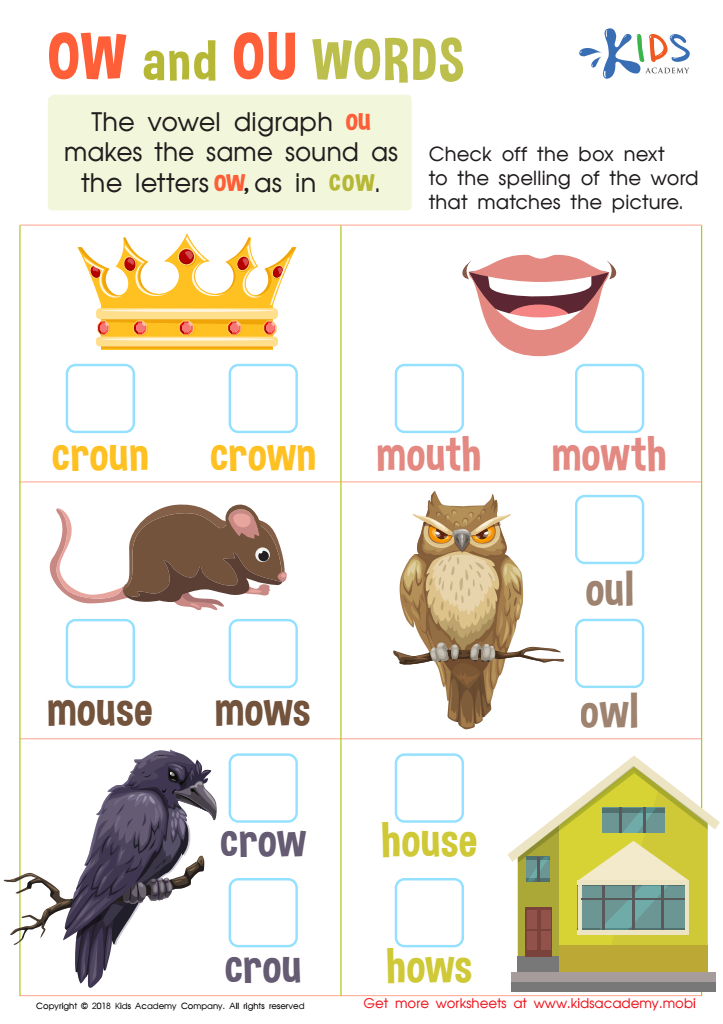
Reading: OW and OU Words Worksheet
Help your kids learn phonetics! Explain the different sounds and long/short variations. Emphasize that some vowel sounds are the same, e.g. ou = ow in cow. For practice, have them read aloud the words in the worksheet and check the box next to the spelling that matches the picture.
Reading: OW and OU Words Worksheet
Worksheet
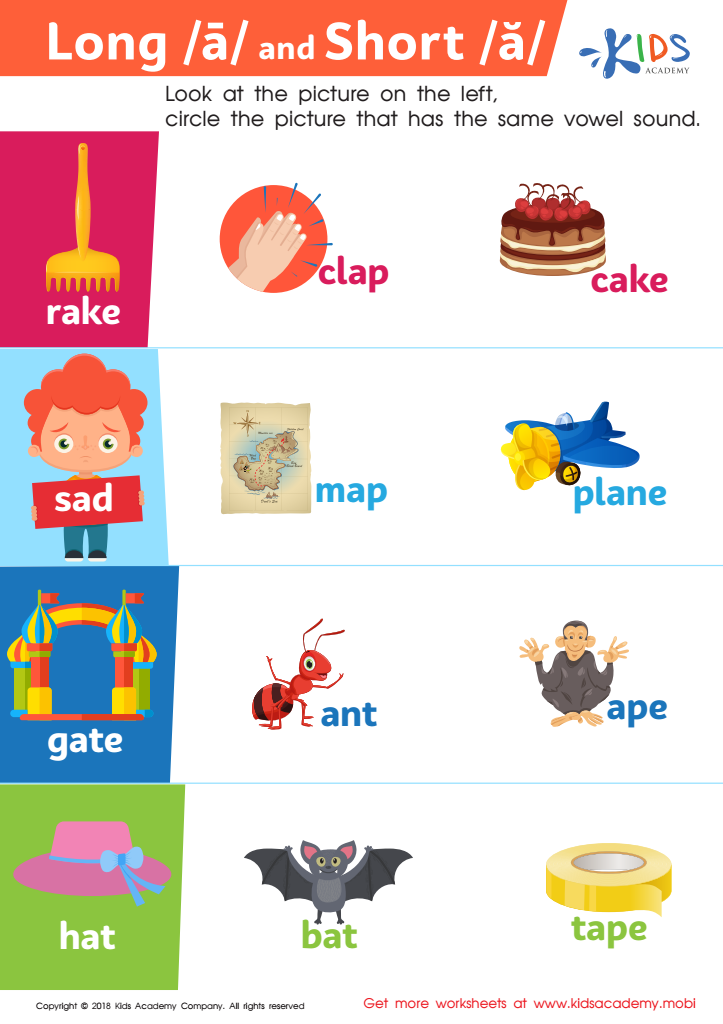
Reading: Long a and Short a Worksheet
This printable helps students practice distinguishing the long and short A sound. Pictures provide clues to read each word and students identify if it has a short or long sound. By completing this worksheet, children gain mastery of the phonics skill.
Reading: Long a and Short a Worksheet
Worksheet
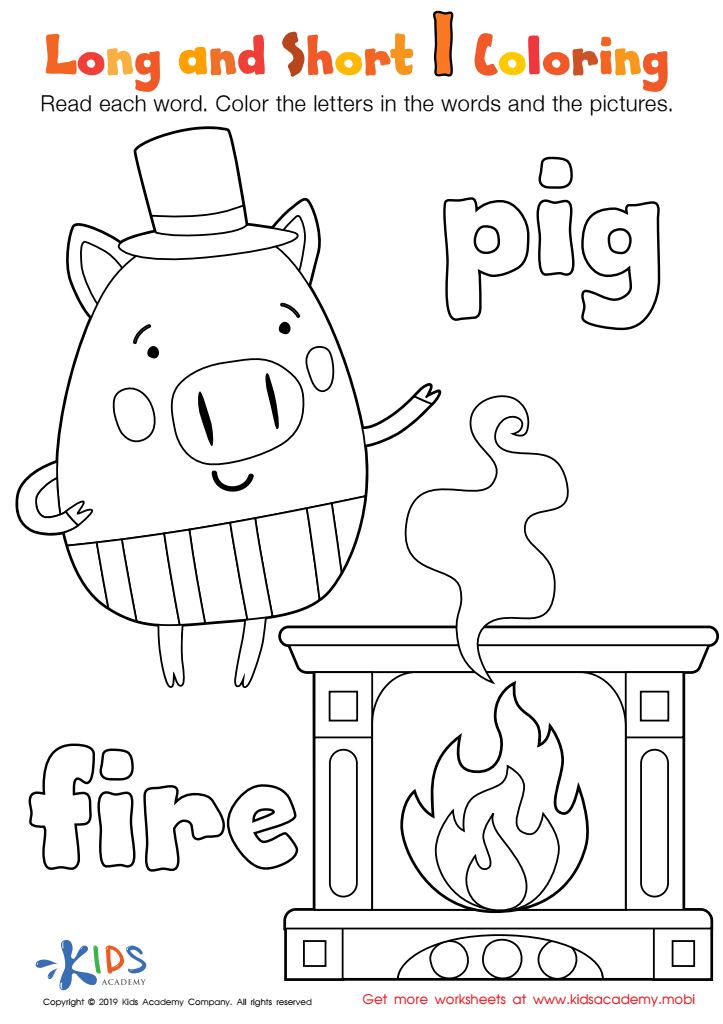
Long and Short I Worksheet
Print the worksheet and have the students read "pig" and "fire". Check for understanding the difference between long and short vowels. Color in words and pictures to make learning phonics fun! This exercise is perfect for introducing the topic to your students.
Download (PDF)
 Assign to My Students
Assign to My Students
Long and Short I Worksheet
Worksheet
Join Kids Academy for Free
Who is primarily going to use this learning content?







Understanding vowel sounds is fundamental for young learners aged 7-8 because it forms the cornerstone of reading and spelling skills. At this age, children transition from recognizing individual letters to blending sounds to form words. Vowels, which are the most common sounds in English, play a crucial role in nearly every word.
Firstly, mastering vowel sounds helps in phonemic awareness, allowing children to decode new words as they encounter them. This skill is necessary for fluent reading, which supports comprehension and fosters a love for reading. Without a clear grasp of vowel sounds, children might struggle with reading fluidly and understanding text.
Secondly, vowel sounds are vital for accurate spelling. English has many words where vowels don't behave as expected (e.g., magic 'e' in "cake" vs. "cat"), posing a challenge for young writers. Teachers and parents can help children recognize these patterns, laying a strong foundation for future literacy skills.
Moreover, vowel sounds often change the meaning of words (e.g., "bat" vs. "bet"). Understanding these nuances helps children communicate more effectively, enhancing both their speaking and listening skills.
Overall, investing time in understanding vowel sounds during these formative years equips children with essential tools for academic success and lifelong literacy.







