Phonics Skills Normal Letter Sounds Worksheets for Ages 7-8
3 filtered results
-
From - To
Introduce your child to the joy of reading with our "Phonics Skills Normal Letter Sounds Worksheets for Ages 7-8." Expertly designed to align with educational standards, these engaging worksheets help young learners master essential phonics skills by recognizing and pronouncing normal letter sounds. Ideal for both classroom and home use, each activity strengthens reading fluency, ensuring a solid foundation for future language success. With colorful illustrations and fun exercises, these worksheets transform learning into an exciting adventure. Empower your 7-8-year-old with the confidence to read independently and succeed academically with our comprehensive and interactive phonics resources.
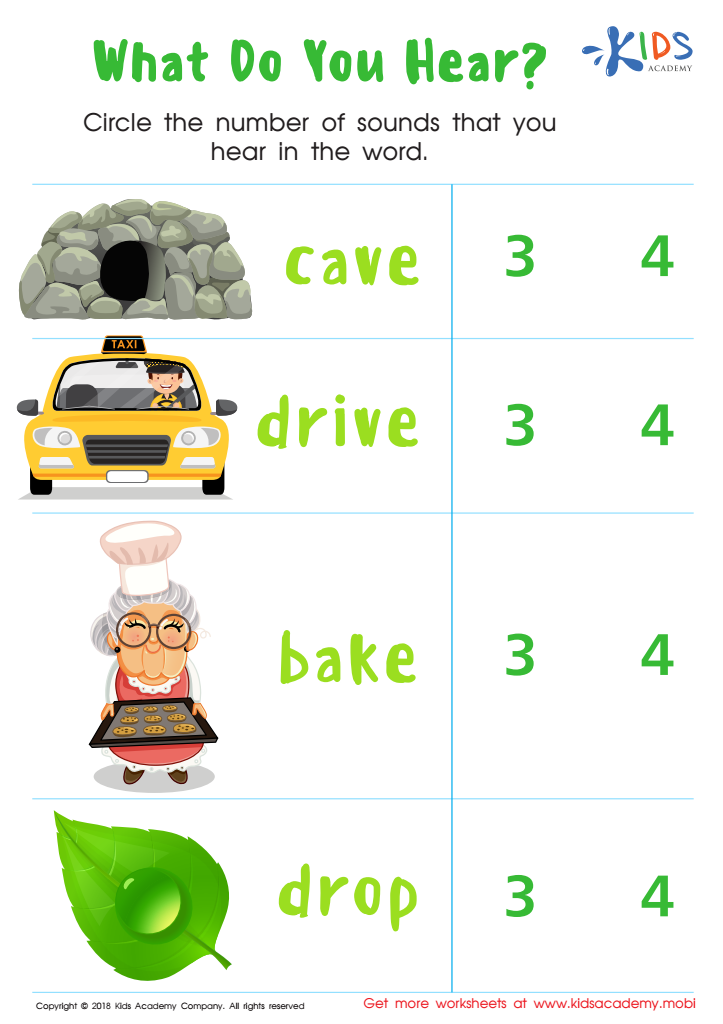
What Do You Hear? Worksheet
 Assign to My Students
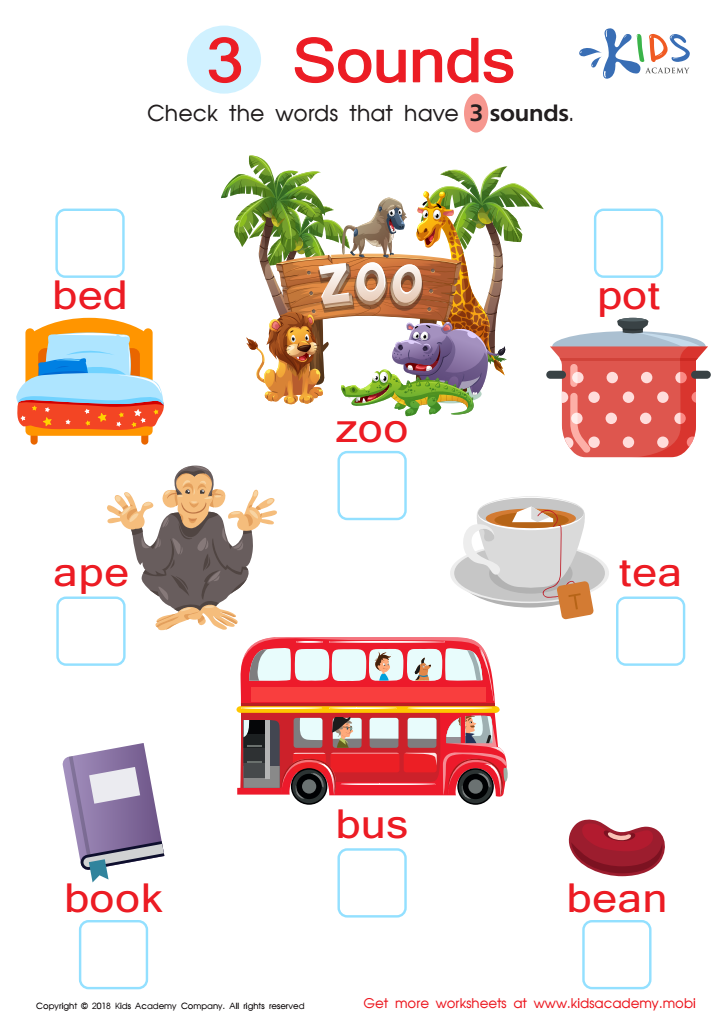
3 Sounds Worksheet
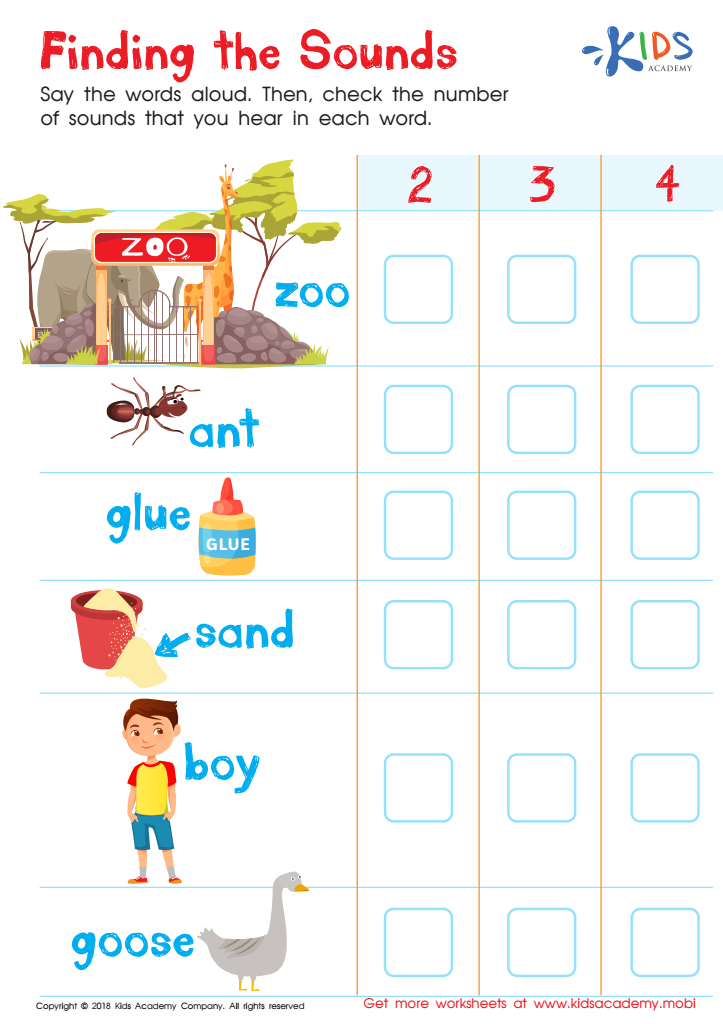
Finding the Sounds Worksheet








Phonics skills and understanding normal letter sounds are foundational to a child's early literacy, especially for children aged 7-8. At this age, children are transitioning from mere recognition of letters to reading more complex sentences and constructing their comprehension capabilities. Phonics plays a crucial role because it connects the sounds of language (phonemes) with letters or groups of letters (graphemes), aiding in word recognition, spelling, and pronunciation.
For parents and teachers, emphasizing phonics skills significantly accelerates children’s reading fluency and comprehension. It equips kids with the tools to decode unfamiliar words, thereby expanding their vocabulary and fostering independent reading. Understanding normal letter sounds allows children to blend sounds to form words (synthesis) or break words into sounds (analysis), fundamental skills not just for reading, but for writing too.
Without a solid grasp of phonics, children may struggle with literacy tasks, leading to frustration and potential long-term academic difficulties. Proficiency in phonics ensures they have a smoother educational journey, instilling confidence and a love for reading. This proactive approach ultimately supports broader educational goals, including critical thinking and effective communication skills indispensable for lifelong learning. Hence, focusing on phonics skills and normal letter sounds is an investment in a child's comprehensive educational development.






