
Letter recognition Normal Phonics Worksheets for Ages 7-8
4 filtered results
Difficulty Level
Grade
Age
-
From - To
Subject
Activity
Standards
Discover engaging Letter Recognition Normal Phonics Worksheets tailored for ages 7-8 on Kids Academy! These expertly crafted worksheets focus on enhancing alphabet knowledge through fun and educational exercises. Ideal for second graders, the activities promote phonemic awareness, ensuring a solid foundation in reading. Whether practiced at home or in the classroom, the puzzles, matching games, and tracing tasks make learning enjoyable and effective. Boost your child's confidence and literacy skills with these delightful, interactive resources. Visit Kids Academy to download and start learning today!
Favorites
With answer key
Interactive
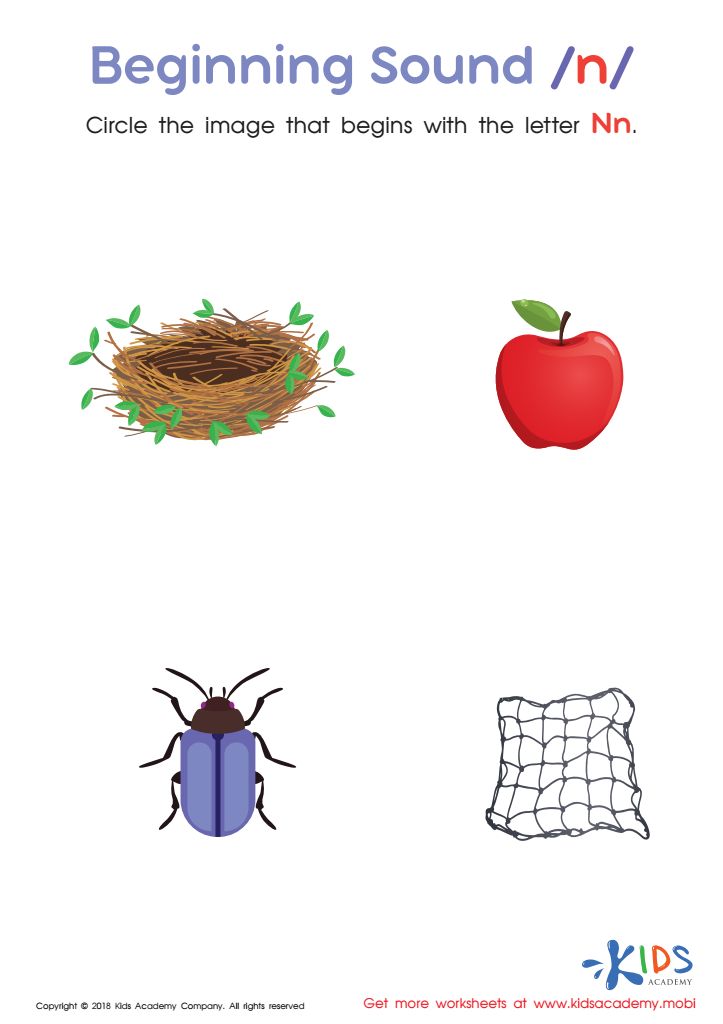
Beginning Sound «n» Worksheet
Help your emerging reader learn the initial «n» sound with this free PDF worksheet! Strengthen fine motor skills by tracing circles around words beginning with «n». Pictures are clear and engaging, giving beginning Phonics learners the right amount of practice and the confidence to succeed.
Beginning Sound «n» Worksheet
Worksheet

Long and Short U Worksheet
Revised: Spice up your lesson on long and short vowels with this fun printout! Kids read the words "tube" and "tub," then reinforce the sound by coloring in the words and pictures. It's a great way to make phonics class enjoyable!
Download (PDF)
 Assign to My Students
Assign to My Students
Long and Short U Worksheet
Worksheet
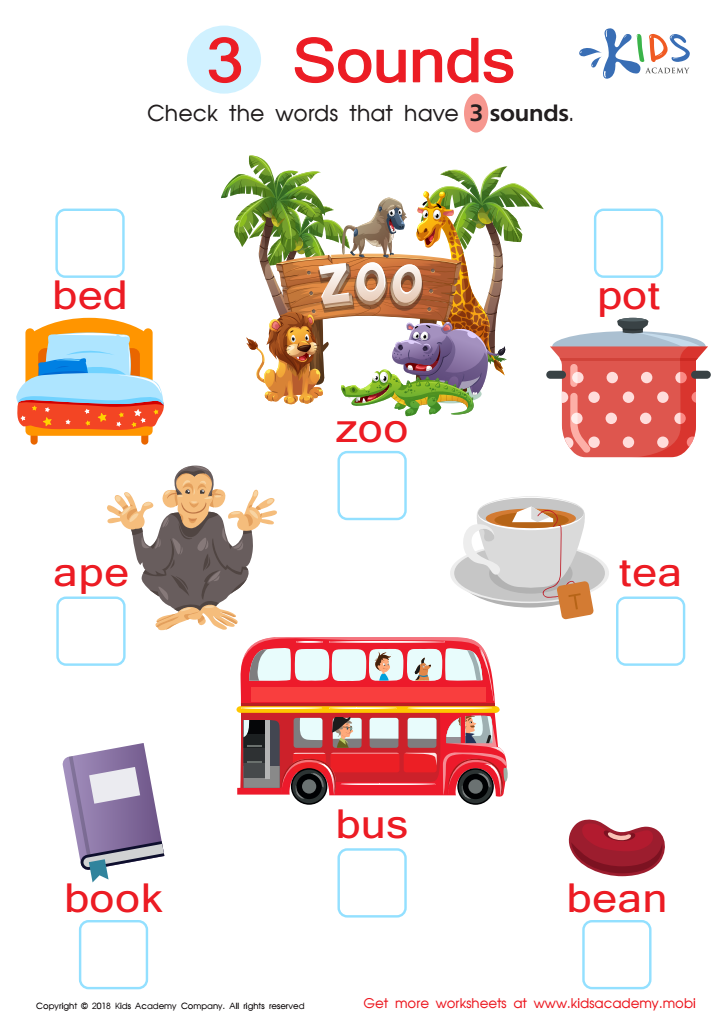
3 Sounds Worksheet
Kids will love learning with this free, colorful worksheet. It's full of familiar words they can name and sound out with three distinct sounds. This helps build decoding skills, plus they get to check off words they read. It's a fun way to teach children to identify and use sounds.
3 Sounds Worksheet
Worksheet
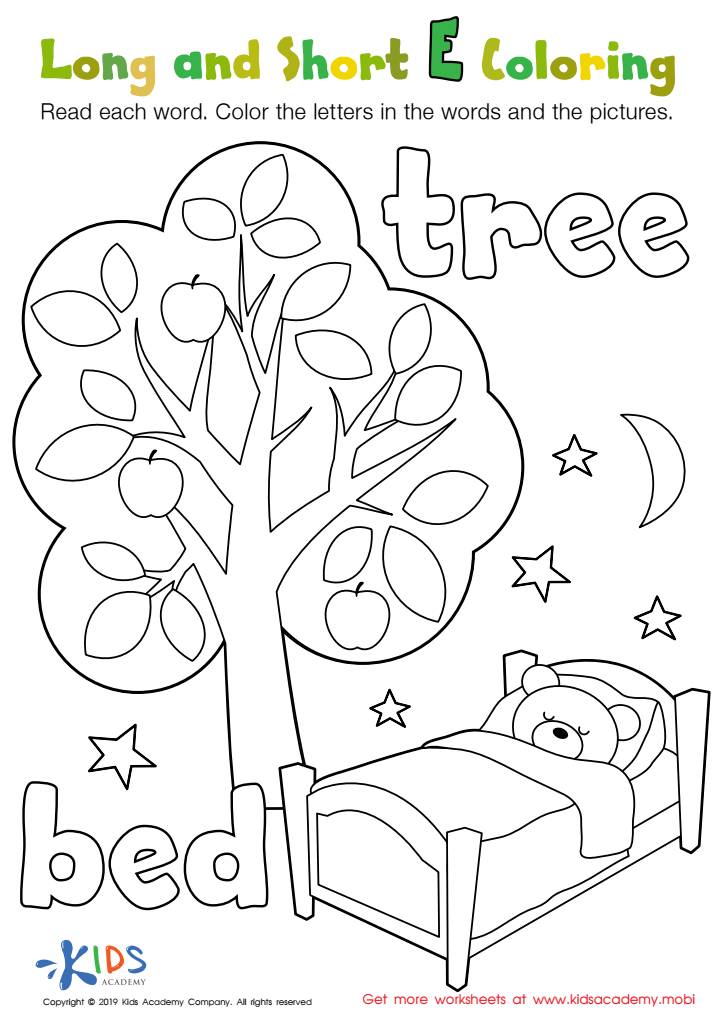
Long and Short E Worksheet
This fun printout makes learning phonics enjoyable for Grade 3 students. Get them to read the words “tree” and “bed” to recognize the different sounds of the letter “E”. After hearing the words they can color the words and the pictures to understand differences between long and short vowels.
Download (PDF)
Assign to My Students
Assign to My Students
Long and Short E Worksheet
Worksheet
Join Kids Academy for Free
Who is primarily going to use this learning content?








Letter recognition and normal phonics are fundamental skills that significantly impact a child's reading and writing proficiency. For ages 7-8, developing these skills is crucial, and here’s why parents or teachers should prioritize them:
Firstly, letter recognition is the ability to identify and name both uppercase and lowercase letters accurately. It serves as the foundation upon which reading and writing skills are built. Without this fundamental skill, children will struggle to decode words, hindering their reading fluency and comprehension. When children recognize letters and their corresponding sounds effortlessly, they can focus more on understanding the text, which enhances their overall literacy.
Secondly, normal phonics instruction involves teaching the relationship between letters and their sounds. This helps children to decode new words using phonetic principles. Phonics skills facilitate efficient word recognition, spelling, and the ability to read unfamiliar words independently. For children ages 7-8, who are generally in the early stages of primary education, a strong grasp of phonics aids in developing fluent reading skills essential for academic success.
In conclusion, investing time in developing letter recognition and phonics skills lays a solid literacy foundation. It boosts children's confidence, encourages a love for reading, and sets them on a path of educational achievement. This, in turn, opens up broader learning opportunities and fosters lifelong educational growth.







