
Reading Skills Normal Phonics Worksheets for Ages 7-8
5 filtered results
Difficulty Level
Grade
Age
-
From - To
Subject
Activity
Standards
Enhance your child's reading abilities with our engaging Normal Phonics Worksheets for ages 7-8! Designed to build essential reading skills, these worksheets focus on phonics—helping young learners connect sounds with letters and improve their decoding skills. Each worksheet is filled with fun activities tailored to reinforce understanding of sounds, blending, and word formation. Perfect for classroom use or at-home practice, these resources offer an interactive way to boost confidence in reading. Foster a love for literacy and ensure your child's academic success with our comprehensive collection of phonics worksheets. Get started on their reading journey today!
Favorites
With answer key
Interactive
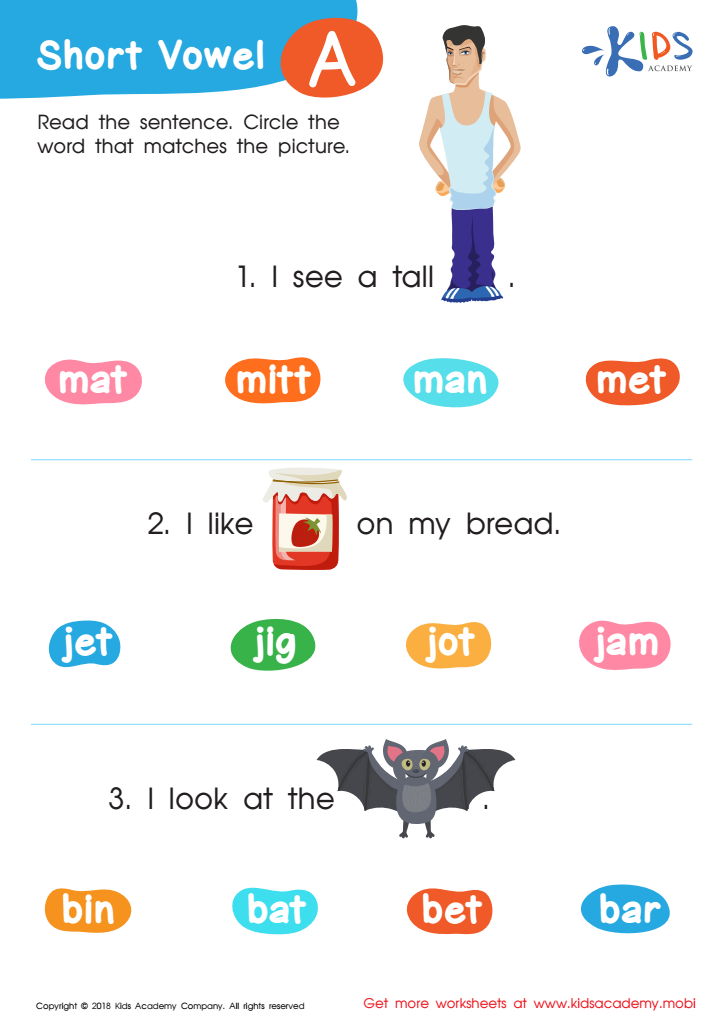
Short Vowel /a/ Worksheet
This free PDF helps new readers use sight words and pictures to read basic sentences. Then, they use accompanying word choices to find the correct word with the short a vowel sound. A key early reading skill, discriminating between short vowel sounds can be tricky in monosyllabic words, so use this PDF to help your reader reinforce it.
 Assign to My Students
Short Vowel /a/ Worksheet
Worksheet
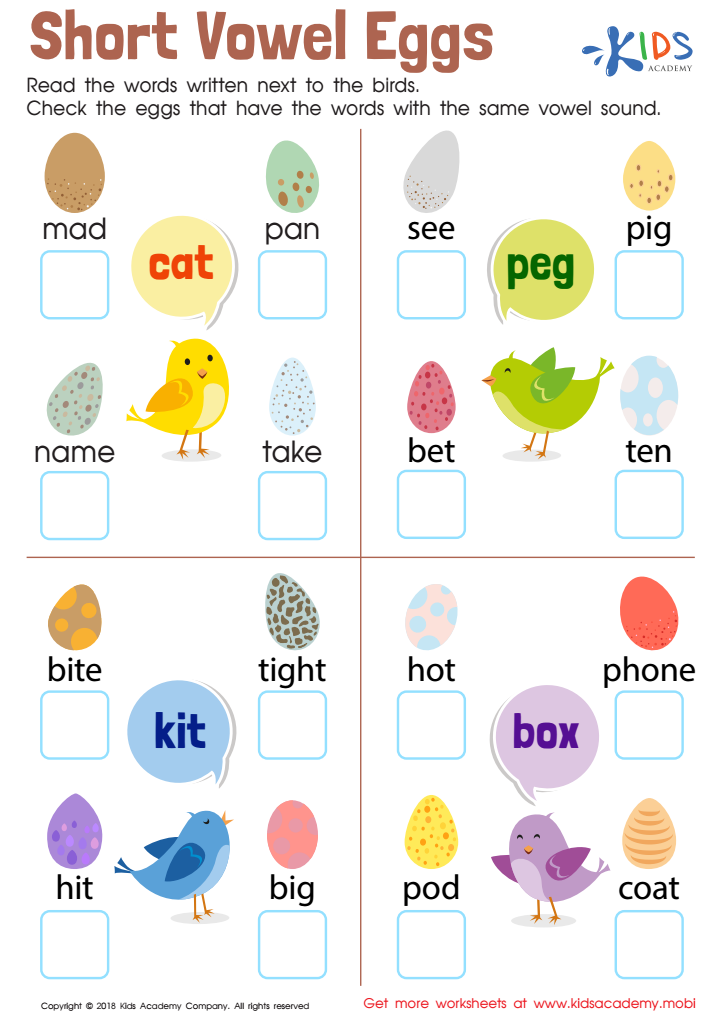
Short Vowel Eggs Worksheet
Your students will love helping these birdies pick the short vowel eggs! Have them read the words in the thought bubbles, then check off the boxes with the same short vowel sounds. The bright colors of this free Worksheet will draw them in and get them practicing their vowels!
Short Vowel Eggs Worksheet
Worksheet
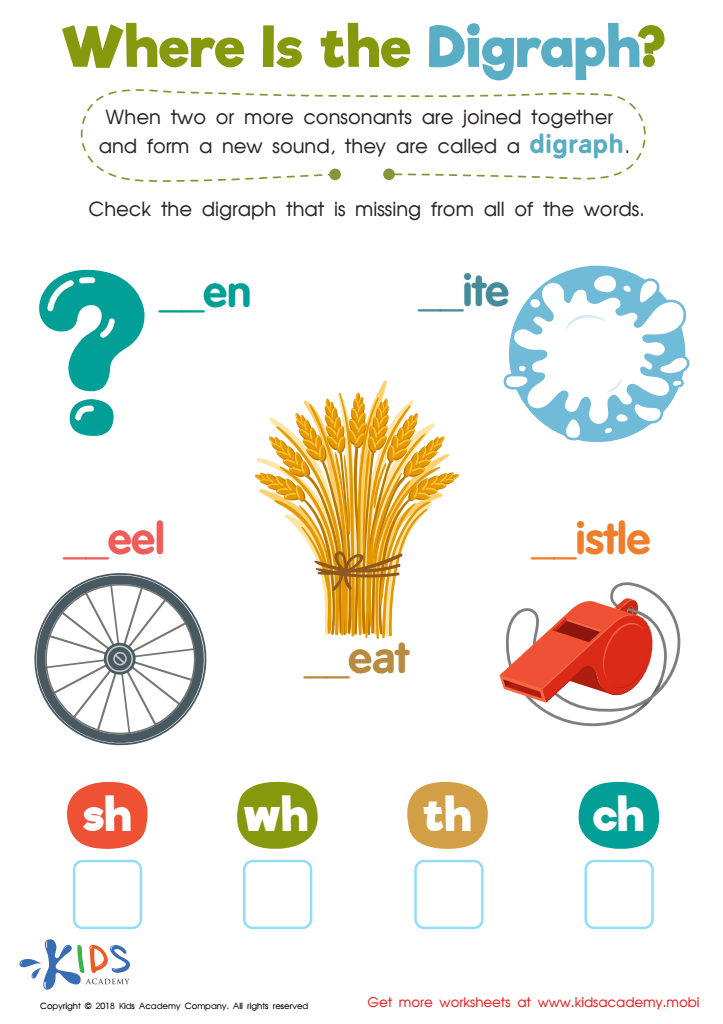
Where Is the Digraph? Worksheet
Teach your child about digraphs - two or more consonants that form one sound, like /wh/, /sh/, and /ch/. Show them words with these sounds and use this worksheet to help. Ask them which digraph is missing from the words and point out the pictures. 80 words.
Where Is the Digraph? Worksheet
Worksheet
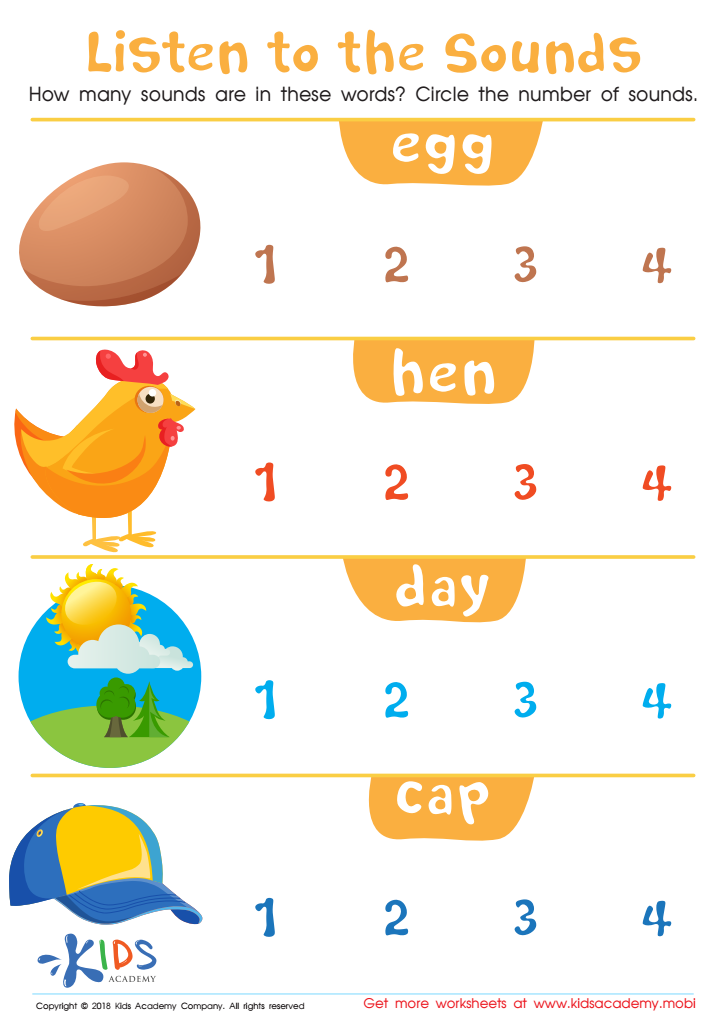
Listen to the Sounds Worksheet
This worksheet builds emerging readers' skills in using sounds for reading and spelling. It helps strengthen auditory processing by having them count the sounds in each word, then trace the corresponding number. Fun and cheerful!
Listen to the Sounds Worksheet
Worksheet
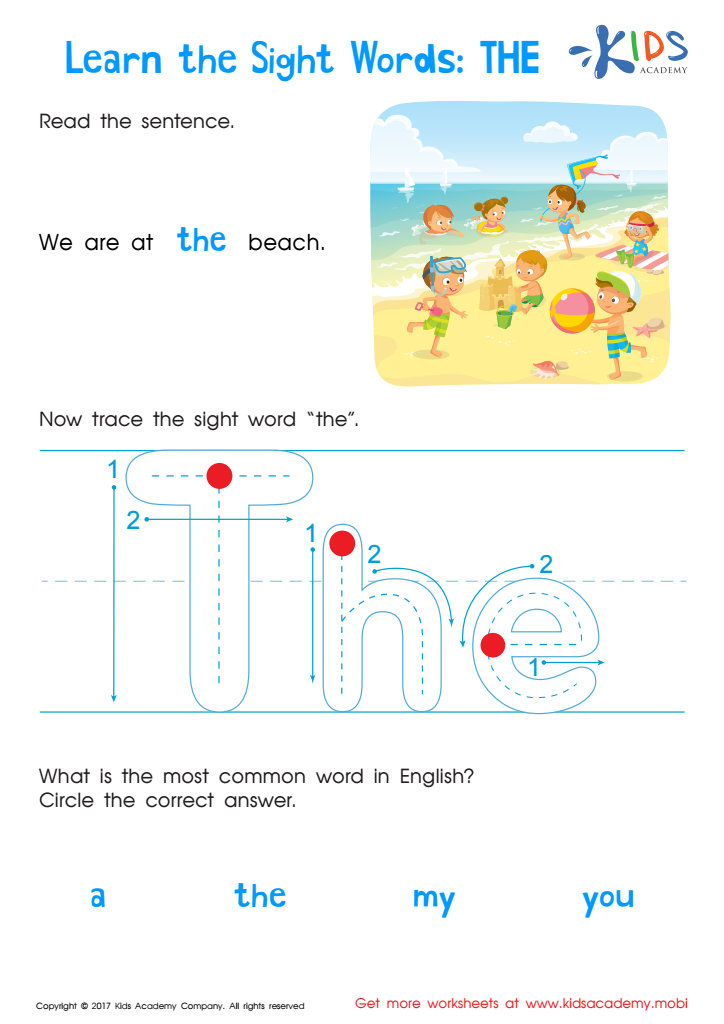
Sight Words: The Worksheet
Get the worksheet and start now.
The word "the" is an essential part of English. Teaching your child to read and write it is easy with this sight words worksheet. They'll practice reading the word, tracing it, and using it in sentences. It's the perfect way to take your child's language skills to the next level! Get the worksheet today.
Sight Words: The Worksheet
Worksheet
Join Kids Academy for Free
Who is primarily going to use this learning content?








Parents and teachers should prioritize Reading Skills Normal Phonics for Ages 7-8 because this stage is crucial for developing a strong foundation in literacy. At this age, children transition from learning to read to reading to learn, which makes phonics essential for their academic success. Phonics instruction helps children understand the relationship between letters and sounds, allowing them to decode unfamiliar words with confidence.
By mastering phonics, children enhance their reading fluency and comprehension, which are critical skills across all subjects. Additionally, effective phonics education promotes a love for reading, fostering engagement and encouraging a growth mindset in young learners. Strong reading skills impact not only a child's academic performance but also their self-esteem and enthusiasm for learning in general.
Moreover, phonics instruction supports children with diverse learning needs, equipping them with tools to overcome challenges in reading. Parents and teachers can collaborate to reinforce phonics through engaging activities at home and in the classroom, creating a supportive environment that nurtures literacy development. Ultimately, fostering strong reading skills through phonics sets children on a path to lifelong learning and success in all areas of life.







