
Reading skills development Normal Phonics Worksheets for Ages 7-8
3 filtered results
Difficulty Level
Grade
Age
-
From - To
Subject
Activity
Standards
Our "Reading Skills Development: Normal Phonics Worksheets for Ages 7-8" provide engaging, age-appropriate resources pivotal in nurturing young readers' abilities. Each worksheet is designed to enhance phonemic awareness, allowing children to grasp sound-letter relationships crucial for fluency. With interactive exercises and vibrant visuals, the worksheets captivate and motivate learners. Perfect for classroom or at-home practice, these resources support systematic phonics instruction, empower confident reading, and lay a solid foundation for advanced language arts skills. Set your child on the path to reading success with our comprehensive and enjoyable phonics worksheets tailored to meet the developmental needs of 7-8-year-olds.
Favorites
With answer key
Interactive
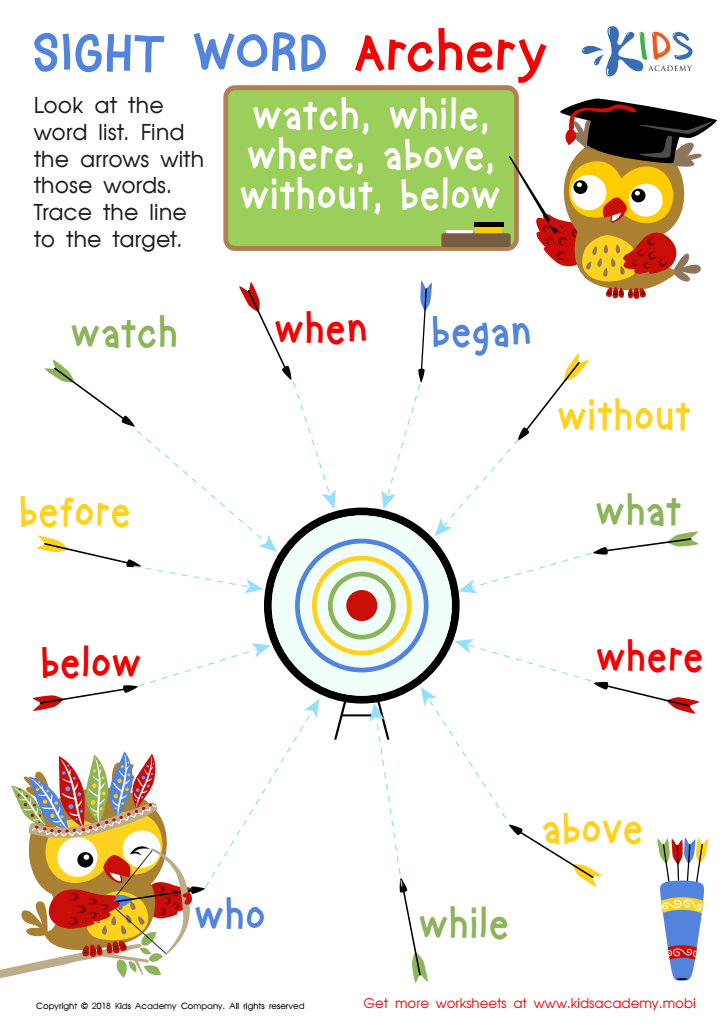
Sight Word Archery Worksheet
Read the words list with your kids, pointing at each one. Ask them to do the same. Help them find the arrows with those words and trace the line to the target in the centre.
 Assign to My Students
Sight Word Archery Worksheet
Worksheet
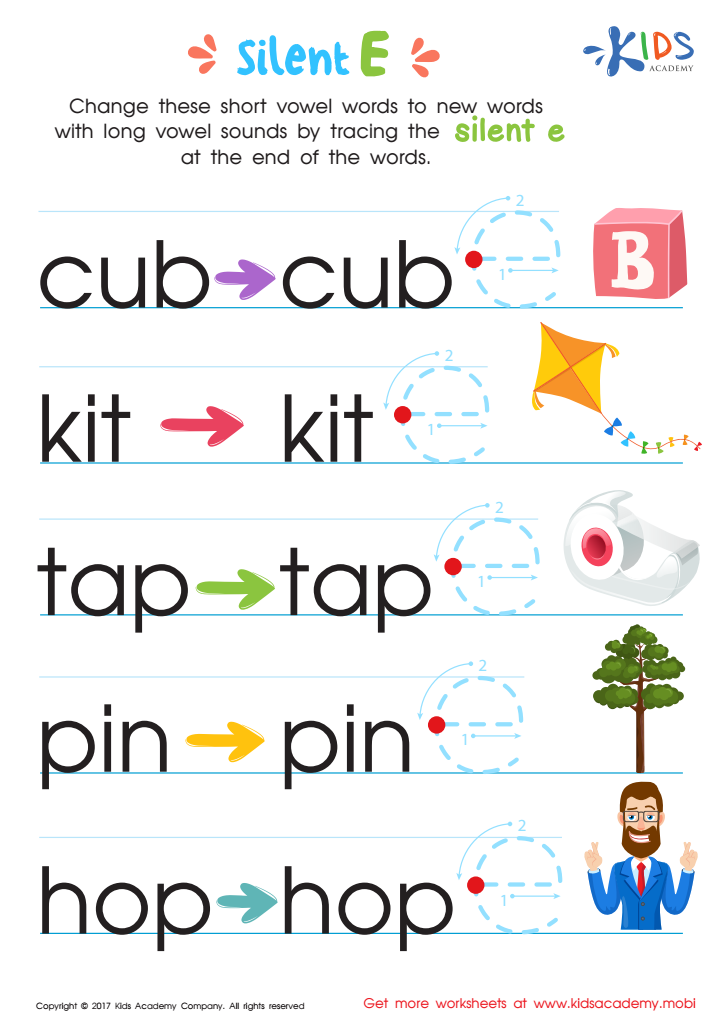
Silent E Words Worksheet
The letter e is amazing - it changes words without making a sound! Boost spelling and phonics with this Silent e worksheet from Kids Academy - fun and colorful!
Silent E Words Worksheet
Worksheet
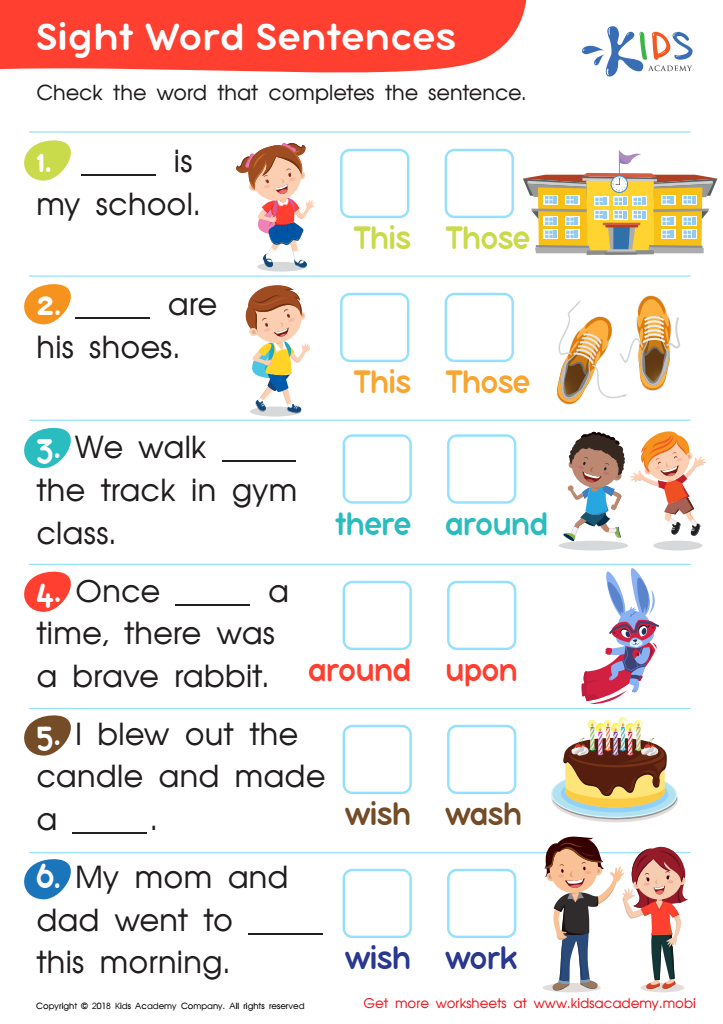
Sight Word Sentences Worksheet
Improve reading fluency! Have students fill in the blank with the correct sight word to complete sentences. Sight words are often tricky to decode - they don't follow phonics or spelling rules. To read smoothly, young learners must know them by memory. Use this printable and help kids master their sight words!
Sight Word Sentences Worksheet
Worksheet
Join Kids Academy for Free
Who is primarily going to use this learning content?








Reading skills development and phonics for ages 7-8 are pivotal for academic and cognitive growth, making it crucial for parents and teachers to prioritize these areas. At this age, children are transitioning from "learning to read" to "reading to learn." Proficient reading skills enable them to access a wide array of knowledge, foster a love for learning, and establish strong foundational skills critical for future academic success.
Phonics, which involves the relationship between letters and sounds, is fundamental to decoding words. Mastery of phonics empowers children to tackle unfamiliar words, enhancing their reading fluency and comprehension. Children who struggle with these skills may lag academically, facing difficulties across all subjects—not just language arts—because reading comprehension is essential for problem-solving and understanding written instructions.
Furthermore, early success in reading boosts children's confidence and motivation to learn, shaping their overall attitude toward education. It nurtures imagination through stories, enhances vocabulary, and improves communication skills.
Given these significant developmental benefits, parents and teachers should actively engage in activities and strategies that support reading and phonics instruction. This investment not only ensures immediate educational success but also lays the groundwork for lifelong literacy and learning, benefiting children's personal and professional futures.







