
Reading skills improvement Normal Phonics Worksheets for Ages 7-8
5 filtered results
Difficulty Level
Grade
Age
-
From - To
Subject
Activity
Standards
Enhance your child's reading abilities with our Normal Phonics Worksheets designed specifically for ages 7-8! These thoughtfully crafted worksheets focus on improving essential reading skills through engaging phonics exercises. Tailored to reinforce letter sounds, blending, and decoding techniques, each worksheet encourages interactive learning and builds confidence in young readers. With a variety of activities that cater to different learning styles, children can practice at their own pace while fostering a love for reading. Perfect for homeschooling, classroom use, or extra practice at home, our worksheets provide the foundation for literacy success. Explore the world of reading in a fun and effective way!
Favorites
With answer key
Interactive
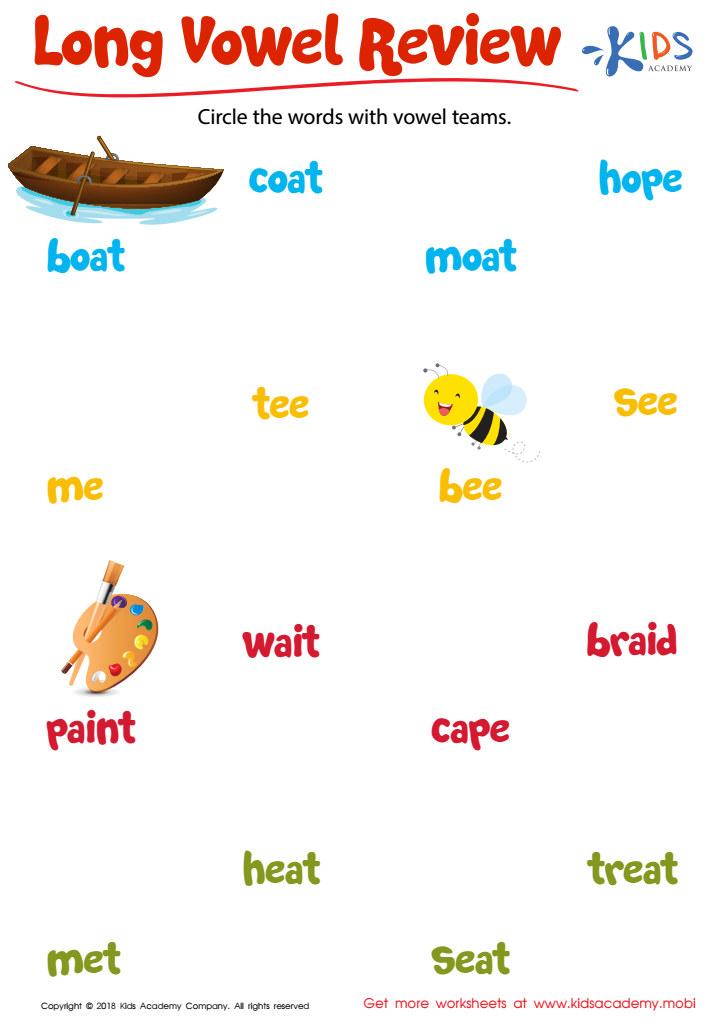
Long Vowel Review Worksheet
Vowel teams like "ea" and "ai" help us make words, and understanding these patterns aids emerging readers in becoming more fluent. This review worksheet has students finding words with vowel teams that make the long vowel sound, and helps them recognize high-frequency words.
 Assign to My Students
Long Vowel Review Worksheet
Worksheet
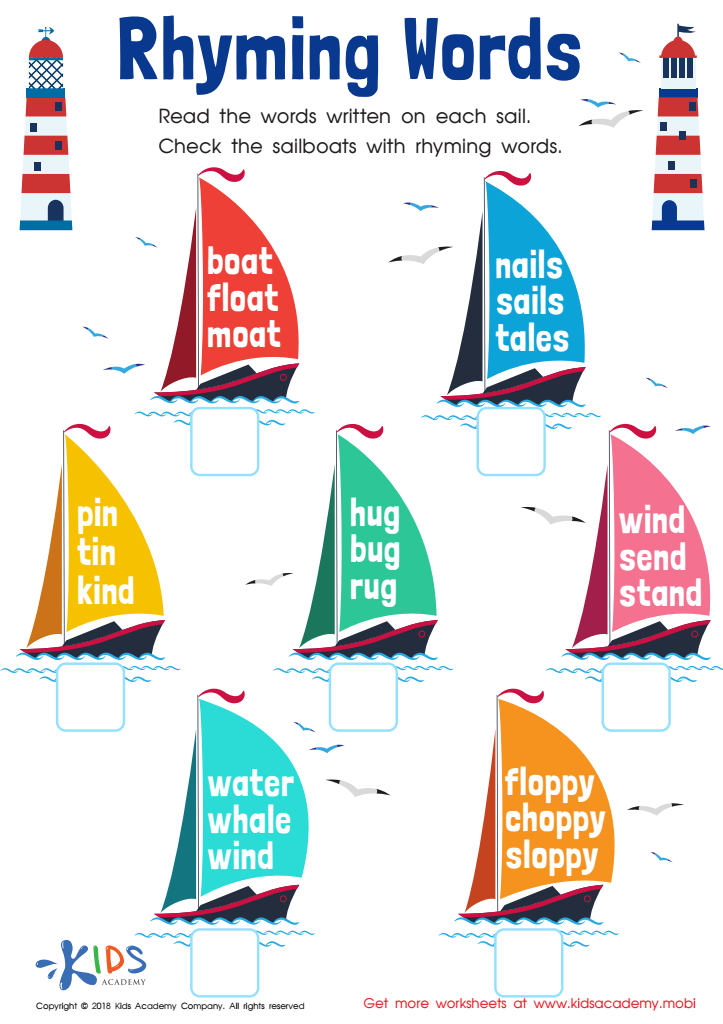
Rhyming Words Worksheet
Does your child know about rhyming words? Get them interested in poetry and explain that these words have similar sounds when pronounced. Read the words on each sailboat to your child and ask them to identify the rhyming pairs. Guide them to check the sailboats.
Rhyming Words Worksheet
Worksheet
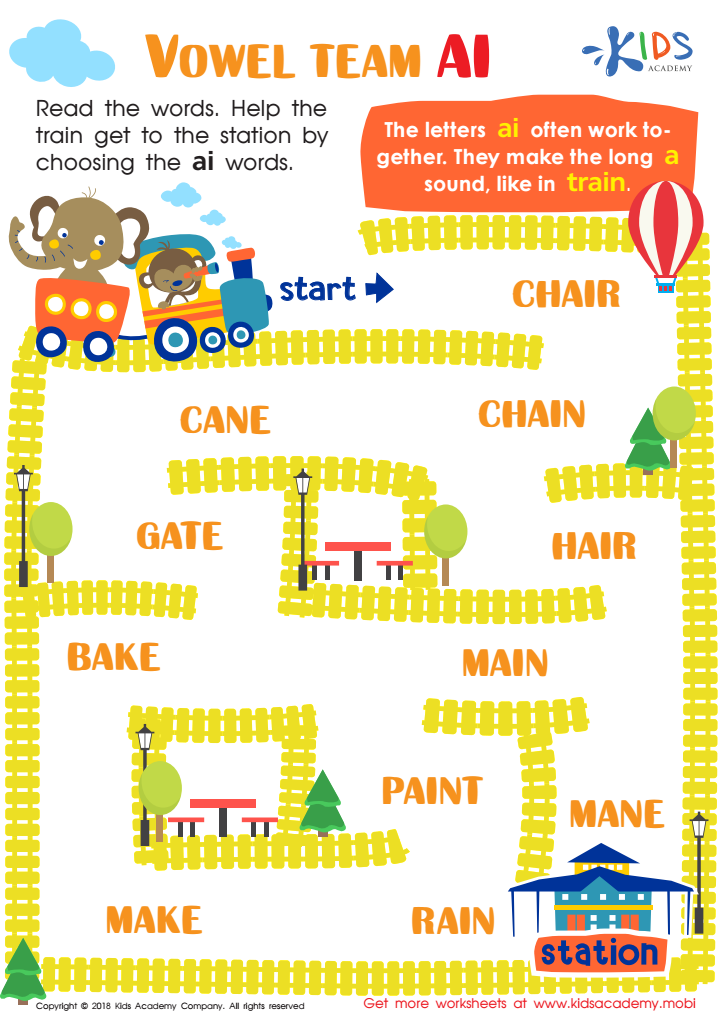
Vowel team ai Worksheet
Kids will have a blast learning about the -ai digraph with this fun worksheet. They'll read words with it and practice their motor skills as they help the animal duo get back to the train station. With success, they'll smile and enjoy the activity!
Vowel team ai Worksheet
Worksheet
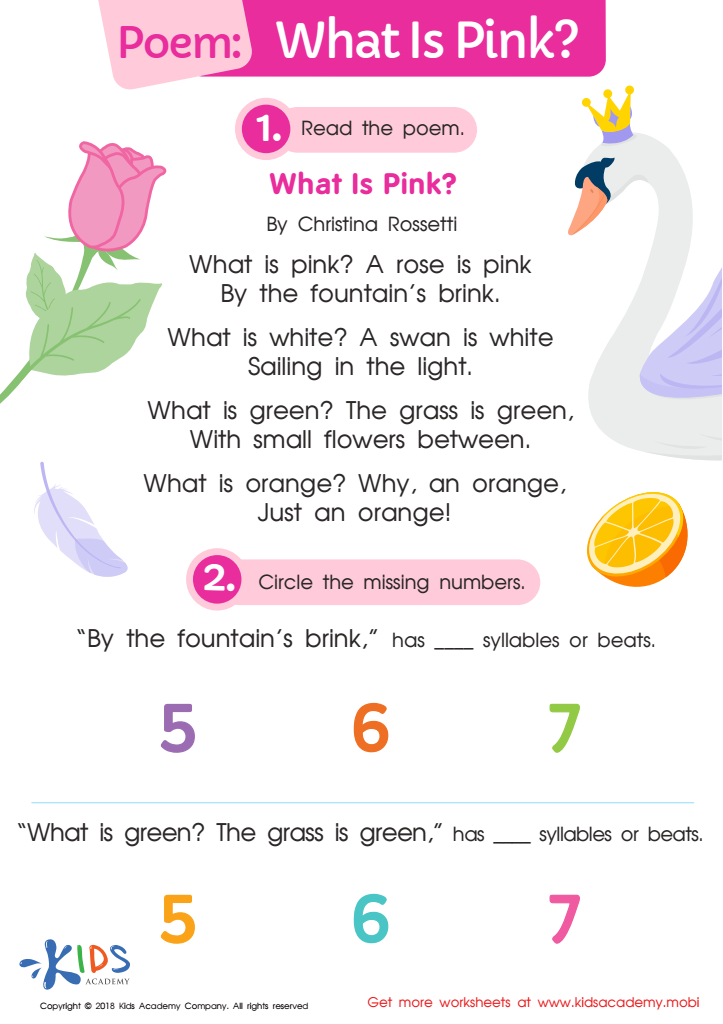
Poem: What Is Pink? Worksheet
Help your kids learn with short, fun, interesting poems! Read it aloud to them and point out the rhyme patterns. Have them circle the missing numbers to answer two questions. Show examples of objects with the colors in the poem. This will help them learn to read, and also understand colors better.
Poem: What Is Pink? Worksheet
Worksheet
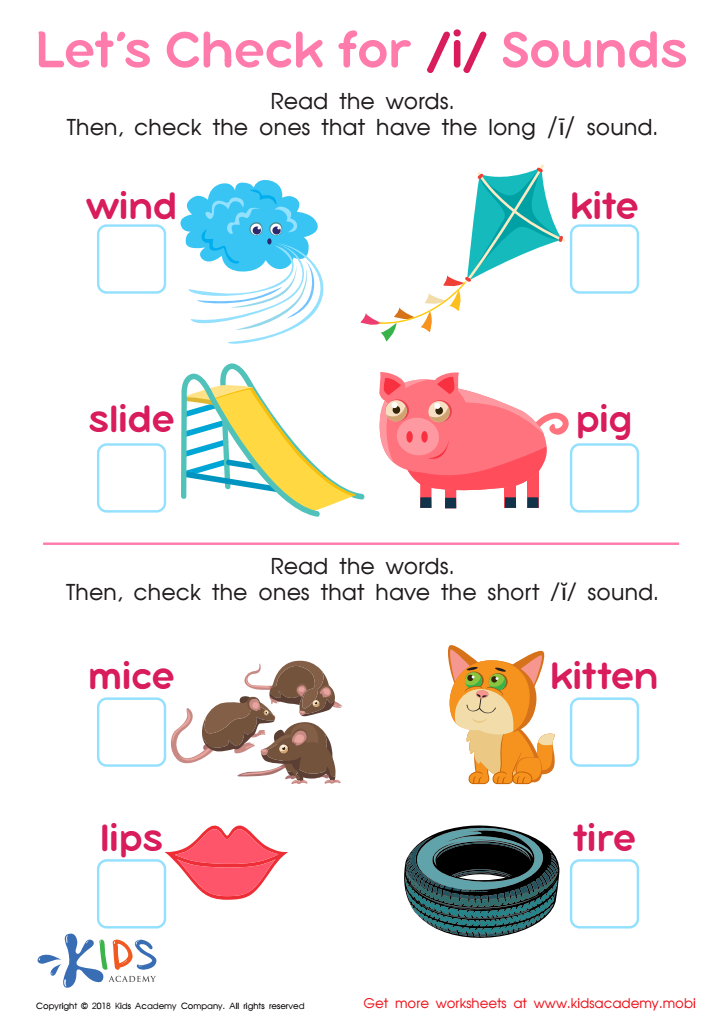
Let's Check for «i» Sounds Worksheet
This fun worksheet with pictures boosts phonics skills - differentiating between long «ī» and short «i» sounds in 1- and 2-syllable words. Kids use picture clues to read words, then check off the correct ones. It's a great way for new readers to practice early reading skills and find success on their own.
Let's Check for «i» Sounds Worksheet
Worksheet
Join Kids Academy for Free
Who is primarily going to use this learning content?








Improving reading skills through normal phonics for children aged 7-8 is crucial for several reasons. Firstly, this age group is at a pivotal stage in their literacy development. Mastering phonics, the relationship between sounds and their respective letters, equips children with essential decoding skills. This lays a strong foundation for fluent reading, enabling them to approach more complex texts with confidence.
Secondly, proficient reading is linked to greater academic achievement across all subjects. As children progress in their education, well-developed reading skills become essential for understanding mathematics, science, and social studies content. Phonics instruction not only enhances reading proficiency but also fosters comprehension skills, critical thinking, and vocabulary expansion.
Moreover, strong reading abilities promote a love for literature and learning, encouraging lifelong reading habits. When parents and teachers prioritize phonics improvement, they also support children's self-esteem and motivation. A child who reads well is more likely to participate actively in class discussions and express curiosity about the world around them.
Finally, investing in phonics and reading skill development during these formative years prepares students for future educational challenges, setting them on a path towards success and lifelong learning. Parents and teachers alike play a vital role in nurturing these vital skills.







