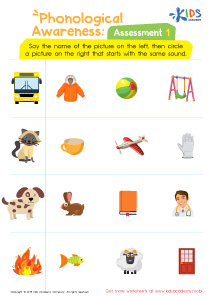
Rhyming skills development Normal Rhyming Worksheets for Ages 7-8
4 filtered results
-
From - To
Enhance your child's language skills with our engaging Rhyming Worksheets designed for ages 7-8. These expert-crafted resources focus on normal rhyming skills development, empowering young learners to recognize patterns in sounds and improve their vocabulary. Through fun activities, children will explore end rhymes, word associations, and playful exercises that stimulate their creativity while reinforcing phonemic awareness. Ideal for both classroom use and at-home practice, these worksheets offer a structured approach to learning through enjoyable tasks. Foster your child's love for language and help them become confident readers and communicators with our comprehensive rhyming resources tailored for this developmental stage.
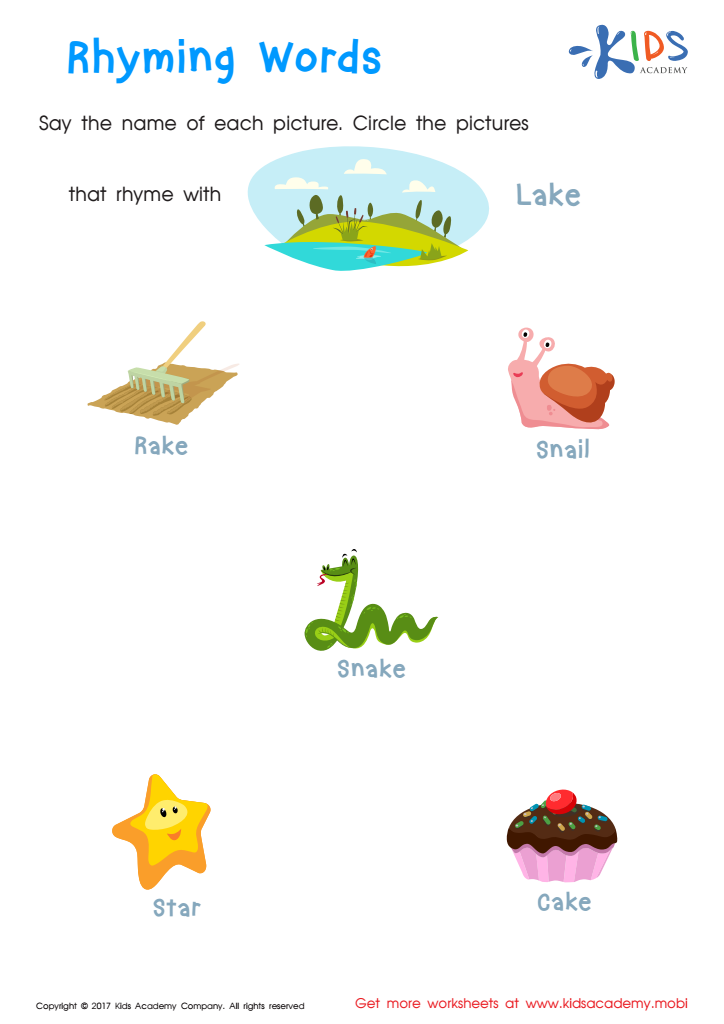
Rhyming Words Rhyming Worksheet
 Assign to My Students
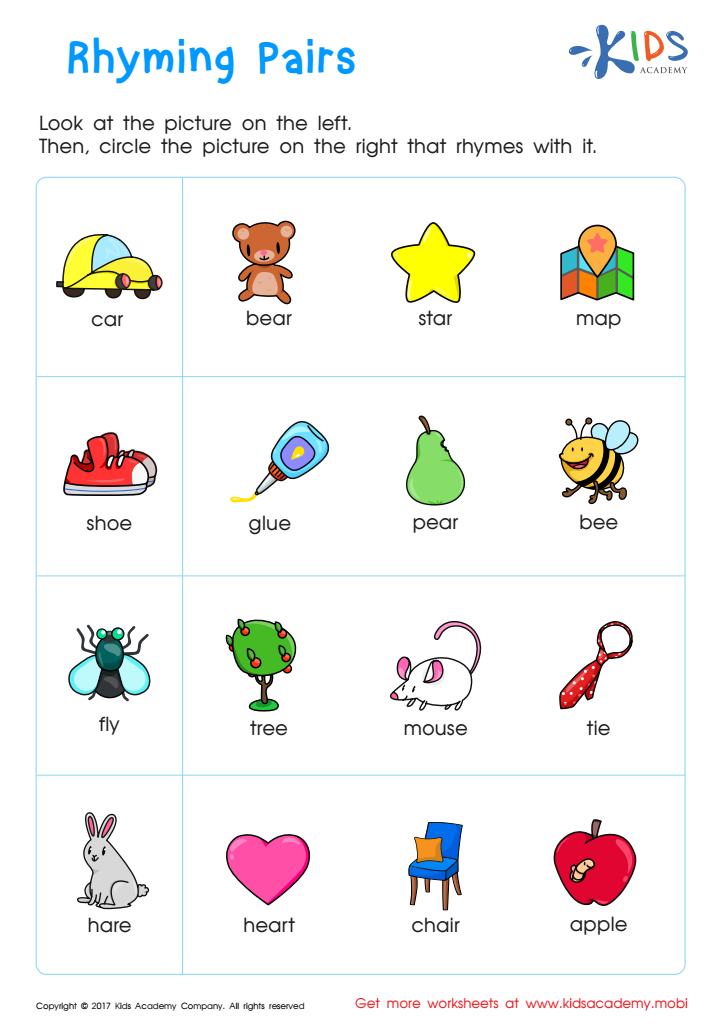
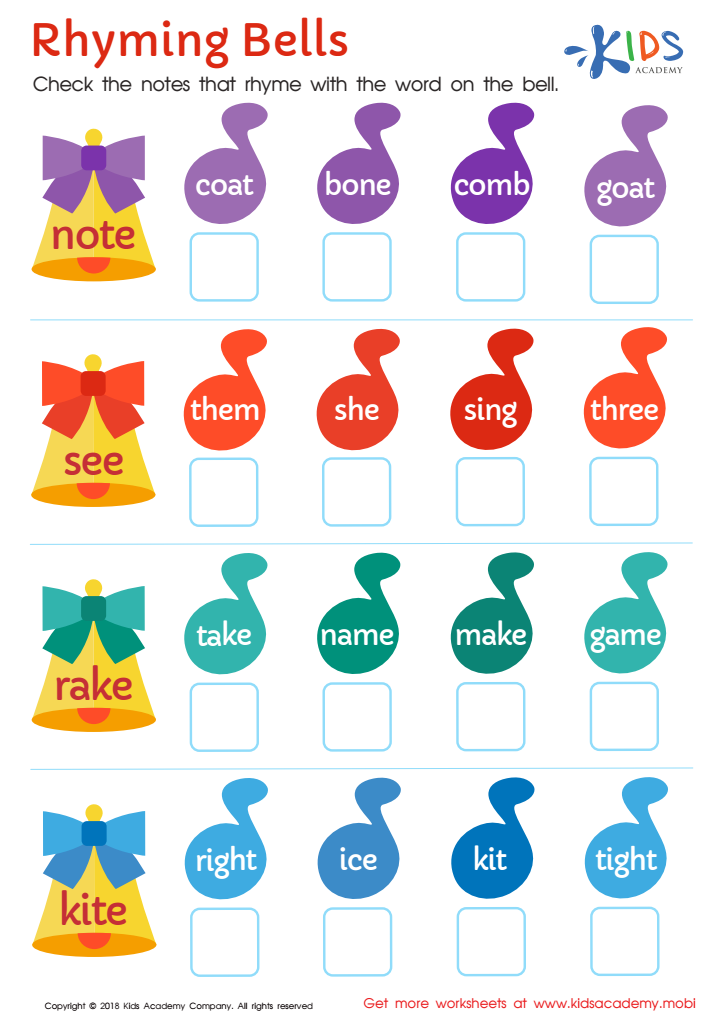
Rhyming Bells Worksheet
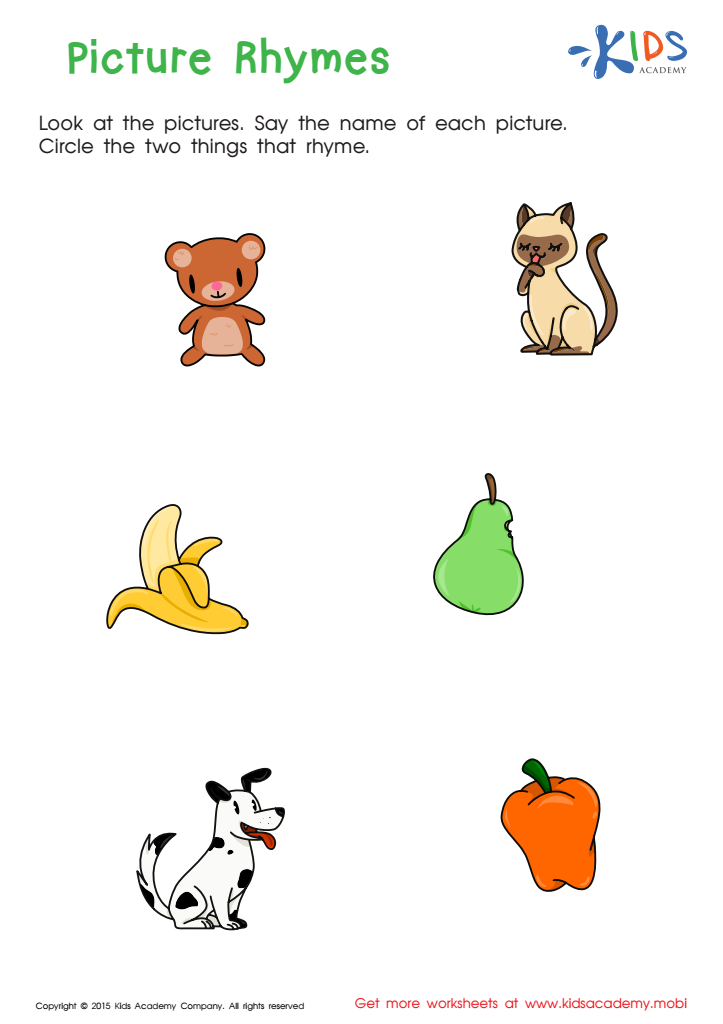
First Words: Picture Rhymes Worksheet







Rhyming skills play a crucial role in the language and literacy development of children aged 7-8. This age marks a significant time in their cognitive and linguistic growth, and fostering rhyming abilities enhances phonemic awareness—the understanding of the sound structure in spoken language. By recognizing and manipulating sounds in words, children build a strong foundation for reading and spelling.
Developing rhyming skills boosts vocabulary, as children become exposed to a wider array of words and their meanings through playful language. Rhymes make language memorable and often enjoyable, which increases motivation and engagement in reading activities. Furthermore, this skill fosters creativity as children learn to play with words, leading to better storytelling abilities.
Additionally, an emphasis on rhyming helps build confidence in children as they explore their language skills. Activities such as rhyming games and poems can strengthen parent-child or teacher-student bonds, providing fun, interactive opportunities for learning.
In summary, both parents and teachers should prioritize rhyming practice, as it not only enhances literacy skills but also enriches a child's overall educational experience, ensuring they are better prepared for more complex language tasks in the future.