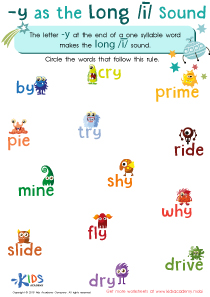
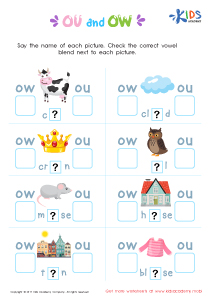
Phonics practice Normal Short Vowels Worksheets for Ages 7-8
3 filtered results
-
From - To
Boost your child's reading skills with our engaging Phonics Practice Normal Short Vowels Worksheets for ages 7-8! These worksheets provide fun and interactive exercises designed to help young learners master the fundamental short vowel sounds. With a variety of activities covering all five short vowels (a, e, i, o, u), children will develop essential phonemic awareness and build a strong reading foundation. Perfect for classroom use or at-home practice, our carefully crafted worksheets align with educational standards and make learning enjoyable. Empower your child to become a confident reader with our expert-curated phonics worksheets today!
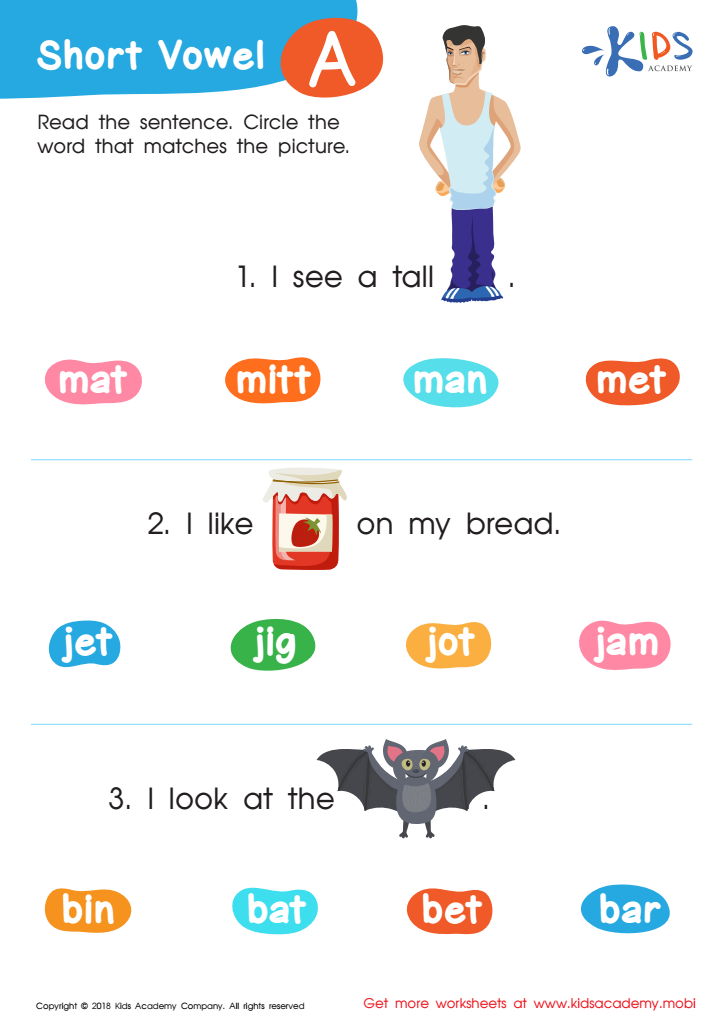
Short Vowel /a/ Worksheet
 Assign to My Students
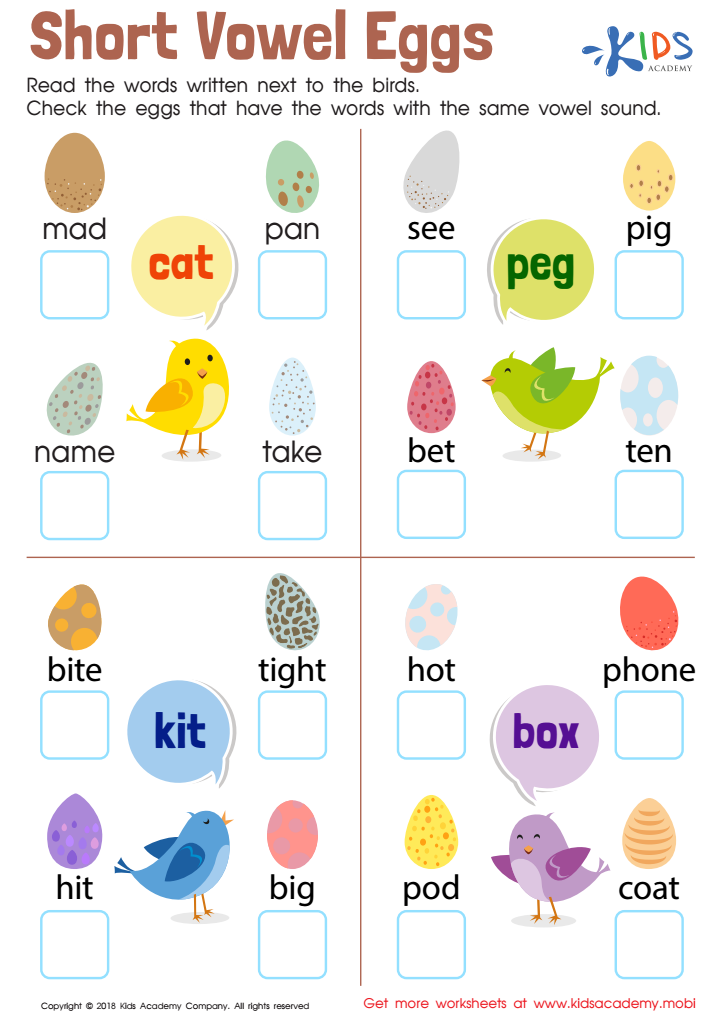
Short Vowel Eggs Worksheet
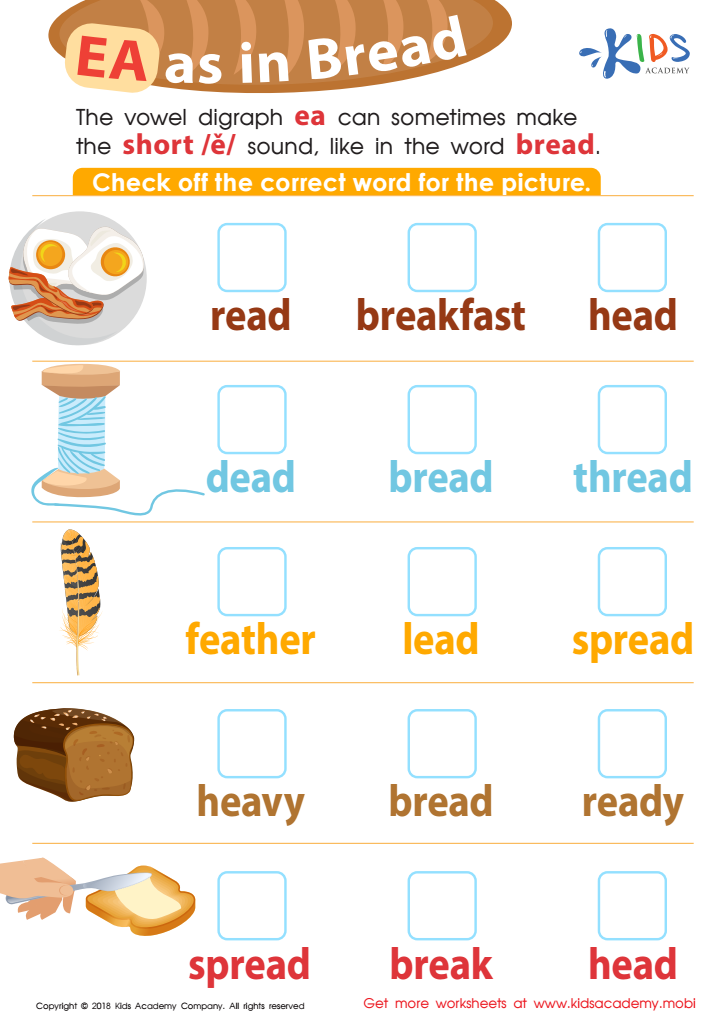
Reading: EA as in Bread Worksheet



Phonics practice, specifically focusing on normal short vowels, is critical for children ages 7-8 as it lays the foundation for reading fluency and literacy. At this age, children typically move from recognizing individual letters to decoding and blending sounds to form words. This stage is crucial for effective reading development.
Short vowels, often more challenging for young readers due to their subtler sounds, play an essential role in a vast number of words. By mastering these, children improve their ability to read and pronounce words correctly. This enhances their reading comprehension, vocabulary, and overall confidence in reading.
Moreover, strong phonics skills have been linked to improved spelling. When children understand the relationship between sounds and letters, they are better able to spell words phonetically. This advantage translates to improved writing skills and more effective communication.
Teachers and parents play a pivotal role in reinforcing these skills through consistent practice and supportive learning environments. Activities can include reading aloud, phonics games, and interactive tools that make learning engaging and enjoyable. By prioritizing phonics practice, specifically short vowels, during these formative years, we equip children with the essential tools for continued academic success and a lifelong love of reading.