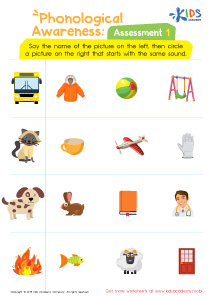
Vowel Recognition Normal Vowels and Consonants Worksheets for Ages 7-8
4 filtered results
-
From - To
Enhance your child's reading and writing skills with our engaging Vowel Recognition worksheets designed specifically for ages 7-8! These printable resources focus on normal vowels and consonants, helping young learners differentiate between vowel sounds and consonant sounds. With a range of fun activities, including tracing, identifying, and completing words, children will enjoy interactive learning while building their foundational language skills. Each worksheet is crafted to reinforce important phonetic concepts, boosting confidence in literacy. Make learning exciting and effective—prepare your little ones for reading success with our Vowel Recognition worksheets today!
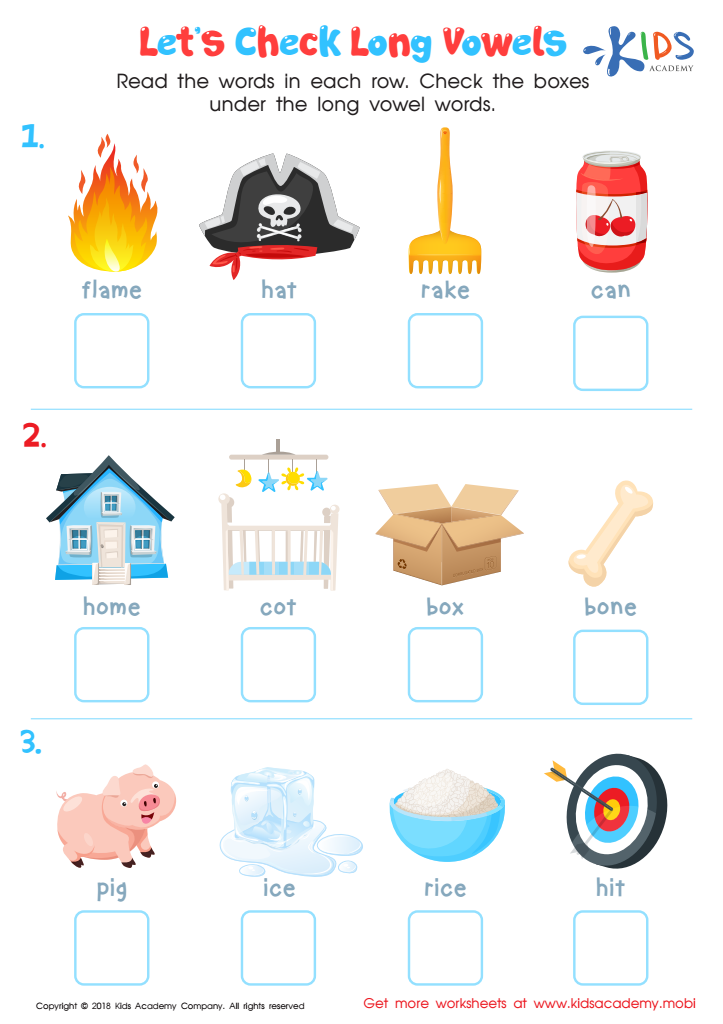
Let's Check Long Vowels: Assessment Worksheet
 Assign to My Students
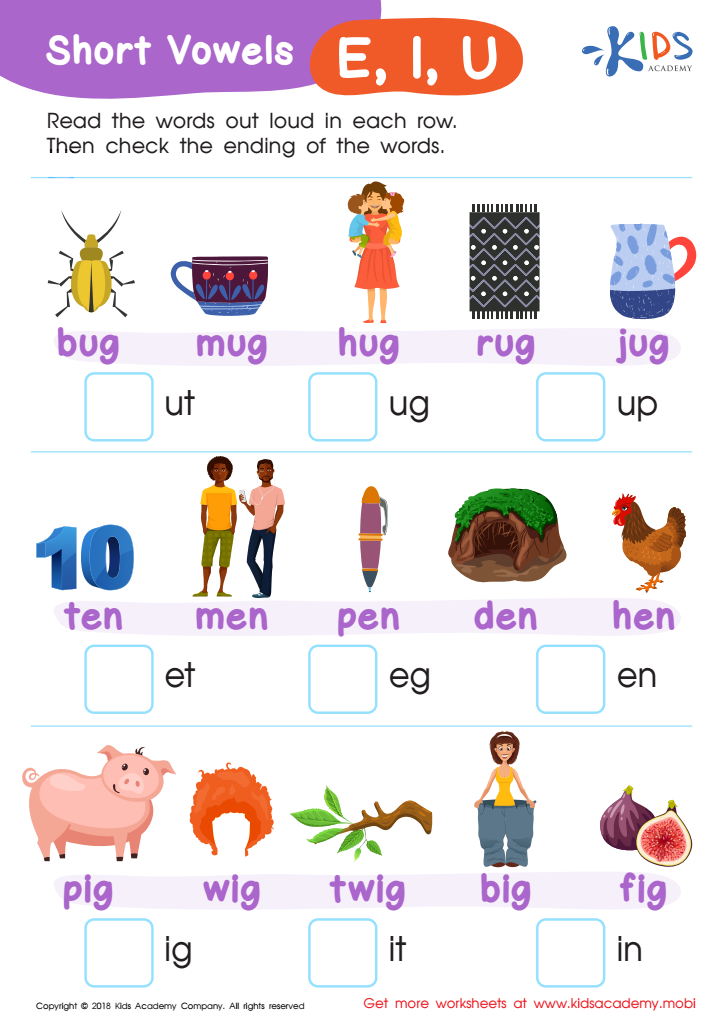
Short Vowels /e/, /i/, and /u/ Worksheet
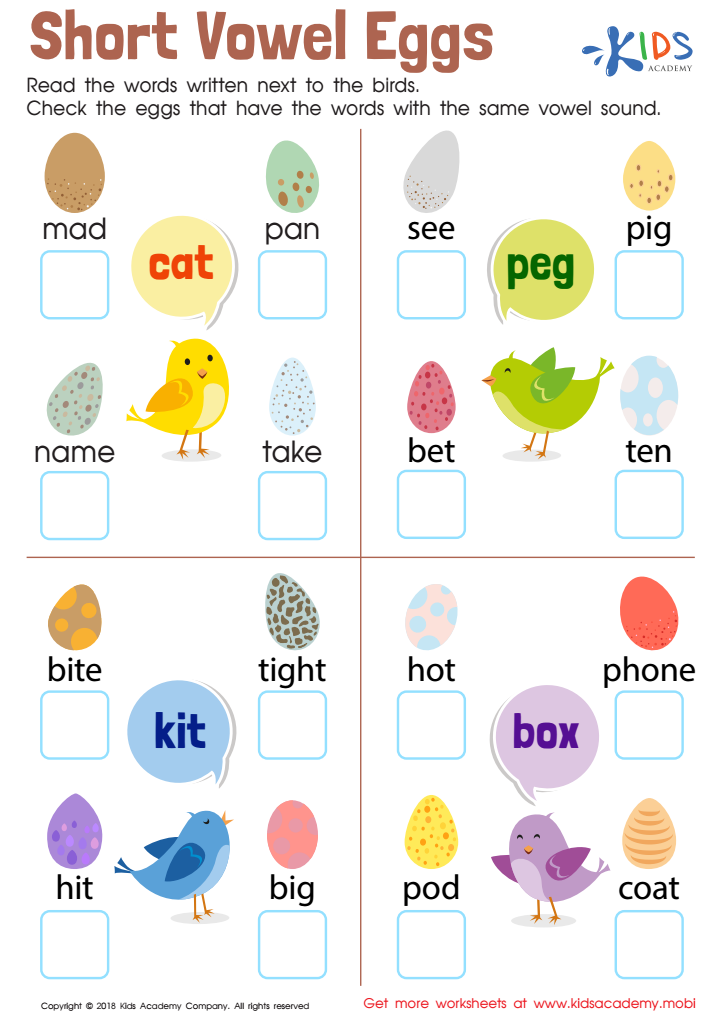
Short Vowel Eggs Worksheet
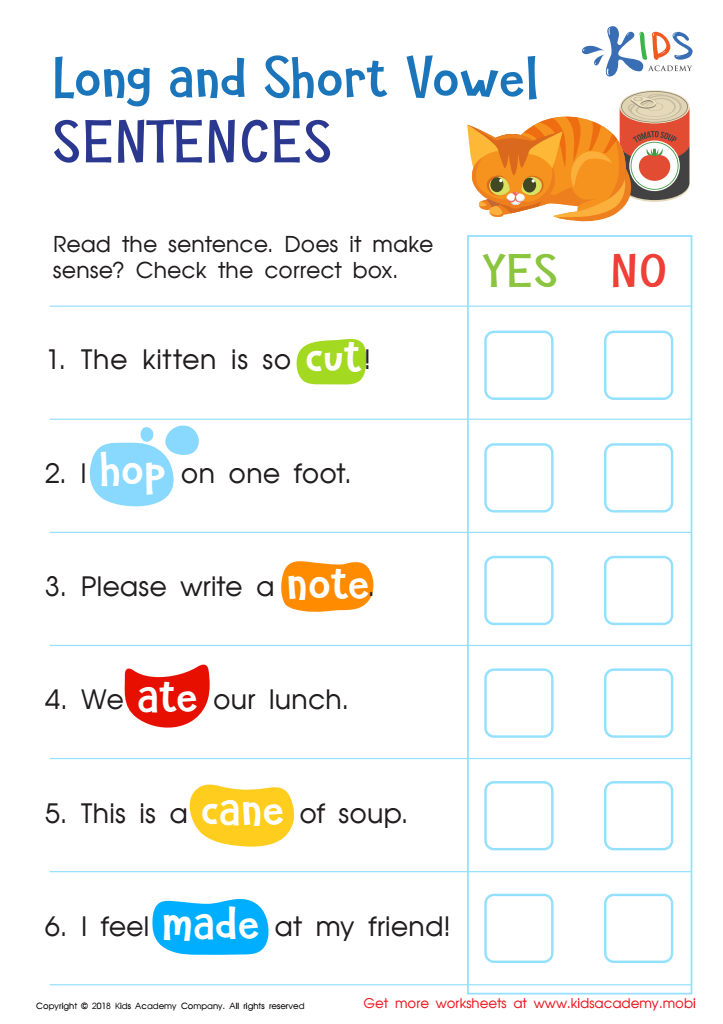
Long and Short Vowel Sentences: Assessment Worksheet



Vowel recognition, along with understanding normal vowels and consonants, is crucial for children aged 7-8 as they develop essential literacy skills. During this developmental stage, children's reading and writing capabilities expand, and a solid grasp of vowels and consonants becomes foundational. Recognizing vowels helps children decode words, understand their sounds, and improve their phonetic awareness, which is vital for reading fluency.
At this age, children begin to encounter more complex texts and will benefit significantly from being able to identify vowels and consonants easily. This recognition aids in spelling and the formation of words, helping children to become more confident in their writing abilities. Moreover, understanding vowel patterns and their roles in syllables contributes to better comprehension of language structure.
Furthermore, targeted instruction in vowel and consonant recognition can help identify and mitigate potential reading difficulties, such as dyslexia. Early intervention is critical and promotes beneficial habits that can support academic success across all subjects. Overall, fostering this understanding not only supports literacy development but also cultivates a love for reading, paving the way for lifelong learning. Therefore, parents and teachers should prioritize vowel and consonant recognition in their efforts to nurture strong, capable readers.