Fine motor skills development Normal Worksheets for Ages 7-8
3 filtered results
-
From - To
Enhance your child’s fine motor skills with our specially crafted worksheets for ages 7-8. Fine motor skills are crucial for daily tasks like writing, buttoning, and tying shoelaces. Our engaging activities help children build strength and coordination in their hands and fingers. Each worksheet is designed to be fun yet challenging, encouraging precision and control. Whether it’s tracing, drawing, or cutting, these exercises are perfect for helping children improve and succeed in school and beyond. Visit our website to access and print a variety of fine motor skill development worksheets tailored specifically for 7-8-year-olds.
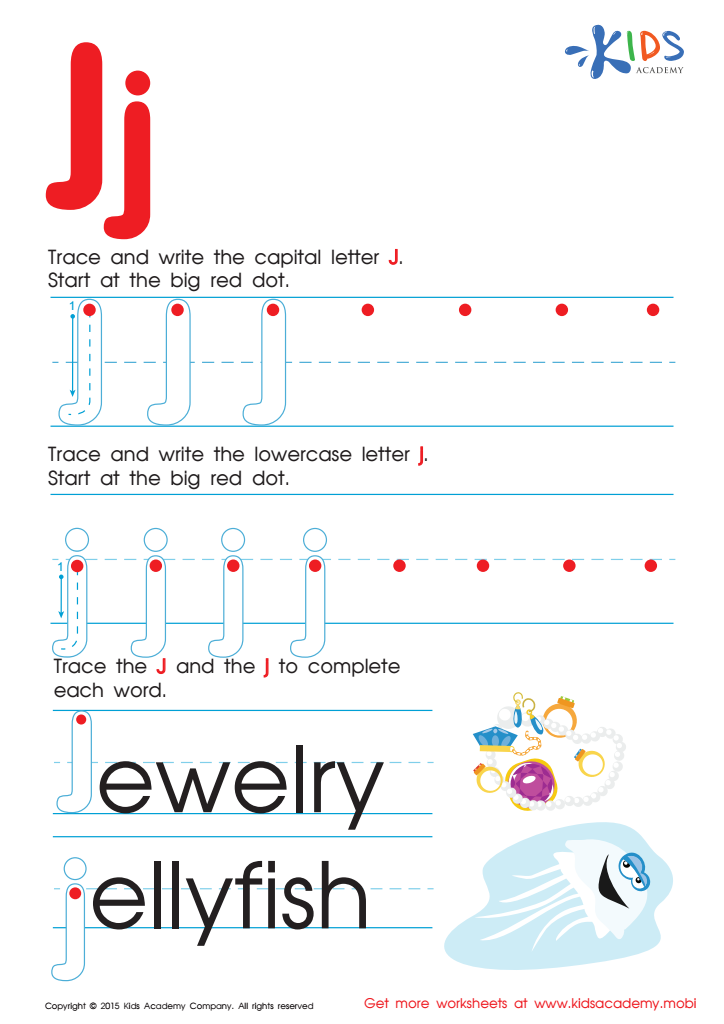
Letter J Tracing Page
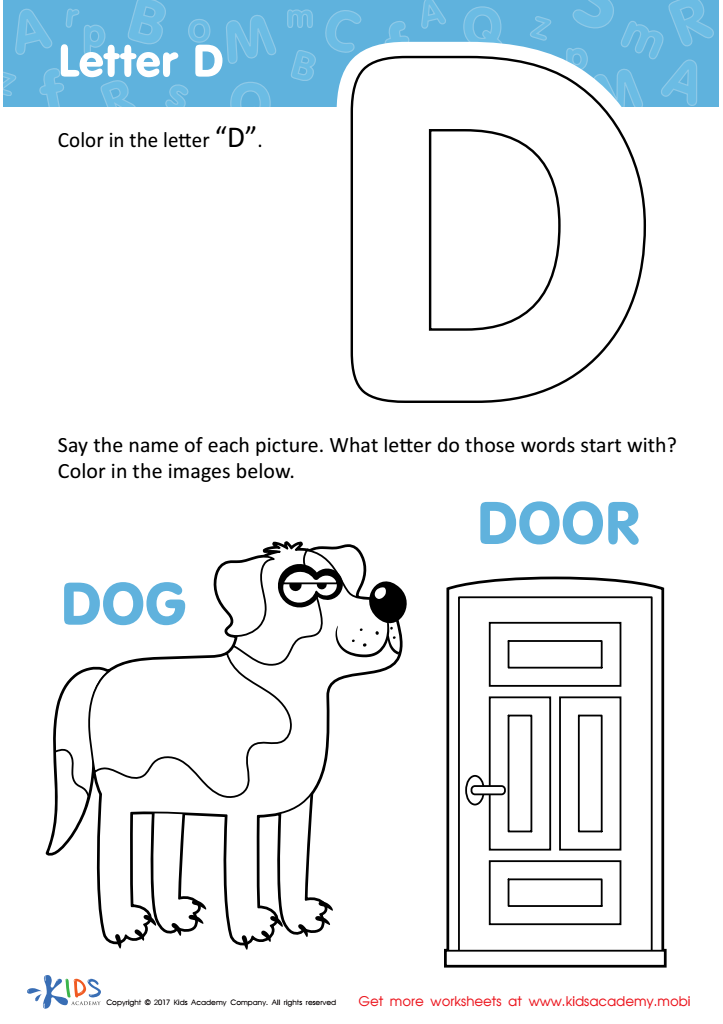
Letter D Coloring Sheet
 Assign to My Students

Night Sky Constellations: Aries Worksheet






Fine motor skills development is crucial for children aged 7-8 as it significantly influences their academic performance, daily activities, and overall confidence. These skills involve the coordination of small muscles in tasks such as writing, buttoning clothes, and using utensils, which are essential for self-reliance and academic success. At this age, children's fine motor skills are still maturing, and proficiency in tasks like handwriting can impact their ability to complete schoolwork efficiently and legibly. Inadequate fine motor skills can lead to frustration and lower self-esteem, affecting their attitude towards learning and school.
Moreover, developing fine motor skills is closely linked to cognitive development, as tasks that require fine motor skills often also stimulate problem-solving and critical thinking. Artistic activities such as drawing and cutting improve not only dexterity but also creativity, offering kids a means to express themselves. Encouraging activities that build fine motor skills, such as puzzles, crafts, and playing with building blocks, can enhance the learning experience and foster a child’s independence. Therefore, by prioritizing the development of fine motor skills, parents and teachers help children build foundational abilities that will benefit them academically, socially, and personally throughout their lives.








